San Cristobal
The name San Cristóbal refers to several distinct geographical locations:
What is San Cristobal?
The name San Cristóbal refers to several distinct geographical locations:
- San Cristóbal de Las Casas, Mexico: A city in the central highlands of Chiapas. Founded in 1528, it serves as a major cultural and political hub for the Maya and other Indigenous peoples of the region.1
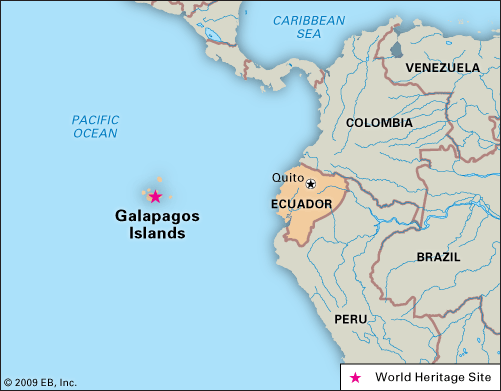
- San Cristóbal Island, Galapagos: One of the easternmost islands of the Galapagos Islands in Ecuador. It is the most populated and fertile island in the archipelago and serves as its nominal capital.23
- San Cristóbal, Dominican Republic: A city in the southern coastal lowlands. Founded in 1575, it is a commercial center for the surrounding agricultural region.4
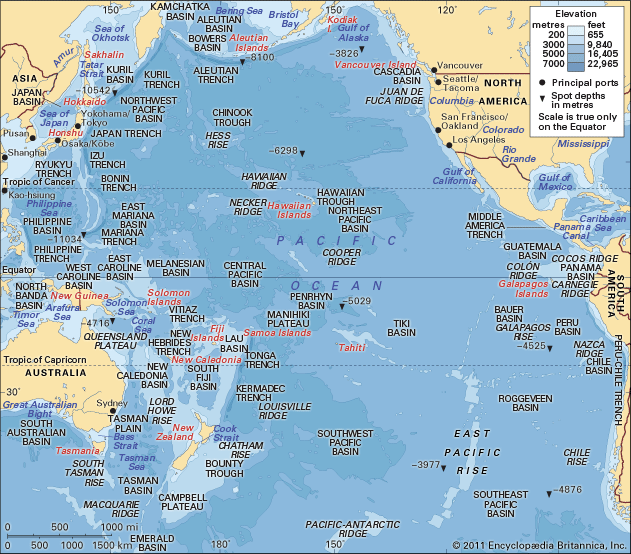
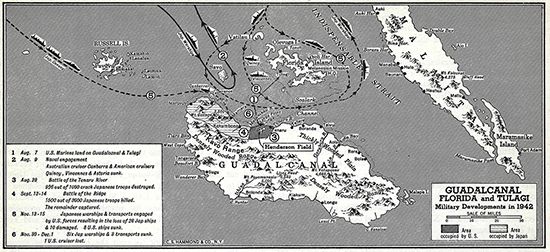
- San Cristóbal (Makira), Solomon Islands: An island in the southwestern Pacific Ocean, located southeast of Guadalcanal.5
- San Cristóbal, Venezuela: A city located in the western part of the country, south-southwest of Lake Maracaibo.6
Who was Bartolomé de Las Casas?
Bartolomé de Las Casas (1474/84–1566) was a Spanish Dominican friar, historian, and missionary who is remembered as “the Apostle of the Indians.” He was the first European to systematically expose the oppression of indigenous peoples by colonial powers in the Americas and to advocate for the abolition of slavery in the region.789
Originally a Spanish settler, Las Casas was appalled by the treatment of native populations. He became a vocal critic of the colonial government and the conquistadors, arguing that their actions were morally unjust. His most influential work, A Short Account of the Destruction of the Indies (1542), was a powerful polemic that contributed to the passage of the New Laws, which sought to limit the exploitation of indigenous labor.9108
Throughout his life, Las Casas served as an influential adviser to the Spanish court and the Council of the Indies, consistently defending the rights of indigenous peoples against those who argued for their inferiority.10
What makes the Galapagos Islands unique?
The Galapagos Islands are unique primarily due to their extraordinary biodiversity and their role in the development of modern evolutionary theory. Located in the eastern Pacific Ocean, this geologically young archipelago is renowned for its high number of endemic species—plants and animals found nowhere else on Earth.5
Key factors contributing to their uniqueness include:
- Evolutionary Significance: The islands’ unusual fauna, observed by Charles Darwin in 1835, provided critical evidence for his groundbreaking theory of natural selection.5
- Endemic Wildlife: The islands host a remarkable range of species, such as giant tortoises that can live up to 150 years, swimming marine iguanas, and flightless cormorants. Additionally, Galapagos finches serve as a classic example of adaptive radiation, where a single ancestral type evolved into multiple subspecies with distinct beak shapes.5
- Diverse Ecosystems: Despite their arid lowlands, the islands feature varied zones ranging from cactus forests to moist Scalesia forests at higher elevations.5
- Unique Coexistence: The archipelago is one of the few places where tropical animals live alongside species typically associated with colder climates, such as penguins and fur seals.5
What was the Zapatista revolt in Chiapas?
The Zapatista revolt was an armed uprising launched on January 1, 1994, by the Zapatista National Liberation Army (EZLN), a guerrilla group based in the southern Mexican state of Chiapas.15
The rebellion began on the same day the North American Free Trade Agreement (NAFTA) went into effect. The Zapatistas, led by the figure known as Subcomandante Marcos, opposed economic reforms that threatened to privatize communal farms (ejidos) and feared that integration into a free-trade pact would further impoverish Mexico’s indigenous population.1516
Key aspects of the conflict included:
- Goals: The movement advocated for land reform, greater political and cultural autonomy, and an end to the long-standing one-party rule of the Institutional Revolutionary Party.15
- Escalation: Following initial clashes, the government engaged in both peace negotiations and covert military operations, including the use of paramilitary units that targeted civilian supporters of the rebels.15
- Political Shift: Over time, the EZLN transitioned from armed combat to peaceful political action, establishing autonomous administrative structures called caracoles and organizing national campaigns to lobby for indigenous rights.1516
Sources
- San Cristóbal de Las Casas — Encyclopædia Britannica
- San Cristobal — Encyclopædia Britannica
- San Cristóbal — Merriam-Webster
- San Cristóbal Island — Encyclopædia Britannica
- Galapagos Islands — Encyclopædia Britannica
- San Cristóbal — Encyclopædia Britannica
- Bartolomé de Las Casas — Encyclopædia Britannica
- Bartolomé de Las Casas: Top Questions — Encyclopædia Britannica
- Latin American literature - Chronicles of discovery and conquest — Encyclopædia Britannica
- Bartolomé de Las Casas - Adviser to Charles V — Encyclopædia Britannica
- Isabela Island — Encyclopædia Britannica
- Galapagos penguin — Encyclopædia Britannica
- Marine ecosystem - Ocean currents — Encyclopædia Britannica
- Charles Darwin: Top Questions — Encyclopædia Britannica
- Zapatista National Liberation Army — Encyclopædia Britannica
- Subcomandante Marcos — Encyclopædia Britannica
- Chiapas — Encyclopædia Britannica
Published on · 3 min read