Sand Fly
A sand fly is an insect belonging to the family Phlebotomidae (sometimes classified within the family Psychodidae) of the order Diptera. While the name is…
What is sand fly?
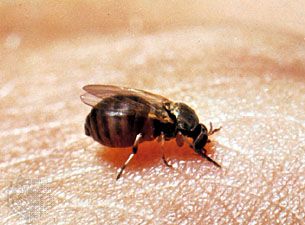
A sand fly is an insect belonging to the family Phlebotomidae (sometimes classified within the family Psychodidae) of the order Diptera. While the name is occasionally used to refer to certain species of black fly or biting midge, true sand flies are distinct insects whose aquatic larvae typically inhabit coastal intertidal zones, mud, or wet organic debris.1
These insects are of significant medical importance because they act as vectors for various diseases. In regions such as the Mediterranean and southern Asia, the genus Phlebotomus transmits the virus responsible for pappataci fever. In parts of Africa, Asia, and South America, they are known to carry protozoan parasites that cause serious conditions, including kala azar, Oriental sore, espundia, and bartonellosis.12
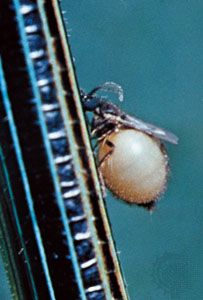
Because female sand flies are bloodsuckers that feed from sunset to sunrise, they pose a persistent health risk in affected areas. Control is challenging because their breeding grounds are often difficult to locate, and their small size allows them to bypass standard mosquito netting.2
What is leishmaniasis and how is it spread?
Leishmaniasis is a parasitic disease caused by flagellate protozoans of the genus Leishmania. It is primarily found in tropical and subtropical regions and manifests in three major forms: visceral, cutaneous, and mucocutaneous.34
How It Is Spread
The disease is transmitted to humans and other vertebrates through the bite of an infected female sand fly belonging to the genera Phlebotomus (in the Old World) or Lutzomyia (in the Americas).35
The transmission cycle occurs as follows:
- Ingestion: When a sand fly bites an infected host, it ingests cells containing the parasite in its nonmotile, round form, known as an amastigote.35
- Development: Inside the fly’s gut, the parasite transforms into an elongated, motile, flagellated form called a promastigote (or leptomonad), which then multiplies.35
- Transmission: The promastigotes migrate to the fly’s mouthparts. During the fly’s next blood meal, these parasites enter the wound of a new host, initiating a fresh infection.35
How do sand flies differ from mosquitoes?
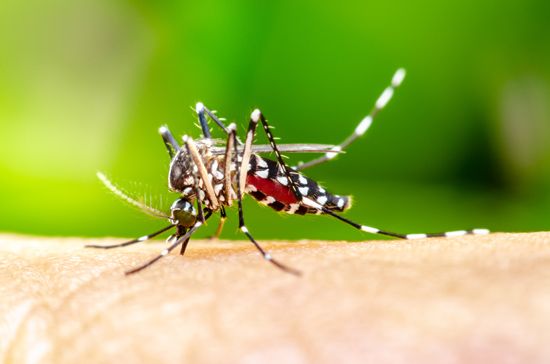
While both sand flies and mosquitoes are bloodsucking insects of the order Diptera that serve as vectors for disease, they are distinct in their classification and biology.
Key Differences
- Classification: True sand flies belong to the family Phlebotomidae (sometimes classified within Psychodidae), whereas mosquitoes belong to the family Culicidae.1
- Larval Habitat: Sand fly larvae typically develop in terrestrial environments such as mud, wet organic debris, or coastal intertidal zones. In contrast, mosquito larvae are aquatic and live in standing water.17
- Disease Transmission: While both are significant medical vectors, they carry different pathogens. Mosquitoes are known for transmitting viruses like dengue and yellow fever, as well as the protozoan that causes malaria. Sand flies are primary vectors for leishmaniasis, pappataci fever, and bartonellosis.18
It is worth noting that the term “sand fly” is sometimes colloquially applied to other biting insects, such as biting midges or certain black flies, which can lead to confusion regarding their specific biological traits.18
What are some effective ways to prevent sand fly bites?
Preventing sand fly bites is essential for reducing the risk of diseases like leishmaniasis and pappataci fever. Because sand flies are very small, standard mosquito netting is often ineffective, as the flies can pass through typical 18-mesh screens.3
Effective prevention strategies include:
- Environmental Control: Using insecticide sprays on screens, around doors and windows, and inside living areas is highly effective, as it kills adult flies that land on treated surfaces.3
- Physical Barriers: Since sand flies typically feed at ground level between sunset and sunrise, sleeping above the ground floor can provide a degree of protection.3
- Personal Protection: Applying insect repellents, such as dimethyl phthalate, to exposed skin can deter sand flies for several hours.3
- Population Management: On a broader scale, the spread of diseases transmitted by these insects is managed by controlling sand fly populations, though their breeding sites are often difficult to locate, making larvicidal efforts challenging.23
Sources
- sand fly — Encyclopædia Britannica
- pappataci fever — Encyclopædia Britannica
- leishmaniasis — Encyclopædia Britannica
- leishmania — Encyclopædia Britannica
- leishmaniasis — Merriam-Webster
- cutaneous leishmaniasis — Encyclopædia Britannica
- insect - Medical significance — Encyclopædia Britannica
- Diptera - General features — Encyclopædia Britannica
Published on · 3 min read