Sand Rat
The term "sand rat" does not refer to a single species but is a common name applied to several different rodents adapted to sandy or desert environments.
What is sand rat?
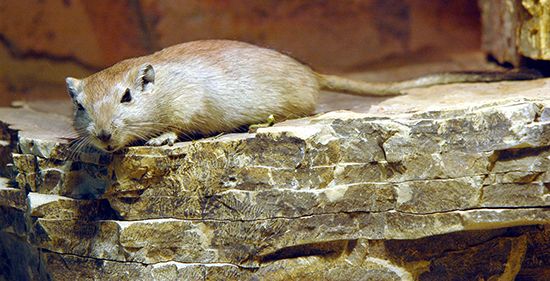
The term “sand rat” does not refer to a single species but is a common name applied to several different rodents adapted to sandy or desert environments.1
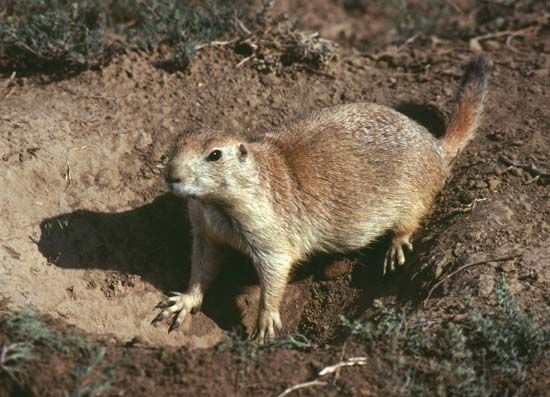
While the name is sometimes used colloquially for pocket gophers or certain African mole rats, it most accurately refers to two species of gerbils belonging to the genus Psammomys. These rodents are specifically adapted to arid habitats, where they have evolved unique physiological traits to survive in harsh, dry conditions.12
How do desert animals adapt to survive in extreme heat?
Animals in desert environments have evolved a variety of morphological and physiological mechanisms to survive extreme heat and water scarcity.
Water Conservation and Thermoregulation
To minimize water loss, many desert animals possess skin that is relatively impervious to water. Because respiratory surfaces must remain moist for gas exchange, some animals, such as gazelles, utilize specialized nasal passages to cool exhaled air, allowing water vapor to condense and be reabsorbed rather than lost to the environment.3
Behavioral Adaptations
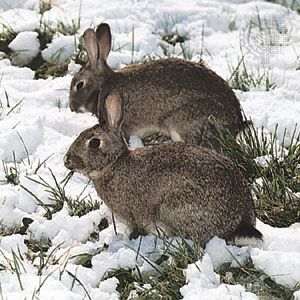
Many desert mammals, including rodents, rabbits, and bats, are primarily nocturnal. By remaining in cool underground burrows during the heat of the day, they avoid the most intense temperatures. Other animals, like the Sahara desert ant, use long legs to keep their bodies elevated above the scorching sand.45
Physiological Strategies
- Dietary Moisture: Many reptiles, birds, and mammals derive necessary moisture directly from their food, such as insects, spiders, or plant fluids, making them largely independent of standing water sources.4
- Dormancy: Some species, such as the desert snail, survive extreme stress through estivation, a state of dormancy.6
- Metabolic Efficiency: Desert-adapted humans and animals often exhibit physical traits that minimize water needs and maximize heat dissipation.7
What are the main differences between gerbils and other rodents?
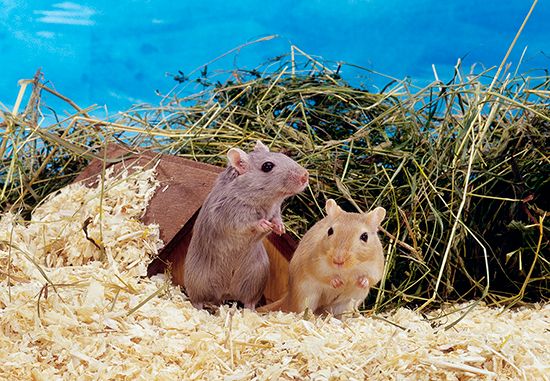
Gerbils belong to the subfamily Gerbillinae within the family Muridae, which also includes “true” rats and mice. While they share the defining characteristics of the order Rodentia—such as specialized incisors for cutting and gnawing—they are distinguished by several specific adaptations and traits:
- Arid Adaptation: Unlike many other rodents, all 110+ species of gerbils are specifically adapted to harsh, arid environments, including sandy deserts, dry steppes, and rocky plains.
- Locomotion: Many gerbils are terrestrial leapers, characterized by short forelimbs and long, powerful hind limbs and feet, which they use to move in running leaps when alarmed. They also possess a long tail used for balance.
- Physical Features: Most gerbils have large ears and eyes. Their body forms range from stout to slender, and their fur is typically soft and dense.
- Unique Dentition: While most gerbils have six upper and six lower cheek teeth, the fat-tailed gerbil is unique among the Muridae for having only four lower cheek teeth, an adaptation linked to its specialized insectivorous diet.
Why are sand rats often studied in medical research?
The provided search results do not contain information regarding why sand rats are studied in medical research; the information provided focuses exclusively on the biological adaptations of naked mole rats.
Sources
- sand rat — Merriam-Webster
- sand rat — Encyclopædia Britannica
- Biosphere - Humidity — Encyclopædia Britannica
- 8 Animals That Live in Extreme Environments — Encyclopædia Britannica
- climatic adaptation — Encyclopædia Britannica
- North American Desert - Animal life — Encyclopædia Britannica
- Sahara: Top Questions — Encyclopædia Britannica
- gerbil — Encyclopædia Britannica
- rodent - Evolution and classification — Encyclopædia Britannica
- rodent - Form and function — Encyclopædia Britannica
- The Naked Mole Rat’s Latest Superpower — Encyclopædia Britannica
Published on · 2 min read