Sanderling
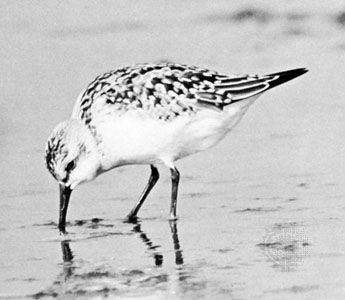
The sanderling (Calidris alba) is an abundant shorebird and a member of the sandpiper family (Scolopacidae).
What is Sanderling?
The sanderling (Calidris alba) is an abundant shorebird and a member of the sandpiper family (Scolopacidae).1
Measuring approximately 20 cm (8 inches) in length, these birds are known for their distinct seasonal plumage: they appear rusty-backed during the summer months but are considered the whitest of all sandpipers in winter. They are also characterized by a long, white wing stripe that is more prominent than those found on other small species.1
Sanderlings nest on barrens near the sea in regions around the North Pole and spend their winters on sandy beaches across the globe. Like many other shorebirds, they are migratory, often traveling long distances between their Arctic breeding grounds and their wintering sites.123
What are some other types of shorebirds that migrate to the Arctic?
Many shorebirds, also known as wading birds, are long-distance migrants that nest in the Arctic tundra during the summer to take advantage of lower predator densities and abundant food sources.2
Beyond the sanderling, several other species within the family Scolopacidae migrate to the Arctic, including:
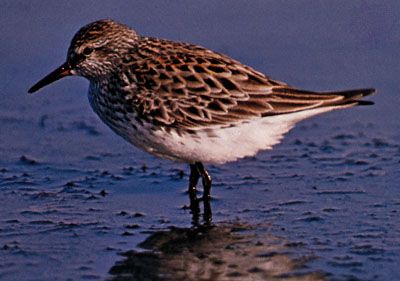
- White-rumped sandpiper: A notable migrant that breeds in the Arctic of North America and travels to southern South America for the winter.24
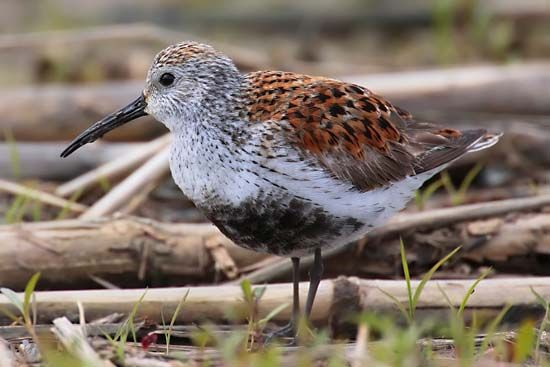
- Dunlin: Also known as the red-backed sandpiper, this species is part of the broad Calidris genus.4
- Purple sandpiper: This species breeds in Arctic highlands, particularly in eastern North America and northern Europe.4
- Least sandpiper: Often called the American stint, it is abundant across sub-Arctic Canada and Alaska.4
- Rufous-necked sandpiper: An Old World species that breeds in the Siberian Arctic.4
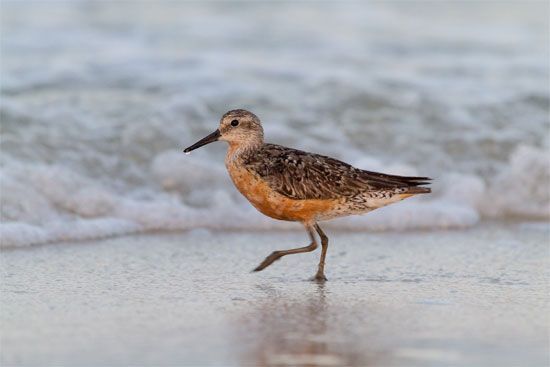
- Knot: Another member of the Calidris genus that utilizes Arctic breeding grounds.4
Additionally, other shorebirds like phalaropes are known to nest in open Arctic tundra. These birds often follow continental coastlines during their extensive annual migrations to southern latitudes.56
How do sanderlings adapt their diet during different seasons?
The provided search results do not contain specific information regarding how sanderlings adapt their diet between seasons. While the documents note that sandpipers (the family to which the sanderling belongs) generally use their bills to pick up surface invertebrates or probe in mud, they do not detail seasonal dietary shifts for this particular species.13
We could dive deeper into the general foraging behaviors of the Scolopacidae family or explore other aspects of sanderling biology if you are interested.
Why do some birds choose to nest in the Arctic tundra despite the harsh conditions?
Birds migrate to the Arctic tundra to nest primarily because the region experiences a massive, short-lived surge in productivity during the summer months. Despite the harsh conditions, this seasonal abundance of food—such as insects, invertebrates, and fish—provides an ideal environment for rearing young.58
The ecological benefits of this migration include:
- Abundant Resources: During the brief summer, the Arctic landscape offers high levels of vegetal and animal production, allowing birds to exploit resources that are not available in more constant, less productive environments.5
- Lower Predator Density: By nesting in the Arctic, many species take advantage of areas with fewer predators compared to temperate or tropical regions, which increases the survival chances of their offspring.8
- Exploitation of Fluctuating Cycles: Migratory birds are highly attuned to these seasonal cycles. They arrive when food is at its peak and depart before the onset of winter, when the environment becomes untenable due to food scarcity and extreme cold.5
Sources
- Sanderling — Encyclopædia Britannica
- Migration - In Europe — Encyclopædia Britannica
- Charadriiform - Locomotion and feeding behaviour — Encyclopædia Britannica
- Sandpiper — Encyclopædia Britannica
- Polar ecosystem - Biota of the Arctic — Encyclopædia Britannica
- Charadriiform - Shorebirds (suborder Charadrii) — Encyclopædia Britannica
- Migration - In coastal and pelagic regions — Encyclopædia Britannica
- Asia - The tundra — Encyclopædia Britannica
- Migration - Ecological significance of migration — Encyclopædia Britannica
- Arctic - Marine fauna — Encyclopædia Britannica
Published on · 3 min read