Phalarope
There are three species of phalaropes, which are unique shorebirds known for a complete reversal of sex roles, where females are larger and more brightly…
What are the three species of phalaropes, and where can they be found?
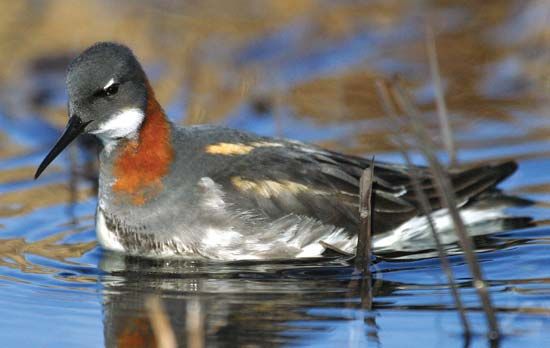
There are three species of phalaropes, which are unique shorebirds known for a complete reversal of sex roles, where females are larger and more brightly colored than males.1
The three species and their general distributions are:
- Red phalarope (Phalaropus fulicarius): Also known as the gray phalarope in Britain, this species breeds around the Arctic Circle and winters on tropical oceans.1
- Northern phalarope (P. lobatus): Referred to as the red-necked phalarope in Britain, this species also breeds around the Arctic Circle and winters on tropical oceans.12
- Wilson’s phalarope (P. tricolor): This species breeds primarily in the interior of western North America, specifically on the northern Great Plains, and migrates to the Argentine pampas for the winter.13
What is the origin of the name ‘phalarope’ and what does it mean?
The name “phalarope” originates from the New Latin phalaropus, which is derived from the Greek words phalaris, meaning “coot,” and pous (or pod-), meaning “foot.” Consequently, the name translates literally to “coot-foot,” a reference to the bird’s distinctive lobed toes that are well-adapted for swimming.51
The term is rooted in the Greek word phalios, which refers to having a white spot, and it has been used to describe these small shorebirds since at least 1771. These birds are members of the family Scolopacidae and are noted for their unique behavior of swimming, which distinguishes them from many of their relatives.51
How do phalaropes differ from other shorebirds in their feeding behavior?
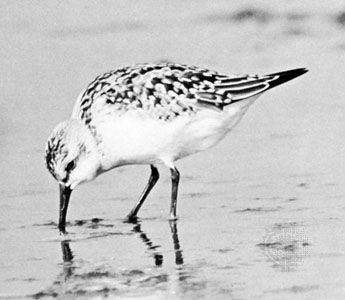
Phalaropes differ from most other shorebirds primarily in their aquatic feeding habits. While many shorebirds forage on open ground or probe in mud and sand, phalaropes habitually feed while swimming.1
Their unique feeding behavior often involves a specialized technique where they spin around in the water to stir up prey from the bottom or the water column, making it easier to capture. This behavior is so characteristic that even young phalaropes, which are aquatic and begin swimming within an hour of hatching, perform this spinning motion.17
In contrast, other members of the family Scolopacidae, such as sandpipers, typically use their bills as forceps to pick up surface invertebrates or probe into mud, while species like curlews and woodcock use their bills to probe into burrows or leaf litter. By choosing to forage on the water, phalaropes occupy a distinct ecological niche compared to their terrestrial or wading relatives.1
What are the unique physical characteristics of phalaropes?
Phalaropes are small, lightly built shorebirds that possess several distinct physical characteristics adapted to their unique lifestyle:
- Lobed Toes: Unlike many other shorebirds, phalaropes have lobed toes, which are specialized adaptations that make them efficient swimmers.19
- Body Structure: They are slim-necked birds that typically measure between 15 and 25 cm (6 to 10 inches) in length.1
- Plumage: Their coloration changes seasonally; they are marked with red and soft gray during the summer months, while their winter plumage consists of gray and white tones.1
- Sexual Dimorphism: Phalaropes exhibit a reversal of typical avian sex roles. Females are generally larger and more brightly colored than males, a trait that supports their active role in competing for nesting territories and performing courtship displays.19
These physical traits, combined with their ability to thrive in both arctic breeding grounds and tropical marine environments, distinguish them from other members of the family Scolopacidae.19
Sources
- Phalarope — Encyclopædia Britannica
- Wilson's phalarope — Merriam-Webster
- red-necked phalarope — Merriam-Webster
- Plover — Encyclopædia Britannica
- phalarope — Merriam-Webster
- Phalaropodidae — Merriam-Webster
- Charadriiform - Locomotion and feeding behaviour — Encyclopædia Britannica
- Charadriiform - Shorebirds (suborder Charadrii) — Encyclopædia Britannica
- Pelecaniform - Physiological adaptations — Encyclopædia Britannica
- Locomotion - Tetrapodal vertebrates — Encyclopædia Britannica
Published on · 3 min read