Sea Anemone
Sea anemones typically attach themselves to hard surfaces—such as rocks, wharf timber, seashells, or the backs of crabs—using a specialized base known as a…
How do sea anemones attach themselves to surfaces and can they move?
Sea anemones typically attach themselves to hard surfaces—such as rocks, wharf timber, seashells, or the backs of crabs—using a specialized base known as a pedal disk. Some species lack this structure and instead burrow deep into sand or mud, while others may secrete adhesive substances to help secure themselves or cover their bodies with debris.1
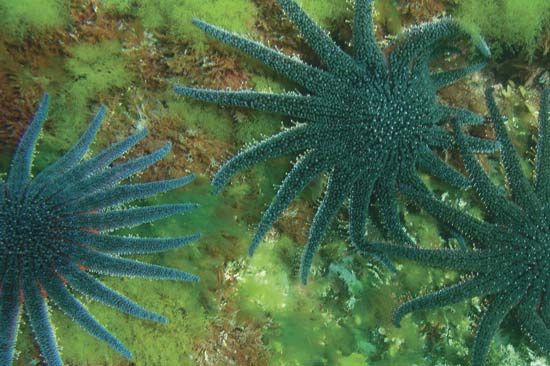
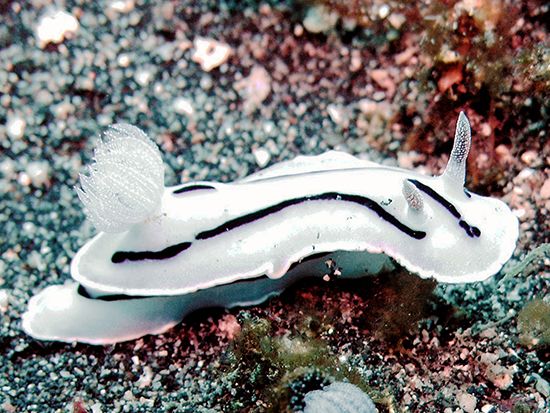
While generally considered sedentary, sea anemones are capable of movement. Most move very slowly by creeping on their pedal disks, though some can travel in a slow, somersaulting fashion. In response to unfavorable conditions or threats from predators like starfish and nudibranchs, they may detach entirely to relocate. A few species are even capable of swimming by flexing their columns or paddling their tentacles.123
What are some of the most unique or colorful species of sea anemones?
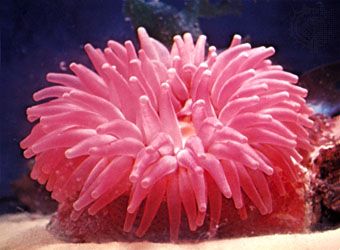
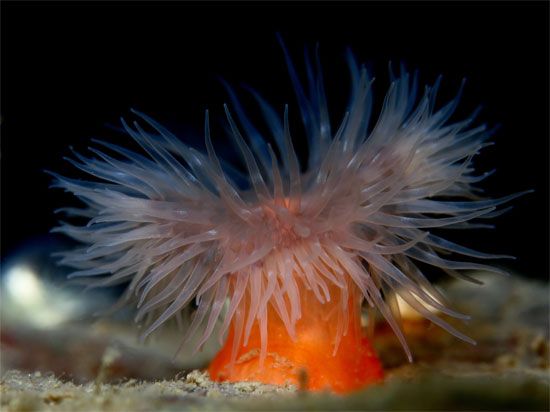
Sea anemones are renowned for their flower-like appearance and vibrant colors, which are typically most vivid in warmer, tropical seas. While there are nearly 1,000 species, they are commonly found in shades of yellow, green, or blue.41
Some notable and unique groups include:
- Tealia: These are particularly recognized for their striking, colorful displays and are commonly found in temperate regions.1
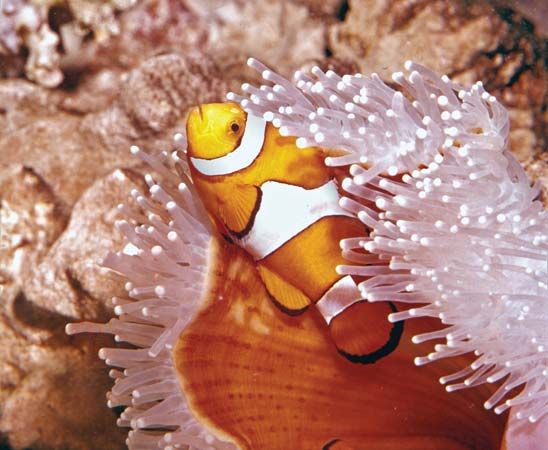
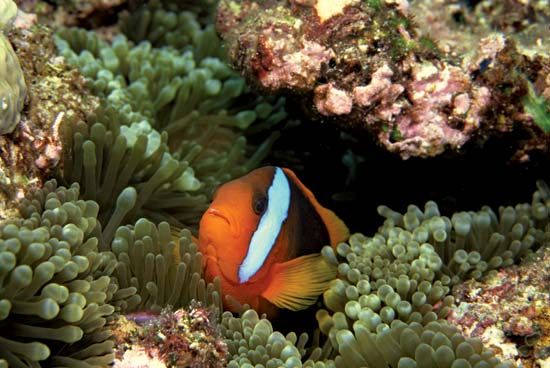
- Stichodactyla: This genus contains the largest sea anemones, which can reach up to 1.5 meters (about 5 feet) in diameter. They are well-known for their mutualistic relationships with anemone fish (genus Amphiprion), which live safely among their stinging tentacles.15
- Calliactis: These anemones are unique for their symbiotic lifestyle, often attaching themselves to the shells occupied by hermit crabs.1
- Minyas: Unlike most sedentary anemones, members of this genus are unique for their habit of floating near the ocean surface with their mouths hanging downward.1
- Burrowing Species: Genera such as Edwardsia, Halcampa, and Peachia lack a pedal disk and instead burrow deep into sand or mud, exposing only their colorful oral disks and tentacles to the water.1
How do sea anemones reproduce and what are their life cycle stages?
Sea anemones reproduce through both sexual and asexual methods, employing diverse strategies to ensure the survival and dispersal of their species.19
Sexual Reproduction
In most species, the sexes are separate (dioecious), though some are hermaphroditic.19
- External Fertilization: Typically, sperm and eggs are discharged into the water column, where fertilization occurs externally.110
- Internal Fertilization: In some species, such as Halcampa and Actinia, sperm are drawn into the female’s gastrovascular cavity, where fertilization takes place internally.110
Interestingly, some sea anemones exhibit a form of parental care. The larvae may remain inside the adult until they are ready to metamorphose, at which point they emerge from the parent’s mouth to settle and develop.9
Asexual Reproduction
Sea anemones can also reproduce asexually, allowing them to create genetically identical individuals:9
- Fission: Some species, such as Anemonia, undergo longitudinal fission, where the animal splits lengthwise into two equal individuals.1
- Pedal Laceration: In species like Metridium, the pedal disk breaks into fragments, each of which can grow into a new, independent sea anemone.110
Life Cycle Stages
The life cycle of a sea anemone generally involves a transition from a mobile larval stage to a sedentary adult form:111
- Larval Stage: Following fertilization, the embryo develops into a ciliated, free-swimming larva known as a planula1. This stage is crucial for the dispersal of the species, as the planula can travel on water currents to reach new habitats.121113
- Settlement and Metamorphosis: Once the planula finds a suitable hard surface, it settles and undergoes metamorphosis, transforming into the adult polyp form.19
- Adult Stage: The adult anemone develops its characteristic cylindrical body, oral disk, and tentacles. It remains primarily sedentary, attached to its substrate by a pedal disk, though it retains the ability to move slowly or relocate if threatened.19
What symbiotic relationships do sea anemones form with other marine organisms?
Sea anemones frequently engage in mutualistic symbioses, forming close, beneficial associations with various marine organisms. These relationships typically involve an exchange of protection for cleaning services or mobility.114
Associations with Crustaceans
Sea anemones often live on the shells of hermit crabs. This relationship provides the anemone with transportation, while the anemone protects the crab from predators like octopuses. In some cases, the crab actively transplants the anemone to a new shell when it outgrows its old one, or the anemone may move itself onto the new shell. Other crabs carry anemones on their legs, backs, or within their claws for similar defensive benefits.31
Associations with Fish
One of the most well-known partnerships is between tropical sea anemones and anemone fish, such as the common clown fish.111
- Protection: The fish lives among the anemone’s stinging tentacles, which deter predators. The fish is protected by a specialized mucous coating that inhibits the anemone’s stinging behavior.111
- Benefits to the Anemone: In return, the fish cleans parasites from the anemone and drives away other fish that might feed on the anemone’s tentacles.111
Sources
- sea anemone — Encyclopædia Britannica
- cnidarian - Locomotion — Encyclopædia Britannica
- cnidarian - Associations — Encyclopædia Britannica
- sea anemone — Merriam-Webster
- Marine bioluminescence — Encyclopædia Britannica
- cnidarian — Encyclopædia Britannica
- anemone fish — Encyclopædia Britannica
- Bioluminescence - The range and variety of bioluminescent organisms — Encyclopædia Britannica
- Reproductive behaviour - Coelenterates — Encyclopædia Britannica
- planula — Encyclopædia Britannica
- sea anemone: Top Questions — Encyclopædia Britannica
- Larva — Encyclopædia Britannica
- Animal development - The larval stage — Encyclopædia Britannica
- common clown fish — Encyclopædia Britannica
Published on · 4 min read