Sea Buckthorn
Sea buckthorn (Hippophae rhamnoides) is a willowlike shrub belonging to the family Elaeagnaceae. It typically grows to about 2.5 meters (8 feet) in height…
What is sea buckthorn?
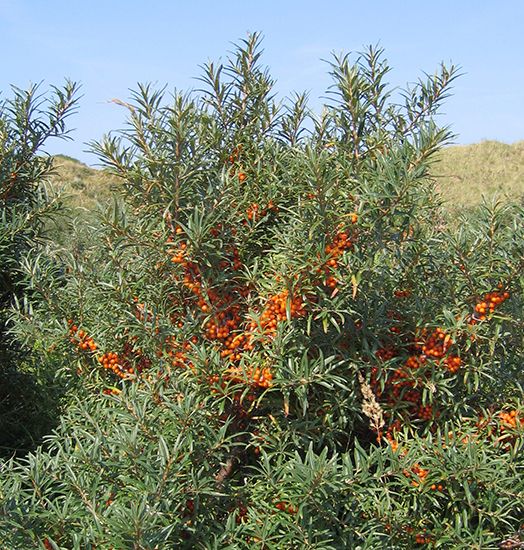
Sea buckthorn (Hippophae rhamnoides) is a willowlike shrub belonging to the family Elaeagnaceae. It typically grows to about 2.5 meters (8 feet) in height and is characterized by narrow leaves that feature a silvery underside.12
The plant produces small, globose, orange-yellow to orange-red fruits that are edible. It is commonly found on sand dunes along the coasts of Great Britain and is widely distributed throughout the mountainous regions of Europe and Asia. Beyond its natural habitat, the shrub is frequently cultivated as an ornamental plant for its attractive foliage and fruit, and it is also known for yielding a yellow dye.12
What specific nutrients are found in sea buckthorn berries?
How is sea buckthorn oil extracted and used?
What environmental conditions help sea buckthorn thrive on sand dunes?
The sea buckthorn (Hippophae rhamnoides) is a hardy, willowlike shrub that thrives in specific environments, including coastal sand dunes. While the provided information notes its prevalence in these sandy habitats along the coasts of Great Britain, it does not detail the specific environmental mechanisms or physiological adaptations that allow it to flourish in such conditions.
Beyond its coastal presence, the plant is also widely distributed across the mountainous regions of Europe and Asia, demonstrating a significant tolerance for diverse climates and terrains.
Sources
- sea buckthorn — Encyclopædia Britannica
- sea buckthorn — Merriam-Webster
Published on · 1 min read