Oleaster
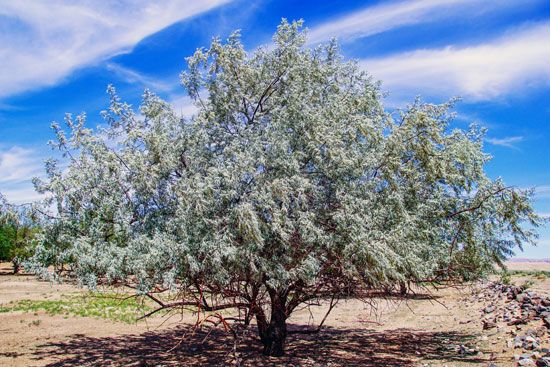
The oleaster (Elaeagnus angustifolia), also commonly known as the Russian olive, is a small, deciduous tree native to Eurasia. Typically reaching heights of…
What is oleaster?
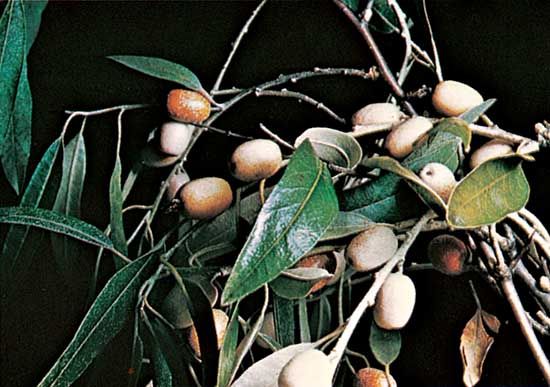
The oleaster (Elaeagnus angustifolia), also commonly known as the Russian olive, is a small, deciduous tree native to Eurasia. Typically reaching heights of 4.5 to 6 meters (15 to 20 feet), it is characterized by smooth, dark brown branches that often feature spines and narrow leaves with a distinctive silvery underside caused by tiny scales.123
The tree produces small, fragrant, greenish flowers and edible, olive-shaped fruits that are yellowish and have a sweet but mealy texture. Because the species is hardy, wind-resistant, and tolerant of poor or dry soil conditions, it is frequently utilized for windbreak hedges and as an ornamental plant.12
The oleaster is a member of the Elaeagnaceae family, a group of flowering plants known for their silvery or rusty-colored scales and their ability to thrive in various environments.34
What are nitrogen-fixing bacteria and how do they help plants?
Nitrogen-fixing bacteria are microorganisms that transform atmospheric nitrogen—a gas that makes up 78 percent of the atmosphere but is unusable by most organisms—into fixed nitrogen, such as ammonia, which plants can utilize for growth and development. Because nitrogen is a vital component of proteins and nucleic acids, these bacteria are essential to life on Earth and perform over 90 percent of all biological nitrogen fixation.567
These bacteria generally fall into two categories:
- Free-living (nonsymbiotic) bacteria: These organisms, such as Azotobacter and certain cyanobacteria, fix nitrogen independently in the environment.5
- Mutualistic (symbiotic) bacteria: These bacteria, including Rhizobium and Frankia, form intimate associations with host plants. They invade root hairs and stimulate the formation of root nodules, where they convert nitrogen into ammonia directly for the host plant.5
By providing this essential nutrient, these bacteria support plant health and are often used in crop rotation or as green manures to naturally enrich soil for other crops.7
What are some other plants in the Elaeagnaceae family?
The Elaeagnaceae family, also known as the oleaster family, consists of approximately 45–60 species categorized into three primary genera: Elaeagnus, Hippophae, and Shepherdia.2
Beyond the oleaster, notable plants in this family include:
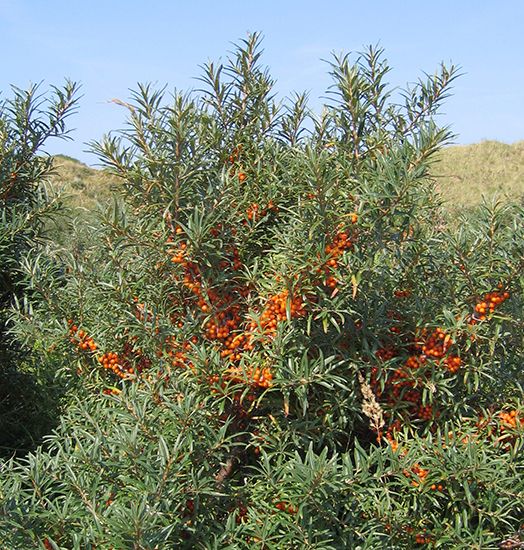
- Sea buckthorn (Hippophae rhamnoides): A willowlike shrub common in coastal and mountainous regions of Europe and Asia. It is widely cultivated for its attractive foliage and edible, orange-yellow fruits.29
- Buffalo berry (Shepherdia argentea): A hardy shrub native to the North American Great Plains. It is valued as an ornamental hedge plant and produces tart, edible berries used in jellies and relishes.210
- Canadian buffalo berry (Shepherdia canadensis): A smaller relative found across North America, from Newfoundland to Alaska and the Rocky Mountains. Its fruits are edible but generally considered less flavorful than those of the silver buffalo berry.10
- Roundleaf buffalo berry (S. rotundifolia): A species endemic to the Colorado Plateau in the southwestern United States.10
Why are some plants considered invasive in certain regions?
Plants are considered invasive when they are nonnative species that significantly disrupt or modify the ecosystems they colonize. While many introduced species fail to survive in new environments, some become invasive because they possess a competitive advantage over indigenous species, particularly when the new habitat lacks natural predators or pathogens to keep their populations in check.12
Invasive plants often thrive by:
- Outcompeting native species: They may prevent native plants from obtaining essential resources like food, water, sunlight, or living space. For example, the common buckthorn creates dense vegetation that blocks sunlight, displacing native flora.1213
- Allelopathy: Some species, such as Japanese knotweed, release chemicals into the soil that actively inhibit the survival of surrounding plants.14
- Rapid proliferation: Many invasive plants spread quickly through aggressive growth, effective seed dispersal, or vegetative propagation via rhizomes, making them difficult to eradicate.1514
- Altering habitats: Invasive plants can change the physical environment, such as cheatgrass, which increases fire frequency and intensity, ultimately destroying native vegetation.16
Sources
- oleaster — Encyclopædia Britannica
- Elaeagnaceae — Encyclopædia Britannica
- Russian olive — Merriam-Webster
- oleaster — Merriam-Webster
- Nitrogen-fixing bacteria — Encyclopædia Britannica
- Nitrogen cycle — Encyclopædia Britannica
- Plant - Essential elements and minerals — Encyclopædia Britannica
- Nitrogen-fixing bacteria: Top Questions — Encyclopædia Britannica
- sea buckthorn — Encyclopædia Britannica
- Elaeagnaceae — Merriam-Webster
- buffalo berry — Encyclopædia Britannica
- invasive species — Encyclopædia Britannica
- conservation - Removing invasive species — Encyclopædia Britannica
- Plant - Dispersal and colonization — Encyclopædia Britannica
- habitat loss — Encyclopædia Britannica
- Japanese knotweed — Encyclopædia Britannica
Published on · 3 min read