Shrew Rat
Shrew rats are a group of 24 species of carnivorous, ground-dwelling rodents found in the Philippines, New Guinea, and Sulawesi. They are distinct from the…
What are some notable species of shrew rats and their unique features?
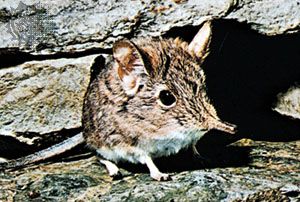
Shrew rats are a group of 24 species of carnivorous, ground-dwelling rodents found in the Philippines, New Guinea, and Sulawesi. They are distinct from the African elephant shrew, which belongs to a completely different mammalian order, Macroscelidea.12
Notable species and their unique features include:
- Sulawesi spiny rat (Echiothrix leucura): The largest of the shrew rats, measuring up to 23 cm in body length. Unlike the soft or woolly fur of most other species, it possesses a striking, prickly coat.1
- Philippine striped rats (genus Chrotomys) and the blazed Luzon shrew rat (Celaenomys silaceus): These species are characterized by a distinct stripe running down their backs.1
- Groove-toothed shrew mouse (Microhydromys richardsoni): A very small species from New Guinea, weighing only 9 to 12 grams.1
- Greater and lesser Sulawesian shrew rats (Tateomys and Melasmothrix naso): These species demonstrate niche partitioning; the greater shrew rats forage for earthworms at night, while the lesser shrew rat exploits the same resource during the day.1
What are the main characteristics that distinguish shrew rats from other rodents?
Shrew rats are a specialized group of 24 species within the family Muridae (the same family as common rats and mice) that have evolved to fill ecological niches similar to those of true shrews. While they are biologically classified as rodents, they are distinguished from other members of their order by several unique physical and behavioral adaptations:
- Carnivorous Diet: Unlike most rodents, which are primarily herbivorous or omnivorous, shrew rats are carnivorous. They forage through wet leaf litter and moss to feed on earthworms, insects, and other invertebrates.1
- Specialized Morphology: They possess features suited for their ground-dwelling, insectivorous lifestyle, including small eyes, long whiskers, and wide front feet. Many species have long, narrow muzzles designed for probing soil, while some possess long front claws to dig into the ground cover.1
- Habitat Specialization: They are found exclusively on the tropical islands of Sulawesi, the Philippines, and New Guinea. A majority of these species live at high elevations in cool, wet mossy forests.1
- Ecological Niche Partitioning: In areas where they coexist with other insectivores, they have developed distinct behaviors, such as temporal niche partitioning, where different species forage for the same food sources at different times of the day or night.1
How are shrew rats classified within the order Rodentia?
Shrew rats are classified within the order Rodentia, which encompasses all rodents. More specifically, they belong to the family Muridae, the same family that includes common rats and mice. Within this family, they are placed in the subfamily Murinae, which consists of Old World rats and mice.1
What is the diet of shrew rats and how does it differ from other rodents?
Shrew rats are a specialized group of 24 species of rodents that have evolved a carnivorous diet, setting them apart from the majority of their order. While most rodents are primarily herbivorous or omnivorous—consuming plant parts, seeds, and occasionally small amounts of invertebrates—shrew rats are specialized predators.14
Their diet consists primarily of earthworms, insects, and other invertebrates, which they locate by poking their narrow muzzles through wet leaf litter and moss on the forest floor. Some species have evolved long front claws that allow them to dig deeper into the soil to access these food sources.1
This dietary specialization is a key adaptation to their environment. In regions like New Guinea, where true shrews are absent, shrew rats serve as their ecological counterparts, filling the niche of an insectivorous predator. Even in areas where they coexist with shrews, such as Sulawesi and the Philippines, they often partition resources; for example, some shrew rats focus on earthworms while shrews consume insects. Furthermore, some species exhibit temporal niche partitioning, where different shrew rat species forage for the same resources at different times of the day or night.1
Sources
- shrew rat — Encyclopædia Britannica
- elephant shrew — Encyclopædia Britannica
- insectivore — Encyclopædia Britannica
- mouse — Encyclopædia Britannica
- rodent - Form and function — Encyclopædia Britannica
Published on · 3 min read