Side-necked Turtle
Side-necked turtles, belonging to the suborder Pleurodira, are an ancient lineage of turtles defined by their unique defensive posture: they fold their necks…
What is the evolutionary history of side-necked turtles?
Side-necked turtles, belonging to the suborder Pleurodira, are an ancient lineage of turtles defined by their unique defensive posture: they fold their necks horizontally to tuck their heads beneath the shell’s margin rather than retracting them vertically.12
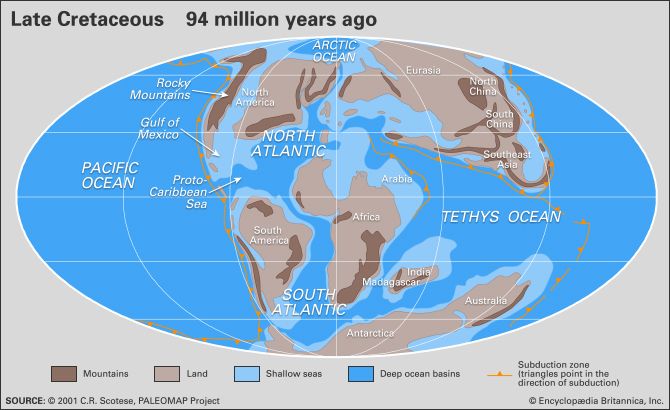
While some Triassic fossils like Proterocheris exhibit characteristics suggestive of pleurodires, the earliest undisputed members of the group do not appear in the fossil record until the Early Cretaceous (approximately 145 to 100.5 million years ago). The first modern families of side-necked turtles emerged later, during the Late Cretaceous.3
Evolutionarily, pleurodires are distinguished from the suborder Cryptodira by fundamental differences in skull architecture and lower jaw musculature3. This distinct cranial structure likely facilitated the development of the “gape-and-suck” feeding mechanism observed in many species, such as the matamata. Throughout their history, these turtles have occupied diverse environments, including marine and estuarine habitats during the Paleogene and Neogene periods, before becoming restricted to their current range in the Southern Hemisphere.21
How do side-necked turtles differ from other turtle species in terms of their neck retraction?
The primary distinction between the two modern suborders of turtles lies in how they retract their necks for protection.14
- Side-necked turtles (Suborder Pleurodira): As their name suggests, these turtles fold their necks horizontally to tuck their heads to the side, beneath the margins of the shell.34
- Vertical-necked turtles (Suborder Cryptodira): Often called “S-necked” turtles, these species retract their necks vertically, allowing them to pull their heads directly into the shell.14
While all turtles possess eight cervical vertebrae regardless of their neck length, these two groups are fundamentally separated by this difference in neck movement, as well as distinct variations in their skull architecture and lower jaw musculature.4
What are the primary habitats and dietary habits of side-necked turtles?
Side-necked turtles, belonging to the suborder Pleurodira, are exclusively aquatic or semiaquatic animals found today in the Southern Hemisphere, including regions of Africa, Madagascar, Australia, South America, and various islands in the Indian Ocean. While they historically occupied marine and estuarine environments during the Paleogene and Neogene periods, modern species are primarily found in freshwater habitats. Some, such as the snake-necked turtle, are strongly aquatic and prefer walking along the bottoms of streams rather than swimming.13
Regarding their diet, side-necked turtles are predominantly omnivores, though both herbivory and carnivory are observed across their more than 70 species. Many carnivorous pleurodires utilize a specialized “gape-and-suck” feeding mechanism. By rapidly enlarging their mouth and throat cavity, they create a vacuum that sucks water and prey—such as fish—directly into their mouths. They lack teeth, instead using sharp keratinous sheaths to cut vegetation or flesh and to crush mollusks.153
Are there any conservation concerns for side-necked turtle species, and if so, what are they?
While the provided search results focus primarily on North American and Asian turtle species, it is a well-established fact that side-necked turtles (suborder Pleurodira) face significant conservation challenges. Many species within this group are threatened by the same anthropogenic pressures that impact turtles globally.
Primary Conservation Concerns
- Habitat Loss and Degradation: As aquatic and semiaquatic animals, side-necked turtles are highly susceptible to the destruction of wetlands, river systems, and riparian zones. Pollution, dam construction, and land development frequently fragment their essential habitats.6
- Overexploitation: Many species are harvested for local consumption as food or for use in traditional medicine. Because these turtles often have slow reproductive rates and late sexual maturity, they are particularly vulnerable to population declines caused by over-harvesting.6
- Illegal Wildlife Trade: The demand for exotic pets and specialized markets poses a severe threat to various pleurodire species, often leading to the removal of individuals from the wild at unsustainable rates.
Ethical stewardship requires that we prioritize the protection of these unique reptiles by preserving their natural environments and strictly regulating trade to prevent further biodiversity loss.
Sources
- side-necked turtle — Encyclopædia Britannica
- turtle - Origin and evolution — Encyclopædia Britannica
- turtle - Form and function — Encyclopædia Britannica
- turtle - Classification — Encyclopædia Britannica
- snake-necked turtle — Encyclopædia Britannica
- turtle - Habitats — Encyclopædia Britannica
Published on · 3 min read