Social Insect
In a social insect colony, individuals are organized into specialized groups known as castes, which are defined by their specific functions, behaviors, and…
What roles exist within a typical social insect colony, and how are they determined?
In a social insect colony, individuals are organized into specialized groups known as castes, which are defined by their specific functions, behaviors, and anatomical structures.12
Typical Castes
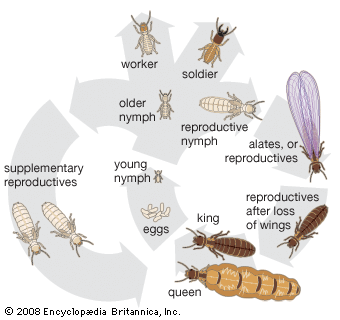
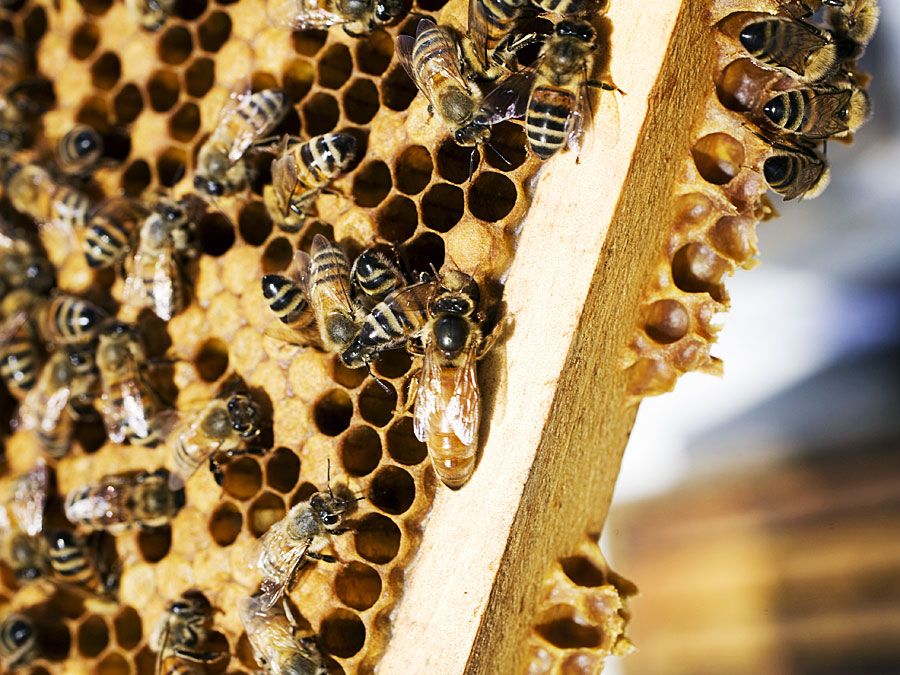
- Reproductives: The queen is the primary reproductive female responsible for laying eggs and maintaining the colony’s population. In some species, such as termites, there may also be secondary or supplementary reproductives. Male drones exist in some species, such as honeybees, primarily for mating.1234
- Workers: These are typically sterile individuals that perform essential maintenance tasks, including caring for the queen and larvae, foraging for food, and constructing or repairing the nest.12
- Soldiers: These sterile individuals are specialized for the defense of the colony against predators. Some species exhibit further subcastes, such as minor and major workers or even “supersoldiers,” which allow for more efficient resource utilization and defense.12
Determination of Roles
Caste differentiation is primarily driven by environmental and developmental factors rather than genetics alone. Key mechanisms include:13
- Diet: In many species, the quality and quantity of food provided to larvae—such as royal jelly for honeybees—determine their developmental path.14
- Chemical Signaling: Pheromones secreted by existing castes can inhibit the development of others, ensuring the colony maintains a balanced ratio of workers, soldiers, and reproductives.3
- Hormonal Regulation: Internal hormonal changes, often triggered by environmental cues or the absence of specific pheromones, guide the transformation of nymphs or larvae into specific castes.13
Which types of insects are considered social insects, and why?
Social insects are defined by three primary characteristics: group integration, a division of labour, and the overlap of generations within a colony. These insects, which include all termites, all ants, and various bees and wasps (order Hymenoptera), are considered “truly social” or eusocial species.46
The reason these insects are classified as social is that they function as a single, cohesive unit—often described as a “gigantic family”—where the vast majority of individuals cooperate to support a small number of reproductive members, typically a queen typically a queen. This structure allows for extreme task specialization, such as workers foraging for food, caring for larvae, and maintaining the nest, while soldiers defend the colony.647
By forgoing their own reproduction to aid the queen, workers gain inclusive fitness benefits, ensuring the survival of the colony despite the constraints on independent breeding, such as limited food or nesting sites. Other insects, including some thrips, aphids, and possibly certain beetles, also exhibit this eusocial behavior.76
How do social insects communicate and coordinate their activities within a colony?
Social insects coordinate their complex activities through a sophisticated combination of chemical, tactile, and vibratory signals. Because many of these insects live in dark environments, they rely heavily on non-visual communication to maintain colony structure and respond to environmental changes.910
Chemical Communication
Pheromones are the primary tools for social regulation. Ants, for instance, use various glands to produce chemical signals that mark foraging trails, recruit nestmates for defense, and distinguish colony members from intruders. In honeybees, the queen secretes “queen substance” to suppress the reproductive development of workers and prevent the rearing of new queens, effectively maintaining the colony’s social hierarchy.1011
Tactile and Vibratory Signals
Physical contact and substrate vibrations are essential for information exchange within the nest:
- Vibrations: Termites communicate alarm by tapping their heads against the ground or jerking their bodies, creating vibrations that are sensed by others through their legs.9
- Tactile Cues: Honeybees perform the famous waggle dance, a figure-eight movement that informs nestmates of the direction and distance of food sources. Attending workers monitor the dancer using their antennae to interpret these signals in the dark hive.1210
- Trophallaxis: This exchange of food between adults and larvae or among adults serves as a vital channel for both nutrition and the transfer of chemical information throughout the colony.1314
What are the main characteristics that define social insects?
Social insects are defined by three primary characteristics that distinguish them as “truly social” or eusocial species:
- Group Integration: Members of the colony function as a single, cohesive unit, often described as a “gigantic family” where individuals are offspring of one or a few reproductive members.415
- Division of Labour: The colony is organized into specialized castes, such as reproductives (e.g., the queen) and steriles (workers and soldiers). Each caste performs specific functions, such as foraging, nest maintenance, brood care, or colony defense.46
- Overlap of Generations: Colonies consist of multiple generations living together, where offspring often remain to assist in the care of younger siblings rather than dispersing to reproduce independently.46
These insects, which include all termites, all ants, and various bees and wasps, often forgo their own reproduction due to environmental constraints. By aiding the queen, workers gain inclusive fitness benefits, ensuring the survival of their shared genetic lineage.1667
Sources
- Caste — Encyclopædia Britannica
- How long do queen bees live? — Encyclopædia Britannica
- western honeybee - Colony and life cycle — Encyclopædia Britannica
- social insect — Encyclopædia Britannica
- termite - Colony organization — Encyclopædia Britannica
- Eusocial species — Encyclopædia Britannica
- insect - Insect societies — Encyclopædia Britannica
- Animal social behavior - The range of social behavior in animals — Encyclopædia Britannica
- waggle dance — Merriam-Webster
- termite - Communication — Encyclopædia Britannica
- Chemoreception - Primer pheromones — Encyclopædia Britannica
- Hymenoptera - Social forms — Encyclopædia Britannica
- Animal communication - Signal production — Encyclopædia Britannica
- trophallaxis — Merriam-Webster
- Animal social behavior - Social interactions involving cooperative breeding and eusociality — Encyclopædia Britannica
- Reproductive behaviour - Group care — Encyclopædia Britannica
Published on · 4 min read