Solo Man
Solo man (also known as Ngandong man) refers to a group of prehistoric humans identified from fossil remains discovered between 1931 and 1932. These fossils…
What is Solo Man and where were its fossils discovered?
Solo man (also known as Ngandong man) refers to a group of prehistoric humans identified from fossil remains discovered between 1931 and 1932. These fossils, which include 11 skulls and two leg-bone fragments, were recovered from the terraces of the Solo River near Ngandong on the island of Java, Indonesia.12
The fossils exhibit a cranial capacity of 1,150–1,300 cubic centimeters, which overlaps with that of modern humans. Physically, the skulls are characterized by thick bones, heavy browridges, and a flattened profile, while the limb bones appear indistinguishable from those of modern humans. The broken state of the skull bases has led researchers to suggest that these individuals may have been victims of ritualistic practices involving trophy-taking or cannibalism.1
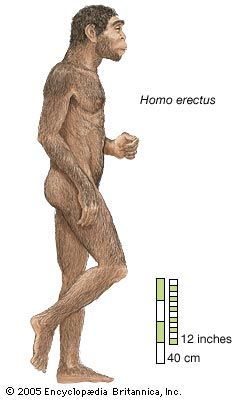
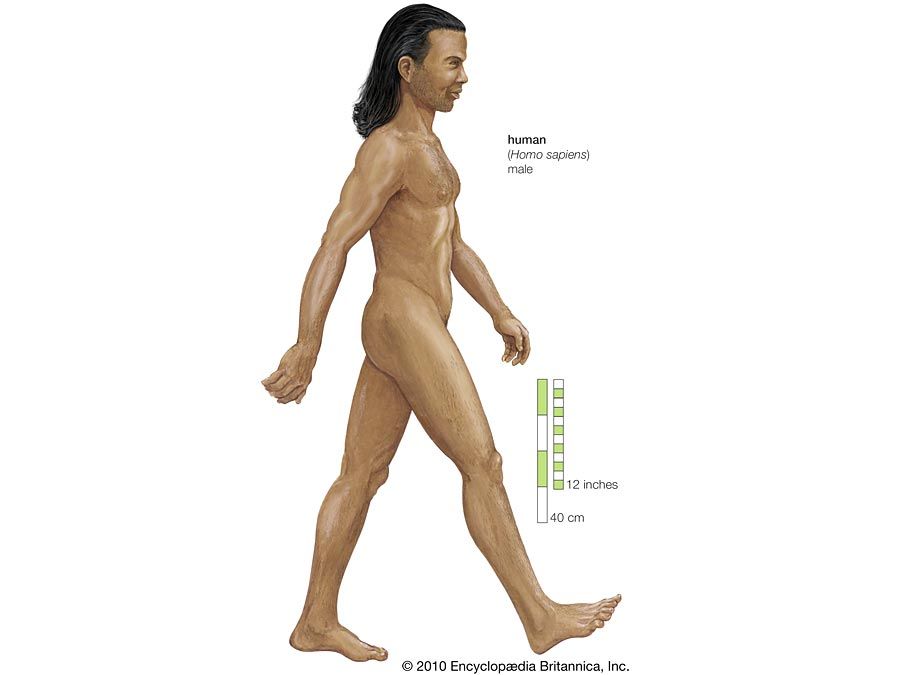
The classification of Solo man remains a subject of scientific debate. Some scholars categorize the remains as a late example of Homo erectus (H.e. soloensis), while others view them as a regional variant of early Homo sapiens.1
What tools or artifacts, if any, have been found associated with Solo Man?
The fossil remains of Solo man, discovered at Ngandong on the island of Java, are primarily known for the 11 skulls and two leg-bone fragments recovered from the site. While the fossils themselves provide significant information about the physical characteristics and potential behaviors of these individuals, there is no specific industry or set of tools definitively identified as being created by Solo man in the provided records.1
However, archaeological research in the region has identified the Ngandongian complex, which consists of artifacts made on small to medium-sized flakes and flake blades, as well as implements fashioned from antler and bone. This complex has been reported from sites of Upper Pleistocene age in central Java, as well as from the Celebes and the Philippines.3
What are the implications of Solo Man’s discovery for understanding human diversity in prehistory?
The discovery of Solo man has significantly complicated our understanding of human evolution and diversity in the Late Pleistocene. Because these fossils exhibit a mix of primitive traits—such as thick bones and heavy browridges—alongside a cranial capacity that overlaps with modern humans, they challenge simple linear models of human development.1
The implications for understanding human diversity include:
- Taxonomic Debate: The fossils highlight the difficulty in classifying transitional hominins. Some researchers classify Solo man as a late-surviving, specialized form of Homo erectus (H.e. soloensis), while others argue they represent a regional variant of early Homo sapiens, placing them in a group that includes Neanderthals and other archaic populations.16
- Regional Variation: Solo man serves as evidence that human evolution was not a uniform process. Their existence suggests that distinct, localized populations persisted in Asia long after other forms of H. erectus had disappeared elsewhere, indicating a complex mosaic of human diversity during the Pleistocene.76
- Behavioral Complexity: The evidence of broken skull bases suggests sophisticated, potentially ritualistic behaviors, further blurring the lines between archaic and modern human cognitive capabilities.1
Are there any indications of the diet or lifestyle of Solo Man based on fossil evidence?
Evidence regarding the diet and lifestyle of Solo man is limited, as the primary findings consist of 11 fossilized skulls and two leg-bone fragments discovered along the Solo River in Java.1
The most significant indication of their lifestyle comes from the physical condition of the recovered skulls. Researchers have observed that the skull bases were broken, which has led to the hypothesis that these individuals may have engaged in practices where heads were taken as trophies and the brains were consumed. Beyond this, there is no direct archaeological evidence in the provided records to definitively reconstruct their broader diet or daily habits.1
While their cranial capacity (1,150–1,300 cubic centimeters) overlaps with that of modern humans, their physical features—such as thick bones and heavy browridges—suggest a morphology distinct from modern populations. Because the age of these remains remains uncertain, ranging potentially from the Late Pleistocene to the last glaciation, their specific cultural or dietary adaptations remain a subject of ongoing scientific debate.1
Sources
- Solo man — Encyclopædia Britannica
- Ngandong man — Merriam-Webster
- human evolution - Refinements in tool design — Encyclopædia Britannica
- Homo — Encyclopædia Britannica
- Stone Age - East and Southeast Asia — Encyclopædia Britannica
- Homo erectus - Other Asian fossils — Encyclopædia Britannica
- Homo erectus - Dating the fossils — Encyclopædia Britannica
- Java man — Encyclopædia Britannica
- Solo man — Merriam-Webster
Published on · 3 min read