Stonefly
Stoneflies (order Plecoptera) serve as vital biotic indicators of water quality alongside mayflies and caddisflies. As macroinvertebrates, they are…
How are stoneflies used as bioindicators of water quality?
Stoneflies (order Plecoptera) serve as vital biotic indicators of water quality alongside mayflies and caddisflies. As macroinvertebrates, they are particularly useful for assessing the health of streams and waterways because they are nonmigratory, spending their entire lives in a localized area.12
Their utility as bioindicators stems from their sensitivity to environmental changes. Because macroinvertebrates vary in their tolerance to pollution, the presence of specific, pollution-sensitive families—such as stoneflies—typically signals high water quality and a pristine environment. Conversely, the absence of these sensitive species in habitats where they would otherwise be expected can indicate degraded water conditions. Because they can be sampled and identified using simple equipment, they are a convenient and standard tool for environmental monitoring before infrastructure projects, such as dredging or the construction of sewage treatment plants.2
What is the importance of stoneflies in fly fishing, and why are they popular among anglers?
Stoneflies are highly significant in the world of fly fishing because their aquatic young, often referred to as naiads, serve as a primary food source for trout.1
Anglers value stoneflies because these insects are a staple of the trout’s diet. Because the stonefly nymph spends a significant portion of its life—ranging from one to four years—underwater, they are consistently available to fish throughout the year. Their popularity among fly fishers is driven by the need to “match the hatch”; anglers create and use artificial flies and nymphs that closely imitate the appearance and behavior of these aquatic insects to successfully attract trout.31
What are the key characteristics of stoneflies that distinguish them from other insects?
Stoneflies (order Plecoptera) are distinguished by several key physical and developmental characteristics:
Adult Characteristics
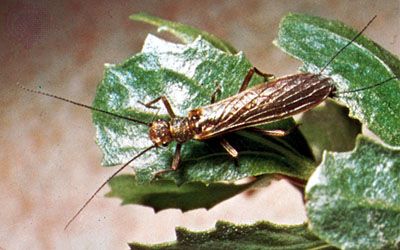
- Morphology: Adults possess long antennae, weak chewing mouthparts, and two pairs of membranous wings. They range in size from 6 to over 60 mm (0.25 to 2.5 inches) and are typically colored in shades of gray, black, or brown to blend into their environment.1
- Flight: Despite having well-developed wings, stoneflies are considered poor fliers.1
- Wing Structure: The hindwings are generally larger and shorter than the forewings and fold like a fan when the insect is at rest.1
Developmental Traits
- Life Cycle: Stoneflies undergo incomplete, or hemimetabolic, metamorphosis. Their immature stage, often called a nymph or naiad, is aquatic and can last from one to four years.13
- Nymphal Features: Unlike the adult, the nymph lacks wings and may possess external gills on various parts of its body to facilitate an aquatic existence.13
- Reproduction: Females may produce up to 6,000 eggs, which are deposited in masses directly into streams.1
What is the life cycle of a stonefly, and how does it differ from other aquatic insects?
The life cycle of a stonefly follows a pattern of incomplete, or hemimetabolous, metamorphosis, consisting of three stages: egg, nymph, and adult.16
Life Cycle Stages
- Egg: Females deposit up to 6,000 eggs in masses directly into streams.1
- Nymph: Often called a naiad, this aquatic stage lasts from one to four years. Nymphs resemble adults but lack wings and may possess external gills for underwater respiration. They feed on plants, decaying organic matter, and other insects.13
- Adult: Upon maturity, the nymph crawls out of the water or floats to the surface to undergo its final molt, emerging as a winged adult. Adults typically live for several weeks.13
Comparison to Other Insects
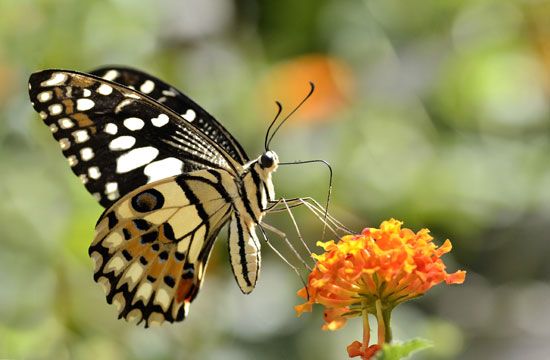
Stoneflies differ from holometabolous insects (such as butterflies or beetles), which undergo complete metamorphosis. Those insects include a pupa stage where the larva undergoes a dramatic transformation into a form that looks nothing like its immature self. In contrast, stonefly nymphs gradually develop into adults through successive molts, with wings developing externally.63
Sources
- stonefly — Encyclopædia Britannica
- macroinvertebrate — Encyclopædia Britannica
- nymph — Encyclopædia Britannica
- Diptera - General features — Encyclopædia Britannica
- caddisfly — Encyclopædia Britannica
- Metamorphosis — Encyclopædia Britannica
Published on · 3 min read