Strait of Georgia
The indigenous peoples who have historically lived along the shores of the Strait of Georgia are the Coast Salish.
What indigenous peoples have historically lived along the shores of the Strait of Georgia?
The indigenous peoples who have historically lived along the shores of the Strait of Georgia are the Coast Salish.
The Coast Salish are a group of Salish-speaking peoples whose traditional territory encompasses the Strait of Georgia, Puget Sound, southern Vancouver Island, and much of the Olympic Peninsula and western Washington state. They are distinct from the “Interior Salish” tribes, who resided further inland in the river basins of the Columbia and Fraser rivers.12
Historically, the Coast Salish lived in permanent winter villages composed of large wooden houses, which were occupied by extended families. Their culture was deeply connected to the marine environment, relying primarily on fishing for sustenance. They are also well-known for the potlatch, a significant ceremonial event involving the distribution of gifts to maintain social prestige and community bonds.1
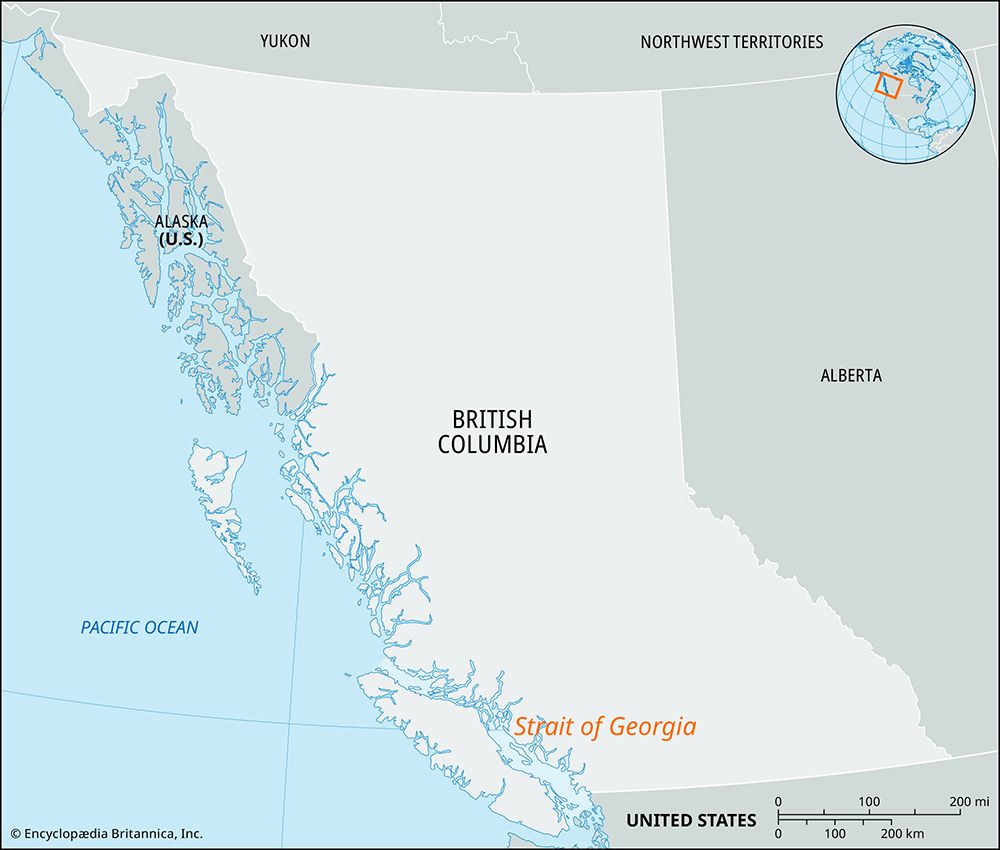
What are the geographical features and dimensions of the Strait of Georgia?
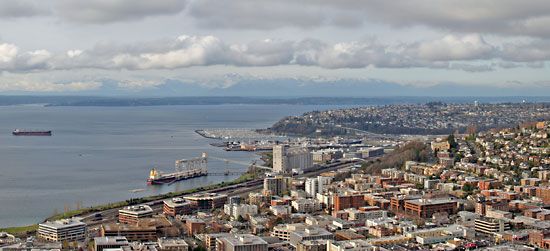
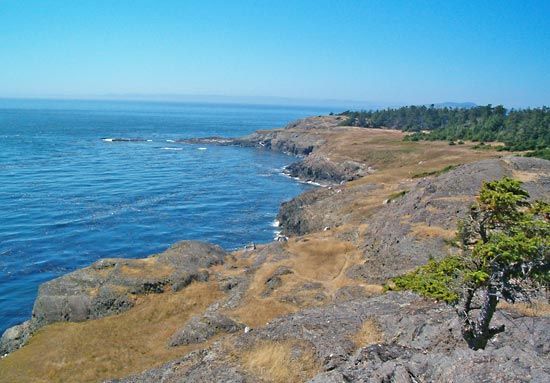
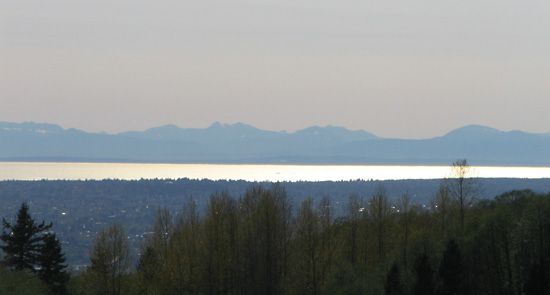
The Strait of Georgia is a narrow passage in the eastern North Pacific located between the central east coast of Vancouver Island and the southwestern mainland of British Columbia, Canada.4
Dimensions and Depth
- Length: It averages 138 miles (222 km).4
- Width: It averages 17 miles (28 km).4
- Depth: The midchannel depth ranges from 900 to 1,200 feet (275–370 m).4
Geographical Features
The strait is bounded to the north by a collection of islands that separate it from the Johnstone and Queen Charlotte straits. Its southern boundary is marked by the San Juan Islands in Washington state. The largest islands located within the strait itself are Texada and Lasqueti.4
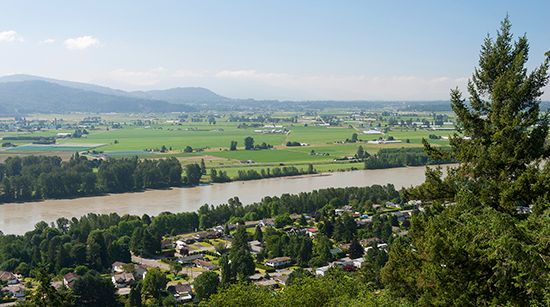
The mainland coast is characterized by numerous inlets, including the mouth of the Fraser River, where the city of Vancouver is situated. The outflow from the Fraser River contributes to a counterclockwise water circulation pattern within the strait. Additionally, the strait serves as a vital segment of the Inside Passage sea route.4
What are some of the major islands found within the Strait of Georgia?
The Strait of Georgia contains several notable islands that define its geography and character:
- Texada and Lasqueti Islands: These are identified as the largest islands located within the strait itself.4
- The Gulf Islands: Situated off the southeastern coast of Vancouver Island, this archipelago is a prominent feature of the region and is protected in part by the Gulf Islands National Park Reserve.6
- San Juan Islands: Located at the southern end of the strait, these islands mark the boundary between the Strait of Georgia and the waters leading toward the Juan de Fuca Strait.47
- Northern Island Cluster: The northern end of the strait is characterized by a dense collection of islands that serve to separate it from the Johnstone and Queen Charlotte straits.4
How does the Strait of Georgia impact the climate and ecosystem of British Columbia?
The Strait of Georgia plays a significant role in the climate and ecosystem of southwestern British Columbia.
Climate Impact
The strait influences local weather patterns by acting as a conduit for moisture-laden winds. For instance, the city of Vancouver receives approximately 47 inches (1,200 mm) of precipitation annually, largely delivered by winds crossing the strait. This contrasts with nearby areas like Victoria, which are sheltered by the Vancouver Island mountains and receive significantly less rainfall.4
Ecosystem and Hydrology
The strait is a critical component of the regional ecosystem, heavily influenced by the Fraser River. The river’s massive outflow into the strait drives a counterclockwise water circulation pattern, which helps distribute nutrients throughout the area.89
This environment is vital for salmon populations; the Fraser River serves as a primary spawning ground, and the strait acts as a crucial transition zone for these fish as they migrate between freshwater tributaries and the Pacific Ocean.9
Sources
- Coast Salish — Encyclopædia Britannica
- Salish — Encyclopædia Britannica
- Haida Gwaii — Encyclopædia Britannica
- Strait of Georgia — Encyclopædia Britannica
- Haro Strait — Encyclopædia Britannica
- Vancouver Island — Encyclopædia Britannica
- Gulf Islands National Park Reserve — Merriam-Webster
- British Columbia - Climate of British Columbia — Encyclopædia Britannica
- Fraser River — Encyclopædia Britannica
Published on · 3 min read