Singapore Strait
The Singapore Strait is a 65-mile (105 km) long channel that serves as a vital deepwater approach to the port of Singapore. Stretching between the Strait of…
What is Singapore Strait?
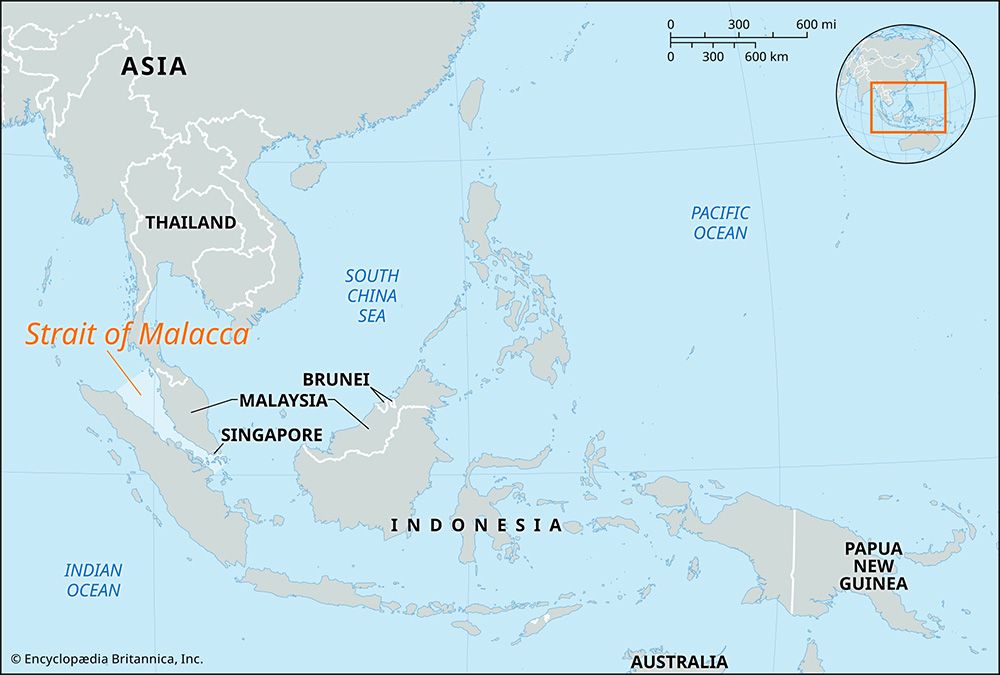
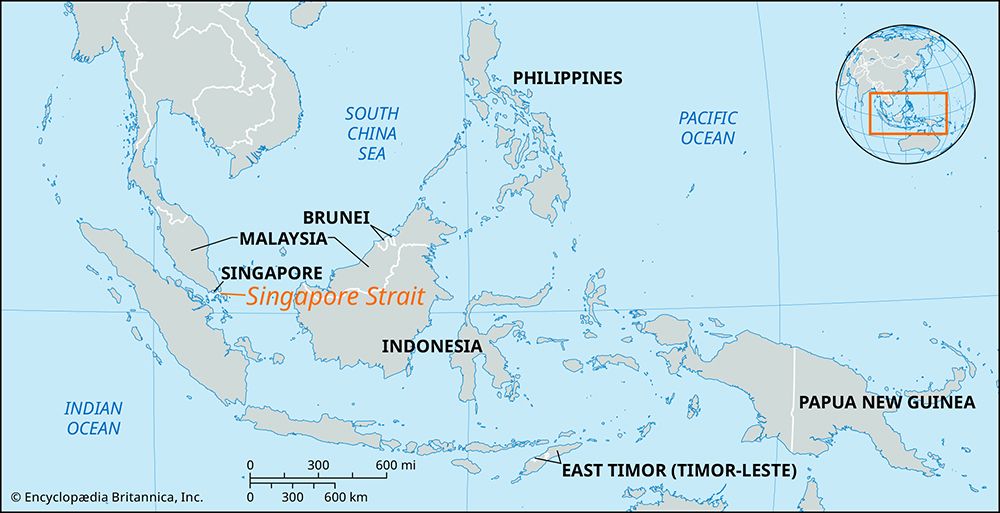
The Singapore Strait is a 65-mile (105 km) long channel that serves as a vital deepwater approach to the port of Singapore. Stretching between the Strait of Malacca to the west and the South China Sea to the east, the strait is approximately 10 miles (16 km) wide.1
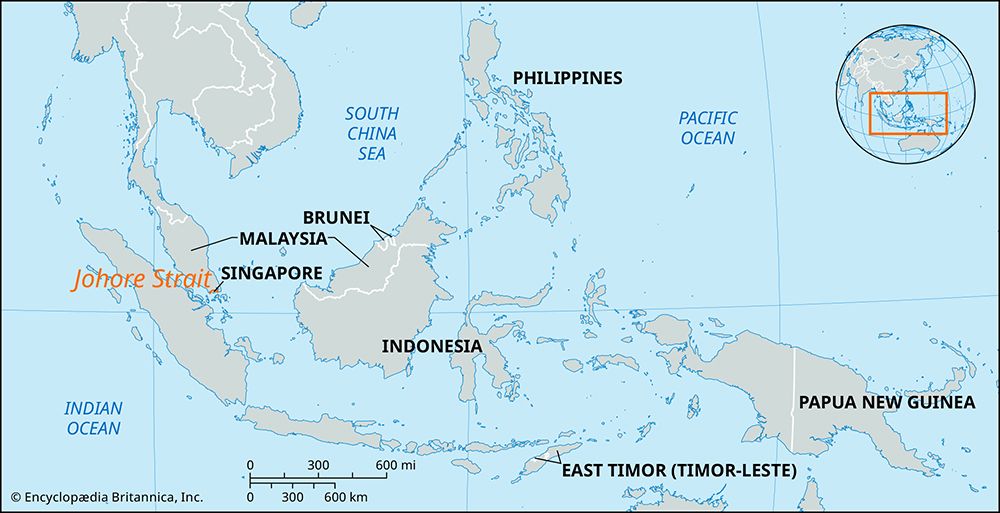
Geographically, it lies between Singapore Island to the north and the Riau Islands of Indonesia to the south. The strait encompasses several features, including Keppel Harbour, various small islands, and the Johore Strait, which acts as its northern arm.12
Due to its strategic location between the Indian Ocean and the South China Sea, the Singapore Strait is recognized as one of the world’s busiest and most important commercial shipping routes.13
What is the historical significance of the Strait of Malacca?
The Strait of Malacca is a waterway of immense historical and economic significance, serving as the shortest sea route between India and China.56
Historical Significance
- Trade and Cultural Exchange: The strait has long been a crossroads of Asian commerce, facilitating the movement of goods such as Indonesian spices, Malayan gold, and Chinese silks. It played a critical role in early Asian migrations through the Malay Archipelago.75
- Spread of Islam: From the 13th to the 17th century, the strait served as a primary conduit for the spread of Sunni Islam, carried by merchants from the Middle East and India.7
- The Sultanate of Malacca: Established around 1400, the port of Malacca became the region’s principal trading entrepôt and a center for the propagation of Islam. Its strategic importance led to successive control by the Portuguese, the Dutch, and the British.758
- Colonial Era: The British consolidated control over the region by governing the Straits Settlements—Penang, Malacca, and Singapore—which became central to their economic and political influence in the peninsula.1
Modern Importance
Today, the strait remains one of the world’s most heavily traveled shipping channels, accounting for approximately 30 percent of global trade. It is a vital passage for giant oil tankers moving between the Middle East and East Asia5.56
How does the Port of Singapore impact the global economy?
The Port of Singapore is a cornerstone of the global economy, recognized as one of the world’s busiest ports in terms of shipping tonnage and the largest in Southeast Asia. Its strategic location between the Indian Ocean and the South China Sea allows it to function as a vital commercial hub for international trade.42
The port’s impact is driven by several key factors:
- Transshipment Hub: It serves as a major global transshipment point, facilitating the movement of essential commodities including oil, rubber, lumber, spices, and plywood.2
- Operational Scale: Managed by the Port of Singapore Authority, the facility operates multiple specialized gateways, such as the Keppel and Jurong ports, which handle a vast array of vessels ranging from oceangoing liners to container ships.42
- Economic Integration: Beyond shipping, the port supports a robust ecosystem of banking, insurance, and brokerage firms, cementing Singapore’s status as a premier financial center.2
- Historical Foundation: Its growth was historically accelerated by the opening of the Suez Canal and the global demand for raw materials like tin and rubber.210
What are the primary goods traded through Southeast Asian shipping lanes?
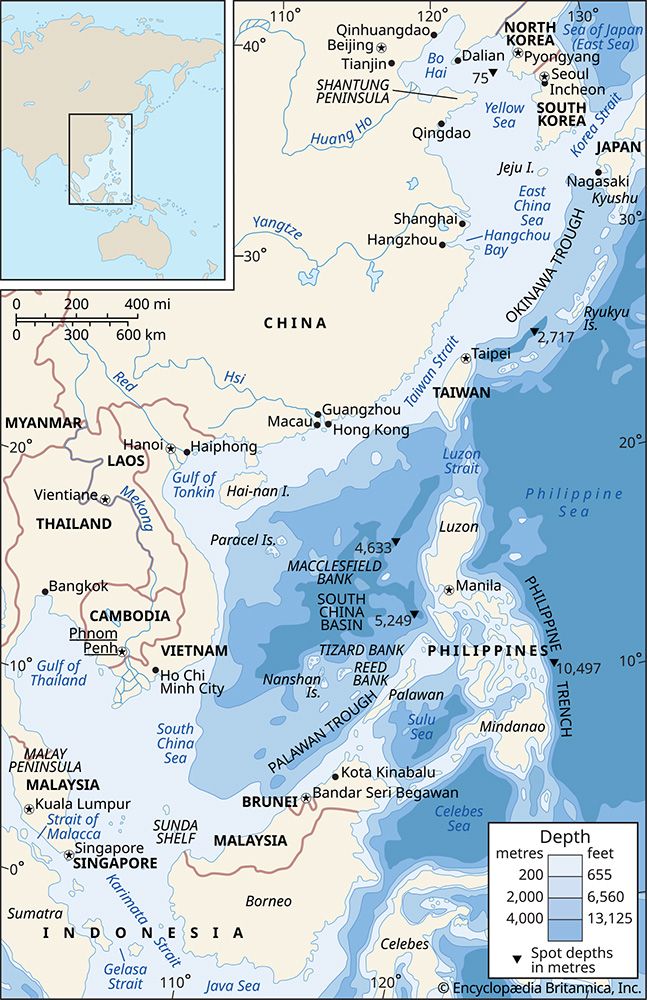
Southeast Asian shipping lanes, particularly the Strait of Malacca and the South China Sea, are among the most vital conduits for global commerce. The goods transported through these waters generally follow a pattern where raw materials and energy resources move toward industrial centers, while manufactured goods are distributed globally.59
Primary Goods Traded
- Energy Resources: Petroleum and crude oil are dominant commodities, with giant tankers frequently transiting the region to supply energy-hungry economies in East Asia, including Japan.115
- Raw Materials: The region is a significant source and transit point for various raw materials, including rubber, timber, tin, palm oil, and tropical hardwoods.124135
- Foodstuffs: Rice remains a critical commodity in intraregional trade, alongside processed seafood and other agricultural products.13514
- Manufactured Goods: A vast array of finished products, including machinery, transport equipment, and consumer goods, are shipped through these lanes to and from markets in the United States, Europe, and China.12514
Sources
- Singapore Strait — Encyclopædia Britannica
- Singapore — Encyclopædia Britannica
- Johore Strait — Encyclopædia Britannica
- Singapore - Transportation — Encyclopædia Britannica
- Strait of Malacca — Encyclopædia Britannica
- Malaysia - Malaya — Encyclopædia Britannica
- history of Malaysia - Early European intrusions and emerging sultanates in Malaysia — Encyclopædia Britannica
- Malaysia - The advent of Islam — Encyclopædia Britannica
- List of Important Straits — Encyclopædia Britannica
- history of Singapore - Development of the port of Singapore — Encyclopædia Britannica
- Singapore - Trade of Singapore — Encyclopædia Britannica
- Southeast Asia - Economy of Southeast Asia — Encyclopædia Britannica
- Southeast Asia - Trade — Encyclopædia Britannica
- Indian Ocean - Trade and transportation — Encyclopædia Britannica
- territorial disputes in the South China Sea - Physiography and economic factors — Encyclopædia Britannica
- South China Sea — Encyclopædia Britannica
- Asia - Contemporary trade patterns — Encyclopædia Britannica
- Bay of Bengal - Transportation — Encyclopædia Britannica
Published on · 3 min read