Tephrochronology
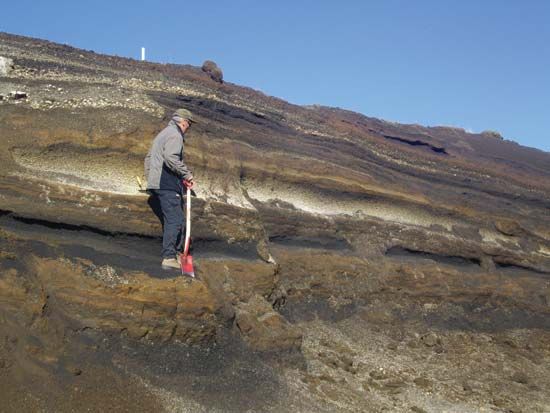
Tephrochronology is a powerful dating method that utilizes layers of volcanic ash, or tephra, as time-stratigraphic markers to correlate geological and…
Can you provide some examples of significant geological or archaeological discoveries made using tephrochronology?
Tephrochronology is a powerful dating method that utilizes layers of volcanic ash, or tephra, as time-stratigraphic markers to correlate geological and archaeological events across vast distances. Because the minerals and volcanic glass from specific eruptive cycles are often unique, these layers serve as reliable “time horizons” once identified.12
Significant examples of this method include:
- Mount Mazama (Oregon): The massive eruption of this volcano approximately 7,700 years ago deposited tephra across 10 states, creating a widespread chronological marker that helped define the basin now occupied by Crater Lake.2
- Icelandic Chronology: Sigurdur Thorarinsson, the founder of the science, used the frequent volcanic activity in Iceland to establish a detailed timeline of both pre-occupational and post-occupational events, which further enabled studies on climate change and the impact of agriculture on the local ecology.1
- Thera (Santorini): The eruption of Thera about 3,400 years ago left distinct tephra deposits in deep-sea sediments and on surrounding land, providing a critical reference point for the Aegean Sea region.2
How do scientists identify and correlate tephra layers across different locations?
Scientists identify and correlate tephra (volcanic ash) layers by treating them as “time horizons” that represent a single, instantaneous event in geologic history. Because the minerals and volcanic glass produced by any specific eruptive cycle are chemically and physically unique, they act as a distinct “signature” that differentiates them from other eruptions, even those originating from the same volcano.123
The process of correlation involves several key steps:
- Characterization: Researchers analyze the physical and chemical properties of the ash to ensure accurate identification and avoid miscorrelating layers from different volcanic episodes.3
- Tracing: Once identified, the ash layer is traced across the landscape. Because wind can transport ash over vast distances—sometimes 1,500 to 3,000 kilometers—these layers can be tracked across diverse environments, including from land areas into ocean basins.12
- Dating: The layers are dated using stratigraphic methods or absolute dating techniques, such as analyzing associated lavas or measuring unaltered mineral crystals (like zircon) found within the ash.23
What is the significance of tephrochronology in climate change research?
Tephrochronology is a vital tool in climate change research because it provides precise, widespread “time-stratigraphic markers” that allow scientists to synchronize environmental records across different regions and environments. By identifying unique layers of volcanic ash (tephra) in terrestrial, marine, and ice-core deposits, researchers can correlate disparate data sets to create a unified global timeline of climatic events.14
The significance of this method in climate studies includes:
- Cross-Environment Correlation: Tephra layers act as instantaneous markers that link land-based records (such as pollen or soil data) with marine stratigraphic deposits and ice cores. This integration is essential for understanding how climate shifts affected different parts of the Earth simultaneously.14
- Ecological Impact Analysis: By establishing a detailed chronology, researchers can study the long-term effects of climate change on local ecology and the influence of human activity, such as agriculture, on environmental stability.1
- Verification of Dating: Tephrochronology helps calibrate and verify other dating techniques, such as radiocarbon dating, which can be subject to errors or offsets.24
How does tephrochronology compare to other dating methods in geology?
Tephrochronology is a specialized dating method that uses layers of volcanic ash, or tephra, as distinct “time-stratigraphic markers” to correlate geologic and archaeological events across vast distances. Unlike other methods, its primary strength lies in its ability to link disparate environments, such as tracing ash from land-based sites into marine stratigraphic deposits.12
When compared to other techniques, tephrochronology offers unique advantages and limitations:
- Correlation vs. Absolute Dating: While absolute dating (such as uranium-lead isotope analysis) provides a specific age in years by measuring radioactive decay, tephrochronology acts as a marker horizon that synchronizes events across widely separated locations. Tephra layers are often dated using associated lavas or stratigraphic methods, effectively bridging the gap between relative and absolute chronologies.26
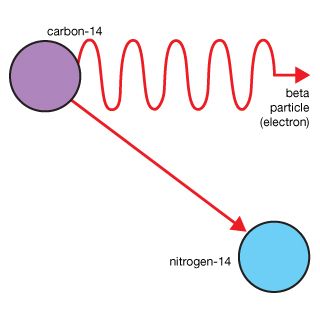
- Comparison with Radiocarbon Dating: Carbon-14 dating is a standard tool for the Holocene, but it can be subject to offset errors or contamination. Tephrochronology provides an independent check to verify these dates.2
- Comparison with Dendrochronology and Varve Analysis: Dendrochronology (tree rings) and varve analysis provide high-resolution, year-by-year chronologies but are often limited by regional environmental factors or the availability of organic material. In contrast, tephra can be distributed by wind over thousands of kilometers, offering a broader geographic reach for correlation.21
Sources
- tephrochronology — Encyclopædia Britannica
- Holocene Epoch - Chronology and correlation — Encyclopædia Britannica
- dating - Principles and techniques — Encyclopædia Britannica
- volcano - Long-term environmental effects — Encyclopædia Britannica
- Quaternary - Correlation of Quaternary deposits — Encyclopædia Britannica
- dating - Distinctions between relative-age and absolute-age measurements — Encyclopædia Britannica
Published on · 3 min read