Tinamou
Tinamous are distinct from other ground-dwelling birds, such as the chickenlike Galliformes, in several key physical and behavioral ways:
How do tinamous differ in appearance from other ground-dwelling birds?
Tinamous are distinct from other ground-dwelling birds, such as the chickenlike Galliformes, in several key physical and behavioral ways:
- Body Structure: Tinamous possess a heavy body with a high rump outline caused by an enormous development of rump feathers, which typically conceal a rudimentary or extremely short tail. Their wings are short and rounded, and their primary flight feathers are hidden by the plumage of their flanks.1
- Feet and Foraging: Unlike gallinaceous birds, tinamous do not scratch the ground for food. This is reflected in their anatomy, as they have weak toes and short nails. Instead of scratching, they use their medium-sized, thin, and slightly downcurved bills to dig or turn over debris.1
- Plumage and Coloration: Their plumage is highly concealing, featuring spotted or barred patterns in shades of brown, gray, tan, or rufous to blend into their environment. While sexes are generally alike, females are often slightly heavier and may exhibit brighter coloration.1
- Behavioral Differences: Most tinamous sleep on the ground, whereas many other ground-dwelling birds do not. Additionally, they are noted for their limited flight capability and a circulatory system that leads to quick exhaustion during sustained activity.1
How are tinamous related to other bird orders?
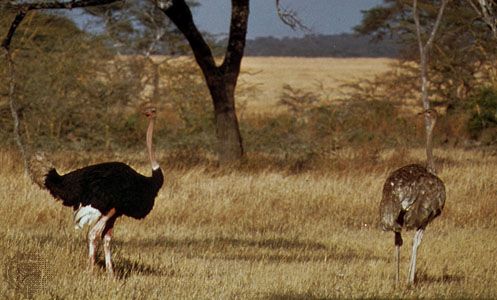
The order Tinamiformes (tinamous) has long intrigued scientists because many of their physical and biological features link them to the ratites—a group of large, flightless birds that includes the ostrich, emu, cassowary, and rhea.
Specifically, anatomical and biological evidence suggests a close relationship between tinamous and rheas. This connection is supported by:
- Palate Structure: The structure of the bony palate, which is a critical taxonomic feature for ratites, clearly links tinamous and rheas.
- Genetic Evidence: DNA and protein analyses further reinforce the evolutionary link between these two groups.
- Developmental Similarities: The chicks of tinamous are blotched and streaked in a manner similar to young rheas.
Despite these strong resemblances, most ornithologists maintain tinamous and rheas in separate orders, with many classifying rheas alongside other ratites in the order Struthioniformes.
How do tinamous communicate with each other?
Tinamous communicate primarily through vocalizations, which are considered among the strongest and most pleasant of any birds in the American tropics. Their calls consist of loud, melodious whistles that vary significantly between species, ranging from long, complex, songlike sequences to simple monosyllabic notes.1
Key characteristics of their communication include:
- Ventriloquism: In most species, the voice is highly ventriloquial, making it difficult for predators or observers to pinpoint the bird’s exact location.1
- Distinctive Calls: While male and female calls are similar, they are discernibly different to the human ear. Some species produce series of notes that ascend or descend in pitch.1
- Context-Specific Vocalizations: Certain calls are specific to behavioral contexts, such as a special call given by the female solitary tinamou before egg-laying, or calls uttered by both sexes after perching at dusk.1
- Visual Displays: Beyond sound, tinamous use physical displays for communication, particularly during courtship. Courting birds may raise their thickly feathered rumps and display brightly colored undertails. Frightened individuals may also use a similar display, pressing their breasts to the ground and spreading their tail feathers like a fan to exhibit marked underparts.1
How many species of tinamous are there, and are any of them endangered?
There are approximately 47 species of tinamous, which are ground-dwelling birds native to Central and South America.1
Regarding their conservation status, while only two species were officially listed as endangered by the International Union for the Conservation of Nature by the late 1990s, many populations have faced significant declines. These reductions are primarily driven by habitat destruction and heavy hunting pressure, as tinamous are highly valued as game birds.1
Sources
- Tinamou — Encyclopædia Britannica
Published on · 3 min read