Ratite
A ratite is any bird characterized by a smooth, raftlike sternum (breastbone) that lacks the keel necessary to anchor flight muscles. Because of this…
What is Ratite?
A ratite is any bird characterized by a smooth, raftlike sternum (breastbone) that lacks the keel necessary to anchor flight muscles. Because of this anatomical structure, all ratites are flightless.12
Unlike flying birds, which possess light skeletons with many hollow bones, ratites have evolved large bodies supported by heavy leg bones and thick, strong feet adapted for running. While they are flightless, scientists generally agree that ratites descended from ancestors that were capable of flight.23
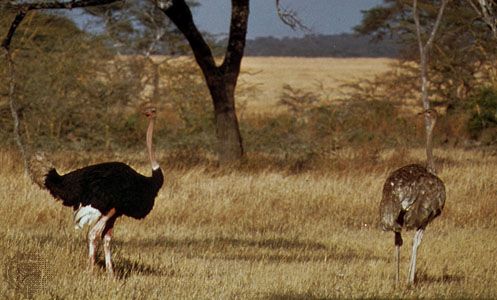
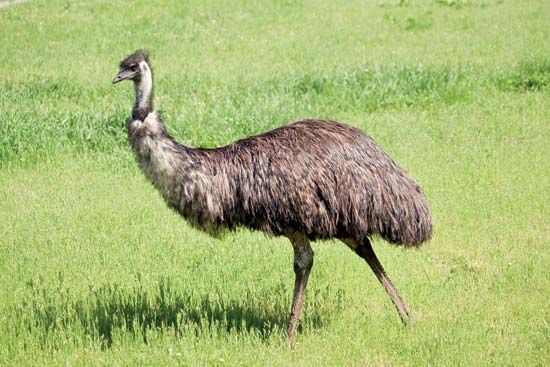
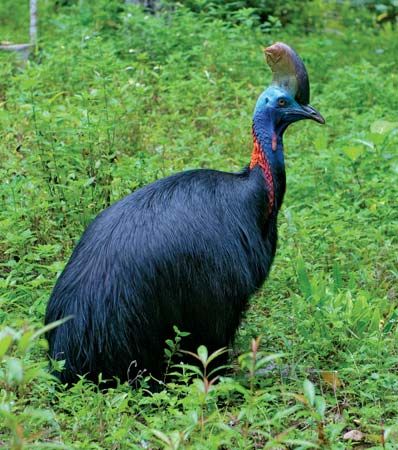
Extant (living) ratites include the ostrich, emu, cassowary, rhea, and kiwi. The group also includes some of the largest birds to have ever lived, such as the extinct moa and the elephant bird1. In many modern classifications, these birds are contained within the order Struthioniformes.123
Why did some birds evolve to lose the ability to fly?
The evolution of flightlessness in birds is a secondary, specialized condition, as scientists widely agree that all flightless birds descended from ancestors capable of flight.45
One primary hypothesis suggests that flight became unnecessary for birds that colonized habitats lacking predators. In such environments, the energy-intensive adaptation of flight was no longer required for survival, allowing natural selection to favor other traits. Over time, these birds underwent significant physical changes:5
- Skeletal Structure: Unlike flying birds, which have lightweight, pneumatic bones, flightless birds often evolved heavy leg bones and thick feet to support larger bodies.25
- Musculature: Many flightless birds, specifically ratites, lost the keel on their sternum, which serves as the anchor for flight muscles.5
- Alternative Defenses: Some species, such as the ostrich and rhea, evolved great size and the ability to run at high speeds to escape predation.45
While this specialization was successful in isolated environments, it left many species vulnerable when predators—including humans and introduced mammals—invaded their habitats, leading to the extinction of many flightless birds like the moa and dodo.5
How do ratites defend themselves against predators without flight?
Because ratites lack the ability to fly, they have evolved alternative strategies to survive in environments where they face predation. Their primary defense mechanisms include:
- High-Speed Running: Many ratites, such as the ostrich, rely on their powerful, muscular legs to escape enemies. An ostrich can reach speeds of up to 72.5 km (45 miles) per hour to outrun carnivores and human hunters.12
- Physical Aggression: If cornered and unable to flee, some ratites are capable of delivering dangerous, forceful kicks to defend themselves against threats.2
- Evasion and Camouflage: To avoid detection, some species may lie flat on the ground with their necks outstretched, blending into their surroundings. This behavior is often misunderstood as burying their heads in the sand.2
While these adaptations were effective in their native habitats, many flightless species were unable to survive the introduction of new predators—such as rats, pigs, and dogs—by human settlers, which contributed to the extinction of birds like the moa and the dodo.1
What are the main physical differences between ratites and penguins?
While both ratites and penguins are flightless birds descended from flying ancestors, they have evolved distinct physical characteristics to suit their respective terrestrial and aquatic environments.593
Key Physical Differences
- Sternum and Keel: A primary difference lies in the breastbone. Ratites lack a keel on their sternum, which is the anchor point for flight muscles in flying birds. Conversely, penguins have retained a pronounced keel to support the powerful pectoral muscles required for swimming.23
- Forelimbs: Ratites possess rudimentary wings that are not adapted for flight. In contrast, penguin forelimbs have evolved into rigid, paddlelike flippers used for propulsion in water.23
- Legs and Feet: Ratites have evolved heavy leg bones and thick, strong feet adapted for running on land; they typically lack the opposable first toe found in many flying birds. Penguins have their feet positioned much farther back on the body, which forces them to walk in an upright, plantigrade (sole-walking) posture.23
- Plumage: Penguins have evolved very short, dense feathers that provide insulation and minimize friction and turbulence in water. They also possess specialized salt glands to process seawater.2
Sources
- Ratite — Encyclopædia Britannica
- Flightless bird — Encyclopædia Britannica
- Bird - Critical appraisal — Encyclopædia Britannica
- Bird: Top Questions — Encyclopædia Britannica
- Bird - Flightlessness — Encyclopædia Britannica
- How high do birds fly? — Encyclopædia Britannica
- Ostrich — Encyclopædia Britannica
- Bird - Behaviour — Encyclopædia Britannica
- penguin - Form and function — Encyclopædia Britannica
Published on · 3 min read