Tornoceras
Tornoceras is an extinct genus of cephalopods that emerged during the Devonian Period (approximately 416 million to 359 million years ago). These creatures…
What is Tornoceras?
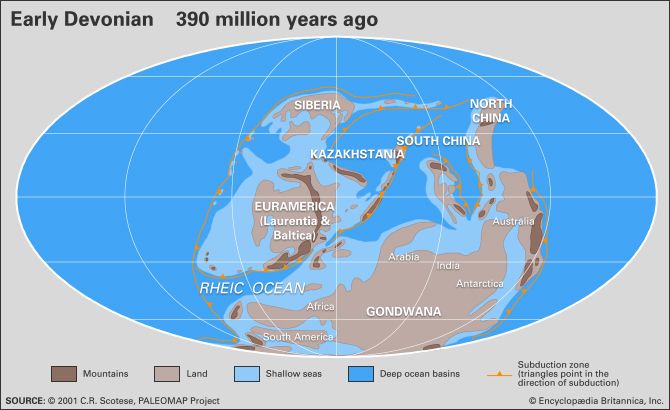
Tornoceras is an extinct genus of cephalopods that emerged during the Devonian Period (approximately 416 million to 359 million years ago). These creatures are related to the modern pearly nautilus.12
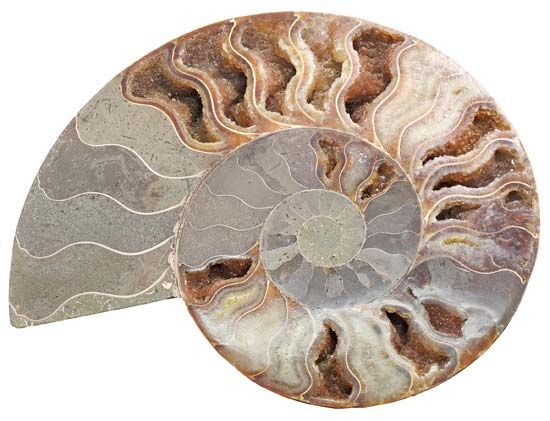
Physically, Tornoceras is characterized by a circular, relatively flat shell where the final whorl covers the earlier ones. A defining feature of this genus is the sutural pattern—the line where internal chamber walls meet the outer shell—which is gently rippled. As a member of the ammonoid group, Tornoceras represents an early stage of evolutionary development; while later ammonoids evolved highly complex, folded sutures, Tornoceras belongs to the group with simpler, goniatite-style suture patterns that flourished during the Paleozoic Era.12
What are index fossils and why are they important?
An index fossil is any plant or animal preserved in the rock record that serves as a marker for a specific span of geologic time or a particular environment.4
To be considered a useful index fossil, a specimen must meet several criteria:
- It must be easily recognizable or distinctive.4
- It must be abundant within the rock record.4
- It must have a wide geographic distribution.4
- It must have existed for only a short period of time.4
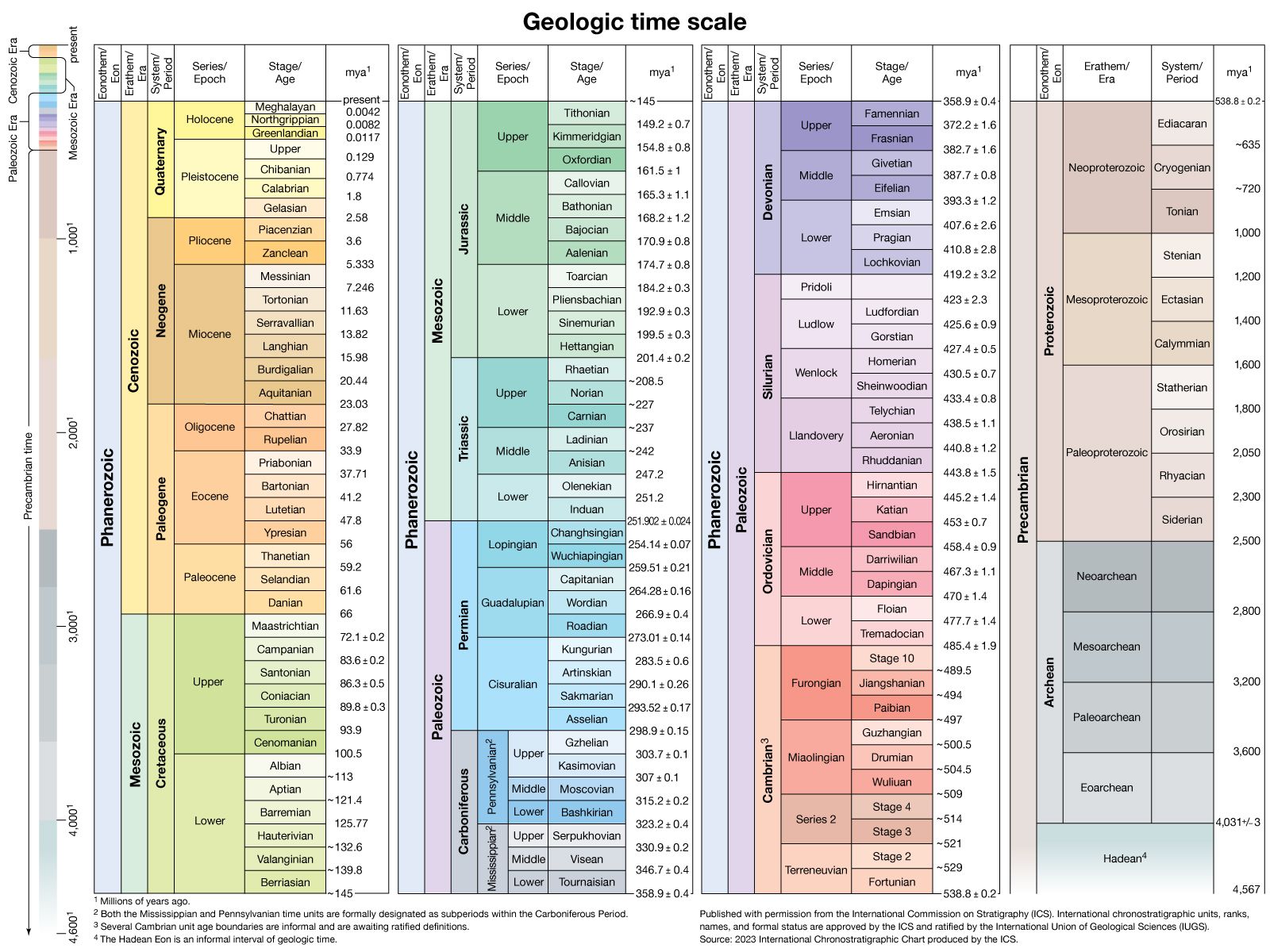
These fossils are essential to geology because they provide the foundation for defining boundaries within the geologic time scale and for the correlation of rock strata across different locations. Because organisms like ammonoids or certain protists evolved rapidly and possessed hard body parts—such as shells, bones, or teeth—they are frequently used to date deposits and reconstruct the history of the Earth.4
How do goniatites differ from ammonites and ceratites?
The primary difference between goniatites, ceratites, and ammonites lies in the increasing complexity of their suture patterns—the lines where the internal chamber walls meet the outer shell. These three groups represent successive stages of ammonoid evolution.2
Group
Suture Pattern
Primary Era/Period
Goniatites
Simple, angular-lobed sutures
Paleozoic Era
Ceratites
Highly folded, distinctive lobes and troughs
Triassic Period
Ammonites
Complex, interwoven patterns
Cretaceous Period
- Goniatites flourished during the Paleozoic Era and are characterized by a relatively simple suture pattern.2
- Ceratites replaced goniatites and became most abundant during the Triassic Period, exhibiting a more highly folded suture structure.23
- Ammonites represent the most advanced stage, appearing later and featuring intricate, interwoven sutures.2
Because of their rapid evolution and distinct, recognizable shell features, these groups serve as vital index fossils for dating marine rock strata across the globe.2
What are the main differences between nautiloids and ammonoids?
The primary distinction between ammonoids and nautiloids lies in the complexity of their suture patterns—the lines where the internal chamber walls (septa) meet the outer shell wall.
- Suture Patterns: Ammonoids are characterized by highly crenulated and complex suture patterns, which evolved from simple to increasingly intricate forms over time. In contrast, nautiloids typically possess much simpler, smoother suture lines.
- Evolutionary History: While both are cephalopods, ammonoids are an extinct group that flourished from the Devonian Period until the Cretaceous Period. Nautiloids have a much longer history, appearing as early as the Late Cambrian, and are represented today by the living pearly nautilus.
- Classification: Ammonoids are thought to have evolved from straight-shelled ancestors (Bactrites) that possessed certain nautiloid traits, eventually developing into the diverse, coiled forms commonly found as fossils today.
Because of their rapid evolution and wide geographic distribution, ammonoids are particularly valued as index fossils for dating marine rock strata.
Sources
- Tornoceras — Encyclopædia Britannica
- ammonoid — Encyclopædia Britannica
- Goniatites — Merriam-Webster
- index fossil — Encyclopædia Britannica
- Ceratites — Encyclopædia Britannica
- goniatite — Merriam-Webster
- cephalopod - Evolution and paleontology — Encyclopædia Britannica
- nautilus — Encyclopædia Britannica
Published on · 3 min read