Vascular Plant
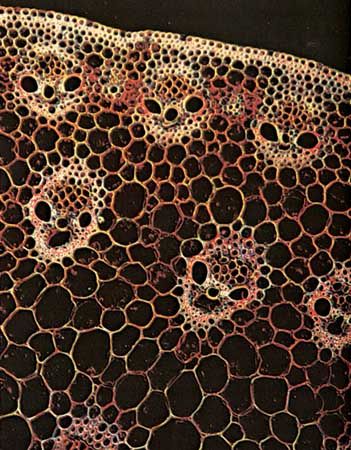
The two primary types of vascular tissue in plants are xylem and phloem. These tissues are organized into vascular bundles or cylinders to facilitate the…
What are the main types of vascular tissue found in plants?
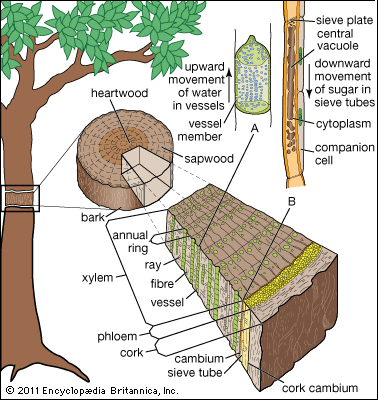
The two primary types of vascular tissue in plants are xylem and phloem. These tissues are organized into vascular bundles or cylinders to facilitate the transport of essential substances throughout the plant.1234
- Xylem: This tissue is responsible for conducting water and dissolved minerals from the roots to the rest of the plant. It also provides structural support through its rigid, lignified cell walls. Xylem consists of specialized water-conducting cells called tracheary elements—specifically tracheids and vessel members—along with parenchyma for storage and fibers for additional support.12
- Phloem: This tissue transports food, specifically photosynthates (sugars), from the leaves to other parts of the plant. It is composed of sieve elements (sieve cells or sieve-tube members) that serve as the main channels for transport, along with companion cells that support the metabolic needs of the sieve elements, as well as phloem fibers and parenchyma.13
How do vascular plants differ from non-vascular plants?
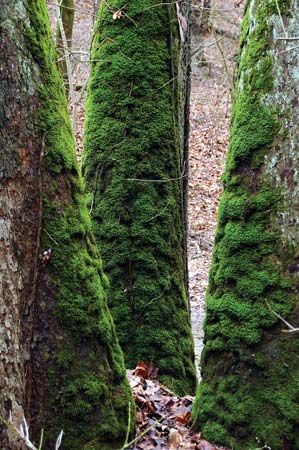
Vascular plants (tracheophytes) and non-vascular plants (bryophytes) are distinguished primarily by their internal anatomy and life cycles.56
Key Differences
- Vascular Tissue: Vascular plants possess specialized tissues—xylem for water conduction and phloem for food transport—which allow them to grow to significant sizes and inhabit diverse terrestrial environments. Non-vascular plants lack these specialized conducting tissues, though some mosses contain primitive hydroids for water movement.56
- Plant Structure: Because they lack vascular tissue, bryophytes do not possess true roots, stems, or leaves. In contrast, vascular plants have evolved these complex structures, supported by a waxy cuticle and stomata to manage water loss and gas exchange.65
- Life Cycle: In vascular plants, the sporophyte is the dominant, conspicuous phase of the life cycle. Conversely, in bryophytes, the gametophyte is the dominant, independent, and photosynthetic phase, while the sporophyte remains dependent on it.56
- Habitat: Bryophytes generally require moist, shady environments to survive and reproduce, as their motile sperm depend on water for fertilization. Vascular plants have adapted to a wide range of habitats, including extreme conditions, by developing mechanisms to thrive on land.65
How do vascular plants transport water from roots to leaves?
Vascular plants transport water from their roots to their leaves primarily through the xylem, a specialized tissue composed of rigid, tube-like structures that act as a conduit for water and dissolved minerals.78
The movement of water is largely explained by the cohesion hypothesis, which describes a passive process driven by transpiration:
- Transpiration Pull: As water evaporates from the leaves through microscopic pores called stomata, it creates a negative pressure (tension) that pulls the water column upward from the roots.7910
- Cohesion and Adhesion: Water molecules are held together by strong cohesive forces, allowing them to form a continuous, unbroken column within the xylem vessels and tracheids. Simultaneously, adhesive forces between the water molecules and the xylem cell walls prevent the column from collapsing under tension.79
- Root Pressure: Under specific conditions—such as high soil moisture and low transpiration—root pressure can also push water upward. This is generated by the active uptake of mineral ions into the roots, which creates an osmotic gradient that draws water in from the soil.71112
What are the main characteristics that define vascular plants?
Vascular plants, or tracheophytes, are defined by several key characteristics that distinguish them from non-vascular plants:
- Vascular Tissue: They possess specialized conducting tissues: xylem for transporting water and minerals, and phloem for transporting food. The xylem is reinforced with lignin, providing the structural support necessary for these plants to grow to significant sizes.514
- True Organs: Due to the presence of vascular tissue, these plants have evolved true roots, stems, and leaves, which allow them to thrive in diverse terrestrial environments.5
- Dominant Sporophyte: In the life cycle of vascular plants, the sporophyte is the larger, more conspicuous, and dominant generation, unlike in bryophytes where the gametophyte is dominant.53
- Terrestrial Adaptations: Their bodies are covered by a waxy cuticle to minimize water loss, and they utilize stomata for gas exchange.5
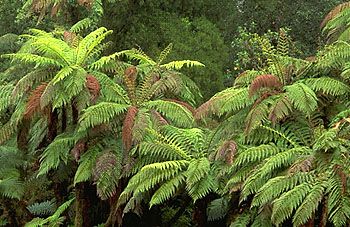
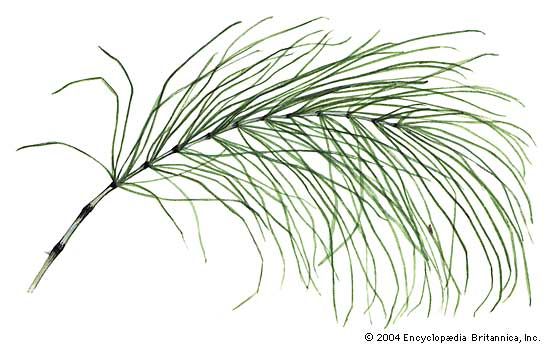
Vascular plants are categorized into non-seed plants (such as ferns and horsetails) and seed-bearing plants (gymnosperms and angiosperms).514
Sources
- Angiosperm - Organization of the vascular tissue — Encyclopædia Britannica
- lower vascular plant - Vascular system — Encyclopædia Britannica
- Xylem — Encyclopædia Britannica
- Phloem — Encyclopædia Britannica
- Plant - Definition of the category — Encyclopædia Britannica
- Plant - Definition of the category — Encyclopædia Britannica
- Angiosperm - Process of xylem transport — Encyclopædia Britannica
- Root pressure — Encyclopædia Britannica
- Cohesion hypothesis — Encyclopædia Britannica
- Stomate — Encyclopædia Britannica
- Angiosperm - Evolution of the transport process — Encyclopædia Britannica
- Angiosperm - Uptake of water and mineral nutrients from the soil — Encyclopædia Britannica
- Transpiration — Encyclopædia Britannica
- lower vascular plant - Reproduction — Encyclopædia Britannica
Published on · 3 min read