Tyrant Flycatcher
The tyrant flycatcher refers to any of approximately 400 species of aggressive, insect-eating birds belonging to the family Tyrannidae. Primarily found in…
What are the defining characteristics of tyrant flycatchers?
The tyrant flycatcher refers to any of approximately 400 species of aggressive, insect-eating birds belonging to the family Tyrannidae. Primarily found in Central and South America, these birds are characterized by the following traits:1
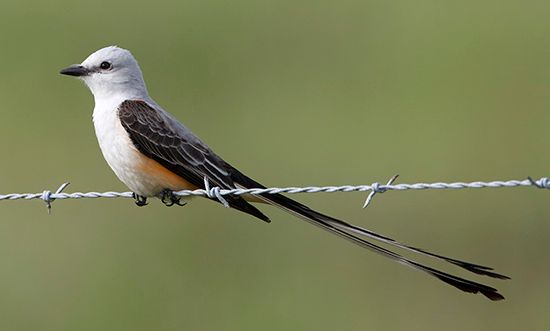
- Physical Appearance: They range from 7.5 to 40.5 cm in length. Most are plain-colored in shades of gray, brown, or olive, though some feature black-and-white patterns or concealed, erectile crown patches of red or yellow.1
- Feeding Habits: While many are strictly insectivorous and dart from perches to capture prey on the wing, others consume berries and fruit. Some larger species, such as shrike-tyrants, may even prey on mice and small frogs.12
- Anatomy: Typical fly-catching species possess broad, flattened bills with a slight hook and bristles at the base to aid in capturing insects.12
- Behavior: These birds are notably territorial during the breeding season and are known to aggressively harass larger birds, such as crows or hawks, that enter their space. Their songs are generally simple, consisting of grating sounds, squeaks, or monotonous whistles.1
How do tyrant flycatchers build their nests, and what materials do they use?
Tyrant flycatchers exhibit significant diversity in their nesting habits, reflecting the varied behaviors within the family Tyrannidae. Rather than following a single architectural style, these birds construct a range of structures, including open cups, domed nests, and hanging bags, while some species choose to nest in holes.1
Regarding their construction methods and materials, the family is known for its resourcefulness:
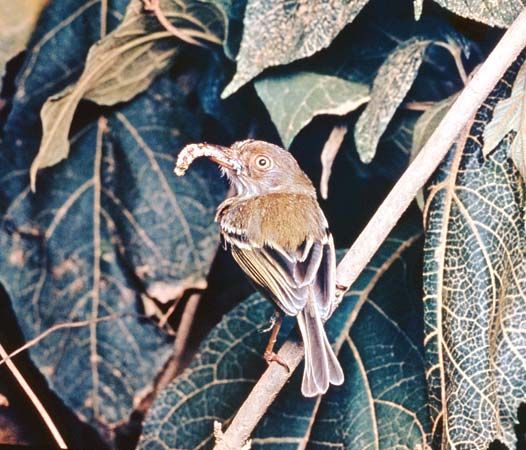
- Strategic Placement: Some species, such as the bent-billed tyrannulet, intentionally build their nests near aggressive wasp colonies. This behavior is believed to provide protection, as the wasps deter potential intruders without harming the birds.34
- Nest Usurpation: While they are not brood parasites, some tyrant flycatchers exhibit a unique nesting strategy by habitually taking over the nests of other birds, particularly oropendolas, which construct hanging nests.14
- General Materials: As members of the order Passeriformes, they utilize a wide variety of materials to build their nests, including grasses, twigs, plant fibers, spiderwebs, and bark strips.4
What are the physical adaptations that help tyrant flycatchers catch insects in flight?
To capture insects in flight, tyrant flycatchers in the family Tyrannidae possess specific anatomical adaptations that facilitate their hunting style. These birds are known for darting from perches to seize prey on the wing, a behavior supported by the following physical traits:
- Bill Structure: Their bills are broad and flattened, which provides a larger surface area for catching insects mid-air. The bills also feature a slight hook at the tip, which helps in securing captured prey.1
- Rictal Bristles: These birds have specialized bristles located at the base of the bill. These structures are believed to serve as sensory or mechanical aids that assist the birds in successfully capturing insects during flight.1
These adaptations allow them to effectively exploit aerial food sources, a strategy they share with the unrelated Old World flycatchers of the family Muscicapidae.15
How do tyrant flycatchers contribute to their ecosystems?
Tyrant flycatchers (family Tyrannidae) play significant roles in their ecosystems primarily through their dietary habits and territorial behavior. As largely insectivorous birds, they help regulate insect populations by capturing prey on the wing, which serves as a natural form of pest control within their habitats. Some larger species, such as the shrike-tyrants, even extend their diet to include small vertebrates like mice and frogs.163
Beyond insect control, many tyrant flycatchers, particularly those in the genus Elaenia, contribute to plant dispersal by feeding extensively on berries and other fruits. Their presence also influences the behavior of other species; many are highly territorial during the breeding season and will aggressively harass larger birds, such as crows or hawks, that enter their nesting areas. Additionally, some species exhibit unique ecological associations, such as building nests near aggressive wasp colonies, which provides a protective environment for the birds while potentially influencing local nesting dynamics.12
Sources
- Tyrant flycatcher — Encyclopædia Britannica
- Tyrannidae — Merriam-Webster
- Tyrannulet — Encyclopædia Britannica
- Passeriform - Nesting — Encyclopædia Britannica
- Flycatcher — Encyclopædia Britannica
- tyrant flycatcher — Merriam-Webster
Published on · 3 min read