Silverbill
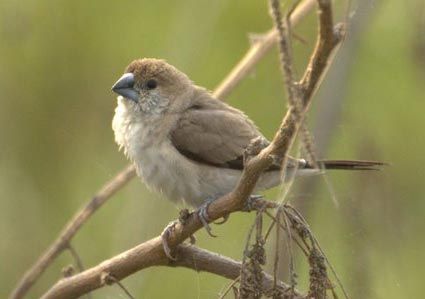
The term "silverbill" refers to several distinct types of birds named for the coloration of their beaks.
What is Silverbill?
The term “silverbill” refers to several distinct types of birds named for the coloration of their beaks.
The name is most commonly applied to certain finch-like birds within the genus Lonchura, which are members of the Estrildidae family. These birds are often categorized alongside munias and are part of a group of small, seed-eating songbirds known for their short, stout bills and gregarious nature.123
Additionally, the name “silverbill” is used for the spectacled tyrant (Lichenops perspicillata), a species of tyrant flycatcher found in central South America. Unlike the seed-eating finches, this bird belongs to a different avian group entirely.2
What are the main differences between waxbills and other finches?
Waxbills are a specific group of birds within the family Estrildidae, whereas the term “finch” is a broad, common name applied to several distinct families of seed-eating songbirds, including Fringillidae (the “true finches”), Emberizidae, Thraupidae, and Estrildidae.25
The primary differences between waxbills and other finches include:
- Taxonomy: Waxbills belong exclusively to the family Estrildidae, which are Old World birds. In contrast, “true finches” belong to the family Fringillidae, which are found on all continents except Antarctica.635
- Physical Characteristics: Waxbills are named for their prominent, waxy-looking bills, which are often red, pink, or white. While all finches generally possess short, stout, conical bills for crushing seeds, the specific coloration and appearance of the waxbill’s bill are diagnostic of their group.372
- Vocalization: Waxbills are generally considered poor singers, with songs characterized by simple chirps, buzzes, and chatters. Many other finches, such as those in the Fringillidae family, are renowned for their complex and beautiful songs.62
- Distribution: Waxbills are primarily Old World tropical birds. Other finch families have a much broader global distribution.325
Why are many species of Estrildidae popular as cage birds?
Many species within the Estrildidae family are popular as cage birds primarily due to their aesthetic appeal, lively behavior, and ability to adapt to captivity.2
Bird fanciers are particularly drawn to these birds for the following reasons:
- Visual Appeal: Members of this family display a wide variety of striking colors and intricate patterns. For example, the Gouldian finch is highly prized for its vibrant plumage, which includes shades of purple, gold, green, blue, and black.29
- Temperament: These birds are generally gregarious and lively, making them engaging subjects for observation in an aviary or cage setting.2
- Adaptability: Their natural behaviors and hardiness contribute to their success as pets, as they adapt well to life in captivity.2
While some members of the family, such as waxbills, are not noted for their vocal abilities—often producing only simple chirps and buzzes—their other physical and behavioral traits make them favorites among enthusiasts.2
How do birds use their conical bills to eat different types of food?
Birds with conical bills are primarily adapted for a diet of seeds, utilizing these sturdy, specialized structures to crack open various plant materials. The morphology of the conical bill varies significantly depending on the specific feeding requirements of the species:113
- Seed Cracking: Many birds, such as the hawfinch, possess exceedingly stout and blunt conical bills. These are powerful enough to crack remarkably hard objects, including cherry pits.11
- Specialized Extraction: Some species have evolved variations for specific types of seeds. For example, crossbills have bills specialized for extracting seeds from pine cones.11
- Generalist Feeding: Other birds, such as siskins, have smaller, more pointed conical bills that are better suited for handling different types of seeds.11
While these bills are highly efficient for seed-eating, most birds are opportunistic feeders. Many granivorous birds supplement their diet with insects, particularly when feeding their nestlings, which are often unable to crack seeds themselves. Additionally, some birds with conical bills may exploit seasonally available plant foods like buds, shoots, or fruits.113
Sources
- silverbill — Merriam-Webster
- Estrildidae — Encyclopædia Britannica
- Finch — Encyclopædia Britannica
- Silverbill — Encyclopædia Britannica
- Waxbill — Encyclopædia Britannica
- finch — Merriam-Webster
- waxbill — Merriam-Webster
- Fringillidae — Encyclopædia Britannica
- Munia — Encyclopædia Britannica
- Grass finch — Encyclopædia Britannica
- Passeriform - Bill — Encyclopædia Britannica
- Bird - Feeding habits — Encyclopædia Britannica
- Charadriiform - Adaptations for feeding — Encyclopædia Britannica
Published on · 3 min read