Vinegar Fly
The name "vinegar fly" is derived from the insect's habit of breeding in pickles and fermenting plant juices. These insects, belonging to the genus…
How did vinegar flies get their name, and are there other common names for these insects?
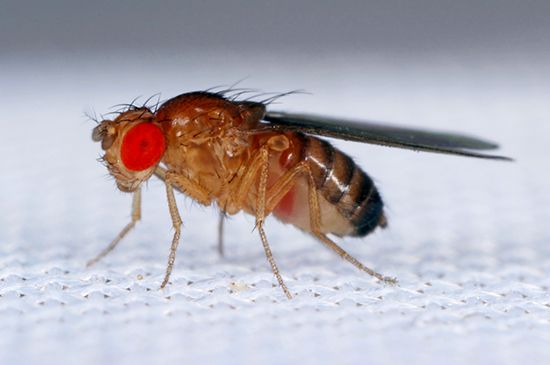
The name “vinegar fly” is derived from the insect’s habit of breeding in pickles and fermenting plant juices. These insects, belonging to the genus Drosophila, are also commonly referred to as small fruit flies.123
While the term “fruit fly” is often used to describe these insects, it is a broad category that also includes members of the family Trypetidae, which are sometimes distinguished as “large fruit flies”. Unlike the vinegar fly, which is frequently studied in genetics and evolution, many species in the Trypetidae family are considered agricultural pests that damage cultivated crops.31
How are vinegar flies used in scientific research and what makes them suitable for this purpose?
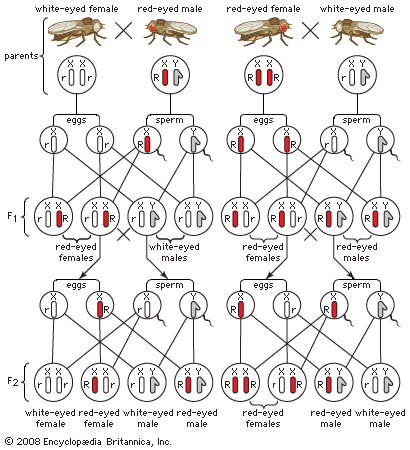
Vinegar flies, particularly the species Drosophila melanogaster, are the most extensively studied animals in the field of genetics. They are highly valued in scientific research for several practical reasons:
- Ease of Maintenance: They are simple and inexpensive to raise in laboratory settings.1
- Rapid Life Cycle: They have a short life cycle, reaching maturity in less than two weeks at room temperature, which allows researchers to observe multiple generations quickly.1
- Genetic Utility: Their chromosomes—specifically the giant chromosomes found in the salivary glands of larvae—are ideal for studying heritable characteristics and gene action.1
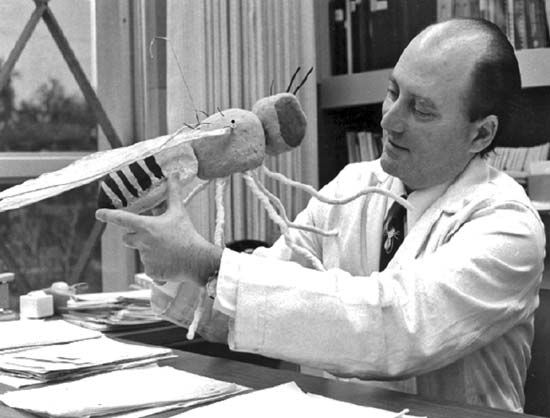
Research on these flies has been foundational to modern science. For instance, geneticist Edward B. Lewis used them to establish the colinearity principle, which explains how genes are ordered on chromosomes to control body segments. This work provided critical insights into biological development and the causes of congenital deformities in humans and other higher organisms. Today, they remain the standard model for understanding the mechanisms of heredity and development.45
How do vinegar flies reproduce and what is their typical life cycle?
Vinegar flies (Drosophila) reproduce through a process involving elaborate courtship displays, which are often necessary for successful mating. During these interactions, males perform specific behaviors to attract females before copulation occurs.1
The life cycle of the vinegar fly is notably rapid, often completing its development in less than two weeks at room temperature. The process generally follows these stages:6
- Egg-laying: Females use a specialized, telescopic ovipositor to deposit their eggs directly into suitable substrates, such as rotting or damaged fruits and fermenting plant juices.67
- Larval Development: Upon hatching, the larvae feed on the organic material where the eggs were laid. This stage is significant for researchers, as the larvae possess giant chromosomes in their salivary glands that are frequently used in genetic studies.67
- Metamorphosis: After the larval stage, the insects undergo metamorphosis to emerge as adults, continuing the cycle.6
Because of their short generation time and ease of maintenance, they remain a primary model organism for biological and genetic research.6
What is the scientific name for vinegar flies and which family do they belong to?
Vinegar flies belong to the genus Drosophila and are classified within the family Drosophilidae.138
Sources
- vinegar fly — Encyclopædia Britannica
- vinegar fly — Merriam-Webster
- Fruit fly — Encyclopædia Britannica
- Edward B. Lewis — Encyclopædia Britannica
- entomology — Encyclopædia Britannica
- Reproductive behaviour - Insects — Encyclopædia Britannica
- Diptera - Eggs — Encyclopædia Britannica
- List of insects - flies (order Diptera ) — Encyclopædia Britannica
Published on · 2 min read