Water Beetle
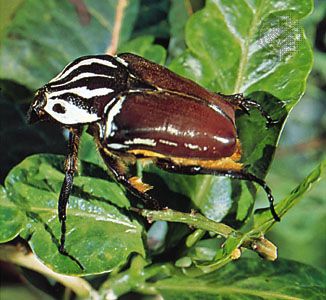
A water beetle is any of several thousand species of aquatic insects belonging to the order Coleoptera. These beetles are categorized into various families…
What is water beetle?
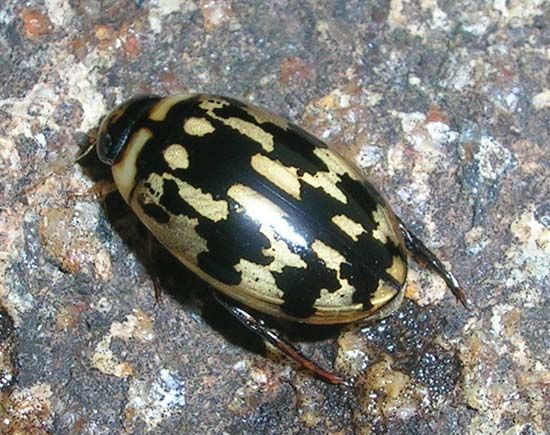
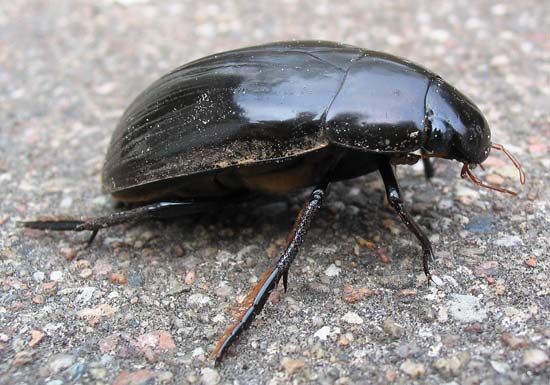
A water beetle is any of several thousand species of aquatic insects belonging to the order Coleoptera. These beetles are categorized into various families, including crawling water beetles (Haliplidae), whirligig beetles (Gyrinidae), water scavenger beetles (Hydrophilidae), and true water beetles, also known as predaceous diving beetles (Dytiscidae).1
These insects have evolved specialized adaptations for life in aquatic environments. Many species utilize a tracheal system for respiration, often employing a “bubble-breathing” strategy where they trap an air supply beneath their wing covers (elytra) before submerging. Some species have developed a plastron—a dense layer of hairs that holds a permanent air film—allowing them to remain underwater indefinitely.23
While some water beetles are scavengers that feed on algae or decaying matter, others are active predators that hunt insects or even small fish. They are found in diverse freshwater habitats, ranging from marshy ponds to trout streams.431
How does a plastron allow some beetles to stay underwater indefinitely?
A plastron allows certain beetles to remain underwater indefinitely by acting as a permanent, thin film of air that functions like a gill. This structure is formed by a dense layer of cuticular hair covering the beetle’s abdomen and thorax. The hairs are packed so closely together that they resist wetting, creating a stable air space beneath them into which the insect’s spiracles open.5
Unlike temporary air bubbles, which shrink as nitrogen diffuses into the surrounding water, the plastron is maintained by surface tension. This tension acts like an elastic skin, preventing the air space from collapsing or losing volume. Because the volume remains constant, the plastron does not require replenishment at the water’s surface. As the beetle consumes oxygen, the partial pressure of oxygen within the plastron drops, causing dissolved oxygen from the water to diffuse into the air film to replace it. This continuous gas exchange allows the beetle to survive submerged as long as the surrounding water is well-oxygenated.35
What are the main differences between predaceous diving beetles and water scavenger beetles?
Predaceous diving beetles and water scavenger beetles are both aquatic members of the order Coleoptera, but they differ significantly in their physical characteristics, feeding habits, and respiratory behaviors.
Key Differences
Feature
Predaceous Diving Beetle
Water Scavenger Beetle
Diet
Primarily carnivorous; they hunt insects and fish.
Mostly feed on algae or decaying matter; few are predators.
Antennae
Typically thin and threadlike.
Short, hairy, and clubbed.
Swimming
Uses long, flattened, fringed hind legs.
Moves middle and hind legs on each side together.
Surface Breathing
Hangs from the surface by its abdomen.
Hangs from the surface by its head.
Air Intake
Extends the tips of its wing covers (elytra) to reach air.
Extends its antennae through the surface film to capture air.
While predaceous diving beetles are highly streamlined predators, often called “water tigers” in their larval stage, water scavenger beetles are generally scavengers that play a different role in their freshwater ecosystems.42
How do aquatic insects like dragonflies use gills differently than water beetles?
Aquatic insects like dragonflies and water beetles utilize fundamentally different respiratory strategies to survive underwater.
Dragonfly Nymphs: Internal Gills
Dragonfly nymphs possess specialized tracheal gills located internally within the rectum. To facilitate gas exchange, these insects rhythmically pump water in and out through the anus, ensuring a constant flow of oxygenated water over the gill surfaces. This system allows them to extract oxygen directly from the water without needing to return to the surface for air.36
Water Beetles: Air-Storage Systems
In contrast, most water beetles are air-breathers that rely on atmospheric oxygen. They typically carry a temporary supply of air under their wing covers (elytra) or trapped within dense body hairs, known as a plastron. While these air stores can function like a physical gill by allowing dissolved oxygen to diffuse from the water into the bubble, they are fundamentally different from the dragonfly’s internal gill system. Unlike the dragonfly, which uses its internal organs for continuous extraction, many beetles must periodically return to the surface to replenish their air supply, unless they possess a permanent plastron that allows for indefinite submergence.36
Sources
- water beetle — Encyclopædia Britannica
- water scavenger beetle — Encyclopædia Britannica
- Respiratory system - Trachea — Encyclopædia Britannica
- predaceous diving beetle — Encyclopædia Britannica
- heteropteran - Respiratory system — Encyclopædia Britannica
- insect - Aquatic insects — Encyclopædia Britannica
Published on · 3 min read