White-eye
A white-eye is any of the nearly 100 species of birds belonging to the Old World family Zosteropidae. These birds are primarily found in warm regions ranging…
What is White-eye?
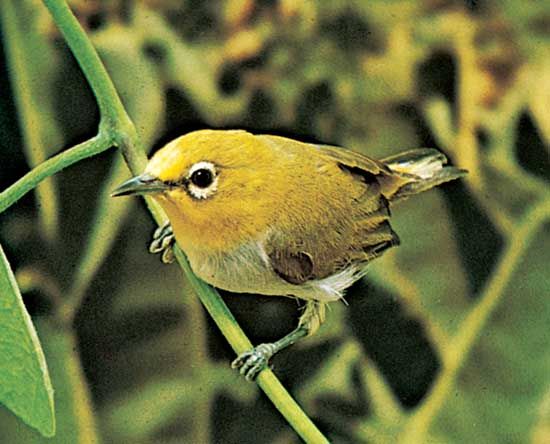
A white-eye is any of the nearly 100 species of birds belonging to the Old World family Zosteropidae. These birds are primarily found in warm regions ranging from Africa across southern Asia to Australia and New Zealand1.1
Most white-eyes are classified within the genus Zosterops. They are small, arboreal birds—typically about 11 cm (4.5 inches) long—characterized by their plain grayish, brownish, or yellow-green plumage and a distinctive ring of tiny, white feathers around their eyes. They possess fine, pointed bills and brush-tipped tongues, which they use to feed on insects, nectar, and soft fruits. While they are generally active and social, some species are known to damage crops like figs and grapes, leading them to be referred to as “blightbirds” in Australia.1
What does a brush-tipped tongue help these birds eat?
The brush-tipped tongue of a white-eye is a specialized adaptation that allows the bird to efficiently feed on nectar from flowers. In addition to nectar, white-eyes use their fine, pointed bills and these specialized tongues to consume insects and soft fruits.14
This anatomical feature is part of a broader set of evolutionary adaptations—including slender beaks—found in various bird families that regularly visit flowers to feed on nectar, pollen, and flower-inhabiting insects or spiders.4
Why are some white-eyes referred to as blightbirds?
Some white-eyes are referred to as “blightbirds” in Australia and New Zealand due to their dual role in the environment. While these birds are known to feed on various insect pests—which can be beneficial to agriculture—they are also known to damage cultivated crops, specifically figs and grapes.61
Because of this tendency to destroy fruit, they earned the colloquial name “blightbird” in regions where their foraging habits conflict with commercial fruit production.1
How do white-eyes build their cuplike nests?
While the provided search results confirm that white-eyes (family Zosteropidae) build cuplike nests and are generally gregarious except when tending to them, the specific materials and construction techniques they use to build these nests are not detailed in the available information.7
In general, bird nests are highly varied, with many species constructing cup-shaped structures using a combination of twigs, leaves, mud, feathers, or spiderwebs. However, because the Britannica knowledge base does not contain specific details regarding the unique nest-building process of the white-eye, I cannot provide further information on their specific methods.1
Sources
- White-eye — Encyclopædia Britannica
- Zosteropidae — Merriam-Webster
- Zosterops — Merriam-Webster
- Pollination - Birds — Encyclopædia Britannica
- Bird - Feeding habits — Encyclopædia Britannica
- blightbird — Merriam-Webster
- Nest — Encyclopædia Britannica
- Reproductive behaviour - Parental care — Encyclopædia Britannica
Published on · 2 min read