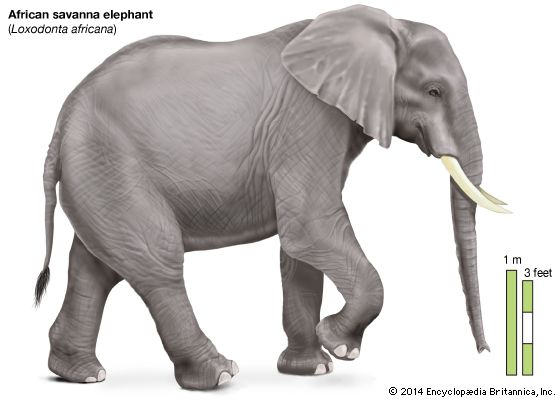
What Are Elephant Trunks Used For?
The elephant trunk, or proboscis, is a highly versatile organ formed by the fusion of the upper lip and nose. It serves several essential functions:
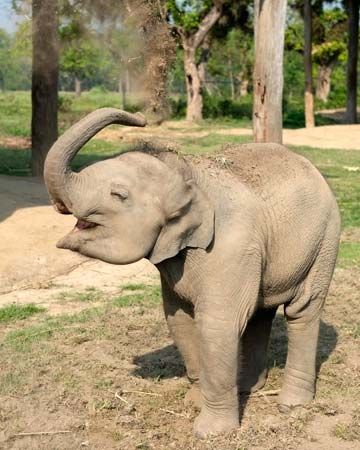
What are elephant trunks used for?
The elephant trunk, or proboscis, is a highly versatile organ formed by the fusion of the upper lip and nose. It serves several essential functions:1
- Manipulation and Feeding: With nearly 150,000 muscle fascicles, the trunk is both powerful and precise. Elephants use it to grasp grasses, leaves, and fruits, placing them into their mouths. Delicate flaplike projections at the tip allow for fine motor tasks, such as picking up small objects.12
- Hydration and Hygiene: Elephants suck up to 10 liters of water into the trunk to squirt into their mouths. They also use it to spray water, mud, or dust onto their bodies for protection against the sun and insects.21
- Sensory and Communication: The trunk acts as an “olfactory periscope” to sniff for danger or locate resources. It is also used for social interaction, such as “trunk-shaking” to greet others.21
- Vital Functions: Most breathing occurs through the trunk rather than the mouth.21
How do African and Asian elephants differ in how they use their trunks?
While both African and Asian elephants use their trunks for similar vital functions—such as breathing, drinking, feeding, and communication—they differ in their physical structure and specific methods of manipulation.123
Structural Differences
The most notable anatomical difference lies in the tip of the trunk. African elephants possess two flaplike projections (one above and one below), whereas Asian elephants have only one.23
Methods of Manipulation
These structural differences influence how the animals interact with their environment:
- The “Pinch” vs. The “Grasp”: African elephants typically use a “pinch” method to pick up objects, utilizing their two projections in a manner similar to a human using their thumb and index finger. In contrast, Asian elephants most often use a “grasp” method, curling the tip of the trunk around an item to secure it.2
- Dexterity: While the African elephant’s trunk may be more extendable, the Asian elephant’s trunk is considered by many to be more dexterous.2
Both species utilize these appendages with remarkable precision to perform delicate tasks, such as picking up small objects or cracking open food items, and both use them as sensory tools to navigate their surroundings.12
What are some other animals that have unique, specialized appendages?
Many animals have evolved highly specialized appendages that allow them to thrive in diverse environments by aiding in feeding, locomotion, defense, or communication. Here are several examples:
- Chameleons: These lizards possess a long, slender, projectile tongue capable of striking prey at great speed from a distance of more than twice their body length. They also have zygodactylous feet, with toes fused into bundles for gripping branches, and many species have prehensile tails for balance.5
- Octopuses: These cephalopods use their eight arms for crawling, grasping objects, and hunting. Males have a specially modified arm called a hectocotylus used for transferring sperm to the female.6
- Anteaters: These mammals feature long, sharp, curved claws on their front feet, which they use to tear open insect nests. They also possess a long, wormlike tongue coated in sticky saliva to capture ants and termites.7
- Star-Nosed Moles: Their most striking feature is a star-shaped ring of fleshy, touch-sensitive appendages around the snout. This “star” is packed with nerve fibers, allowing the mole to navigate and identify prey by touch with incredible speed.8
- Red-Lipped Batfish: This fish has evolved fins that function as “legs,” allowing it to walk across the ocean floor rather than swim.8
- Crustaceans: This group exhibits immense diversity in appendages. For example, many decapods have specialized claws called chelae for feeding or defense, while some species have abdominal appendages modified for swimming or sperm transfer.9
- Arachnids: Spiders and scorpions use their first pair of appendages, the chelicerae, for tasks ranging from capturing prey to producing silk. Their second pair, the pedipalps, are often modified for sensing, holding prey, or courtship displays.10
How do elephants use their trunks to communicate with other herd members?
Elephants utilize their trunks as essential tools for social interaction and communication within their herds. When elephants meet, they often engage in physical contact, such as touching each other’s faces or intertwining their trunks. This behavior, often referred to as a “trunk-shake,” serves functions similar to a human handshake, providing a means of greeting, offering assurance, or assessing the strength of another individual.1
Beyond direct physical contact, the trunk is a vital instrument for vocal and sensory communication:
- Sound Production: Elephants use their trunks to produce a wide range of vocalizations, including low growls and high-pitched trumpets, which are critical for maintaining herd cohesion.2
- Sensory Awareness: When sensing potential danger, an elephant may raise and swivel its trunk, acting as an “olfactory periscope” to sniff the air for information about its surroundings.21
These behaviors allow elephants to share information, establish social bonds, and remain alert to threats within their environment.21
Sources
- What are elephant trunks used for? — Encyclopædia Britannica
- elephant - The trunk (proboscis) — Encyclopædia Britannica
- What’s the Difference Between Asian and African Elephants? — Encyclopædia Britannica
- Asian elephant — Encyclopædia Britannica
- crustacean - Appendages — Encyclopædia Britannica
- chameleon — Encyclopædia Britannica
- arachnid - External features — Encyclopædia Britannica
- 10 Animals With Evolutionary Traits Plucked Straight Out of a Nightmare — Encyclopædia Britannica
- anteater — Encyclopædia Britannica
- cephalopod - Behaviour — Encyclopædia Britannica
- Avoidance behaviour - Protection reflexes, armour, and spines — Encyclopædia Britannica
- octopus — Encyclopædia Britannica
- Caudata - Food and feeding — Encyclopædia Britannica
Published on · 4 min read