Wordian Stage
The Wordian Stage, which occurred during the Middle Permian (Guadalupian) Epoch, is characterized by specific index fossils used to define its geological…
What types of fossils are commonly found in Wordian Stage deposits?
The Wordian Stage, which occurred during the Middle Permian (Guadalupian) Epoch, is characterized by specific index fossils used to define its geological boundaries and correlate strata.
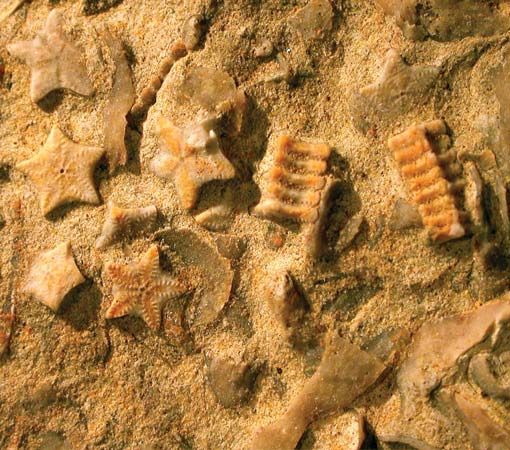
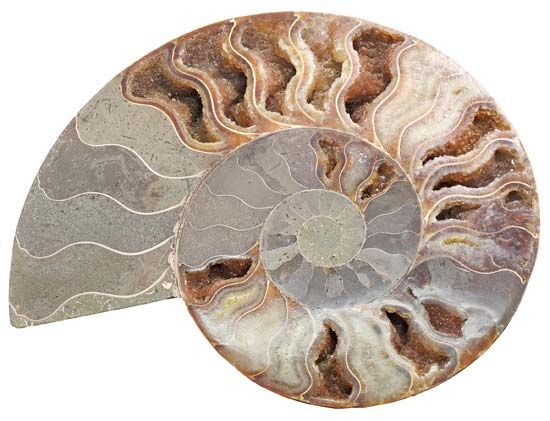
The base of the Wordian Stage is defined by the first appearance of the conodont species Jinogondolella aserrata in the fossil record. In addition to these conodonts, other significant fossils found in Wordian deposits include ammonoids belonging to the genera Timorites and Waagenoceras.1
Because shallow-water marine environments during the Permian often exhibited high levels of provincialism, biostratigraphers frequently rely on these open-ocean organisms, such as cephalopods and conodonts, to correlate strata across different regions. While the broader Middle Permian period was marked by high marine diversity, the latter part of the epoch saw significant environmental changes that led to the decline of many invertebrate groups.234
How does the study of the Wordian Stage contribute to our understanding of Earth’s history?
The study of the Wordian Stage (268.8 million to 265.1 million years ago) is essential to our understanding of Earth’s history because it provides a critical framework for correlating Permian Period strata globally.15
Because many marine invertebrate faunas during this time were highly endemic—meaning they were restricted to specific regions—geologists struggle to correlate rock layers across different areas. The Wordian Stage helps resolve this through the use of conodonts, which are primitive, tooth-shaped chordates. The first appearance of the species Jinogondolella aserrata serves as a Global Stratotype Section and Point (GSSP), acting as a precise chronological marker that allows scientists to align geological records from the Guadalupe Mountains with other locations worldwide.51
Furthermore, analyzing the fossil record within these deposits helps researchers reconstruct the paleoclimate of the Middle Permian. By examining oxygen isotopes and calcium-to-magnesium ratios in fossil shells, scientists can track the temperature fluctuations that preceded the massive environmental crises of the Late Permian, offering insight into how ancient marine ecosystems responded to global warming.16
What is the Wordian Stage, and where does it fit in the geological time scale?
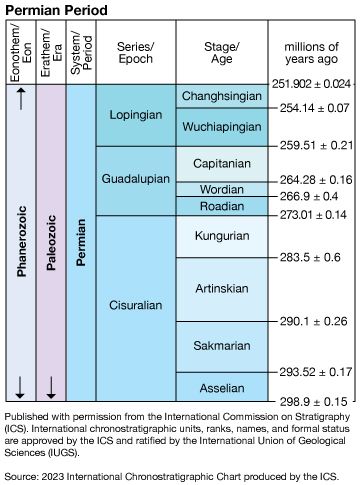
The Wordian Stage is the second of three geological stages that make up the Middle Permian, or Guadalupian Series, of the Permian Period. It encompasses the rocks deposited during the Wordian Age, which lasted from approximately 268.8 million to 265.1 million years ago.16
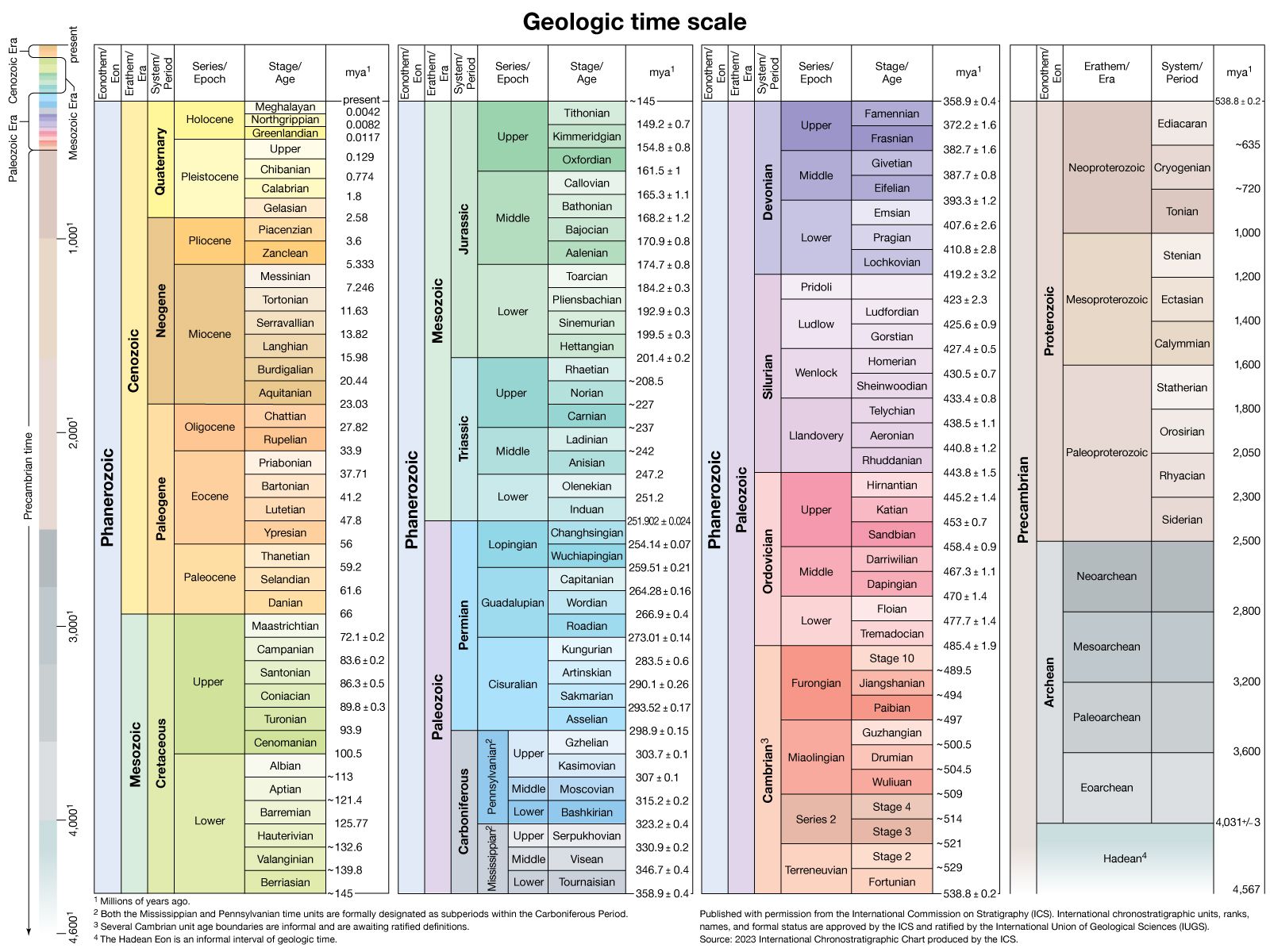
In the geological time scale, the Wordian Stage is positioned between the Roadian Stage below it and the Capitanian Stage above it. Its name is derived from the Wordian Formation in the Glass Mountains of Texas, and its Global Stratotype Section and Point (GSSP) is located in the Guadalupe Mountains of Texas.18
The base of this stage is defined by the first appearance of the conodont species Jinogondolella aserrata in the fossil record. Other characteristic fossils found in these deposits include ammonoids from the genera Timorites and Waagenoceras.16
What methods are used to date rocks and fossils from the Wordian Stage?
To date and correlate rocks and fossils from the Wordian Stage, geologists primarily rely on biostratigraphy, specifically the study of conodonts.11
Biostratigraphic Methods
Because many marine invertebrate faunas from the Permian Period were highly endemic—meaning they were restricted to specific geographic regions—they are often difficult to use for global correlation. To overcome this, scientists use conodonts, which are minute, tooth-shaped microfossils composed of apatite.914
- Zonation: Conodonts evolved rapidly, and their distinct shapes changed over time, allowing researchers to divide rock sequences into specific “zones.”4
- Chronological Markers: The base of the Wordian Stage is defined by the first appearance of the conodont species Jinogondolella aserrata in the fossil record.101
- Global Application: While conodonts are most reliable in paleoequatorial warm-water provinces, different zonation schemes are used for colder regions, such as those surrounding the Gondwana supercontinent, to ensure accurate dating across diverse environments.1
Technical Processing
Conodonts are typically extracted from sedimentary rock, such as limestone, by dissolving the sample in 15 percent acetic acid. The insoluble fossils are then collected from the residue, often using heavy liquids like bromoform to separate them from other mineral grains, and examined under high-magnification microscopes.4
While radioisotopic dating and magnetostratigraphy are essential for refining the broader geologic time scale, biostratigraphy remains the primary framework for identifying and correlating the specific strata of the Wordian Stage.6
Sources
- Wordian Stage — Encyclopædia Britannica
- Permian Period - Marine and terrestrial life — Encyclopædia Britannica
- Permian Period - Marine invertebrates — Encyclopædia Britannica
- Permian Period - Correlation of Permian strata — Encyclopædia Britannica
- Permian Period - Paleoclimate — Encyclopædia Britannica
- Permian Period - Major subdivisions — Encyclopædia Britannica
- Permian Period - Temperature crises — Encyclopædia Britannica
- Roadian Stage — Encyclopædia Britannica
- Gelasian Stage — Encyclopædia Britannica
- conodont — Encyclopædia Britannica
- Tertiary Period - Correlation of Tertiary strata — Encyclopædia Britannica
Published on · 3 min read