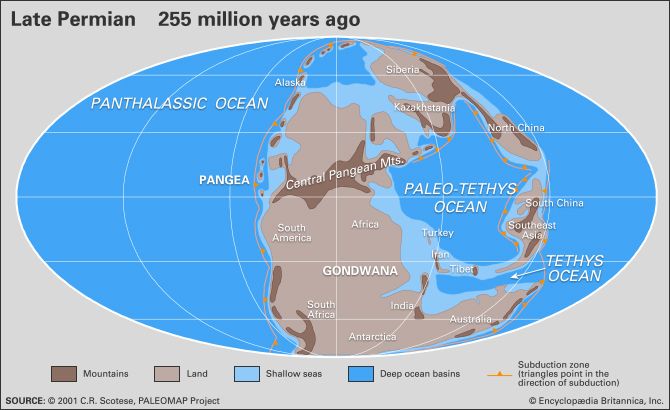
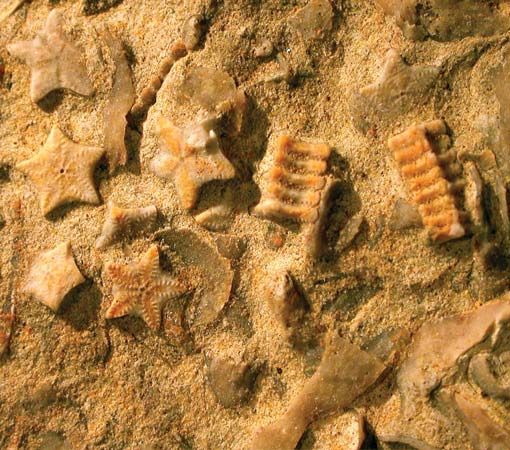
Capitanian Stage
Scientists correlate the Capitanian Stage—the final stage of the Middle Permian Period—with other geological intervals primarily through biostratigraphy. By…
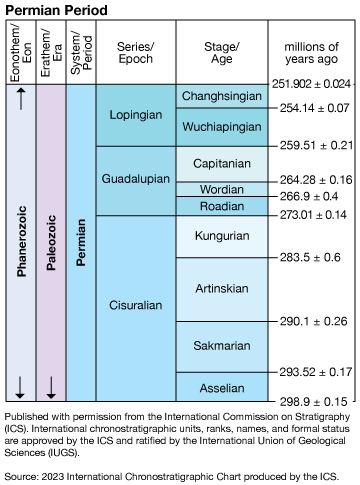
How do scientists use the Capitanian Stage in correlation with other geological stages around the world?
Scientists correlate the Capitanian Stage—the final stage of the Middle Permian Period—with other geological intervals primarily through biostratigraphy. By identifying specific index fossils, researchers can establish the relative age of rock layers across different regions.
The base of the Capitanian is defined by a Global Stratotype Section and Point (GSSP) in Texas, which marks the first appearance of the conodont Jinogondolella postserrata in the fossil record. This stage is further correlated globally using the presence of characteristic fusulinids (such as the genera Yabeina and Polydiexodina) and ammonoids (such as Timorites and Strigogoniatites). These biological markers allow geologists to synchronize the Capitanian with equivalent strata worldwide, positioning it chronologically between the Wordian Stage below and the Wuchiapingian Stage above.1
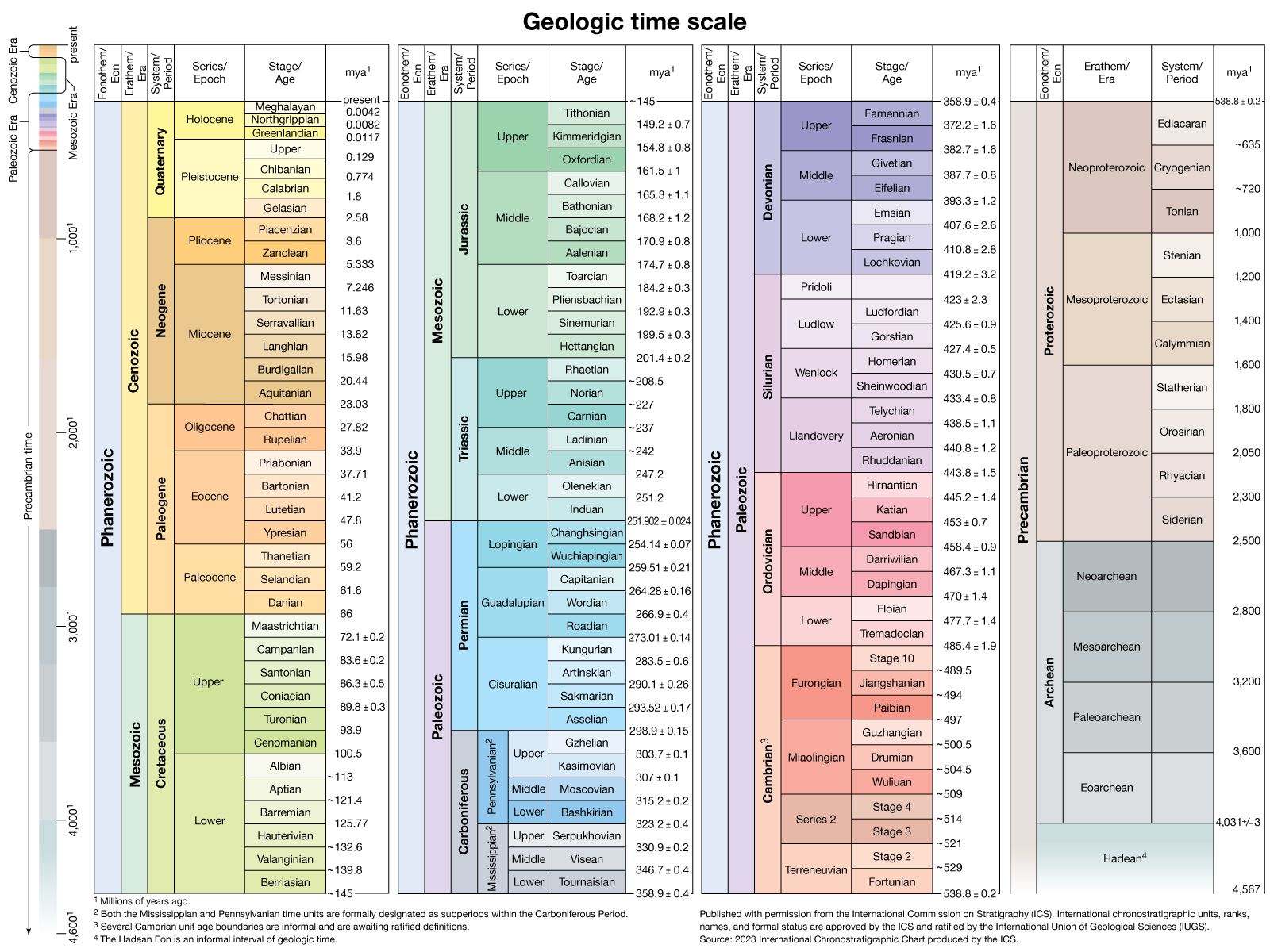
What are the key characteristics of the Capitanian Stage in terms of rock formations and fossils?
The Capitanian Stage represents the final interval of the Middle Permian Period, spanning from approximately 265.1 to 259.9 million years ago.1
Rock Formations
The stage is named after the Capitan Formation found at Capitan Peak in New Mexico. Its defining Global Stratotype Section and Point (GSSP) is located within the Bell Canyon Formation of the Guadalupe Mountains in Texas. This specific GSSP is situated in a limestone deposit located just below the top of Nipple Hill.1
Fossil Characteristics
The Capitanian Stage is identified in the fossil record by several key index fossils:
- Conodonts: The base of the stage is defined by the first appearance of Jinogondolella postserrata.1
- Fusulinids: The stage is characterized by the presence of the genera Yabeina and Polydiexodina.1
- Ammonoids: The presence of the genera Timorites and Strigogoniatites is also diagnostic of this interval.1
These formations and fossils help geologists distinguish the Capitanian from the underlying Wordian Stage and the overlying Wuchiapingian Stage.1
What methods do geologists use to date rocks and fossils from the Capitanian Stage?
Geologists determine the age of rocks and fossils from the Capitanian Stage primarily through biostratigraphy, a method that relies on the identification of specific index fossils within sedimentary rock strata to establish relative geologic age.1
Biostratigraphic Correlation
Because Permian marine invertebrate faunas are often highly localized, biostratigraphers use widely distributed pelagic fossils to correlate strata across different regions. The Capitanian Stage is specifically defined by the first appearance of the conodont Jinogondolella postserrata in the fossil record. Other diagnostic fossils used to identify and correlate this stage include:456
- Fusulinids: Genera such as Yabeina and Polydiexodina.6
- Ammonoids: Genera such as Timorites and Strigogoniatites.6
Integrated Geochronology
While biostratigraphy provides the framework for relative dating, modern geochronology often integrates these findings with absolute dating techniques. Scientists apply radioisotopic dating to volcanic mineral samples found within or near sedimentary sequences to provide numerical ages. Techniques such as potassium-argon dating and the isochron method (using parent-daughter pairs like rubidium-strontium or samarium-neodymium) allow researchers to calibrate the geologic time scale and verify the synchronicity of fossil zones.789
What is the significance of the Capitanian Stage in understanding Earth’s history?
The Capitanian Stage is a critical interval in Earth’s history, marking the final phase of the Middle Permian Period from approximately 265.1 to 259.9 million years ago. Its significance lies primarily in the profound ecological shifts and biodiversity loss that occurred during this time.1
Ecological Crisis and Extinction
The Capitanian Age serves as a pivotal marker for the decline of marine life. By the beginning of this stage, shallow warm-water invertebrate faunas had already experienced significant reductions in generic diversity, ranging from 12 to 70 percent compared to their Middle Permian peaks. This period represents a transition toward the catastrophic extinctions that defined the Middle-to-Late Permian boundary, where diversity levels plummeted to their lowest points since the Ordovician Period.12
Stratigraphic Importance
Geologically, the stage is defined by the Capitan Formation and provides a vital reference point for global correlation. Its Global Stratotype Section and Point (GSSP) in the Guadalupe Mountains allows scientists to track the fossil record through the first appearance of the conodont Jinogondolella postserrata, helping researchers map the environmental stressors that led to the eventual Permian extinction.112
Sources
- Capitanian Stage — Encyclopædia Britannica
- Precambrian - Correlation of Precambrian strata — Encyclopædia Britannica
- Wordian Stage — Encyclopædia Britannica
- Tertiary Period - Correlation of Tertiary strata — Encyclopædia Britannica
- Permian Period - Major subdivisions — Encyclopædia Britannica
- Permian Period - Early work — Encyclopædia Britannica
- Permian Period - Correlation of Permian strata — Encyclopædia Britannica
- Cretaceous Period - Correlation — Encyclopædia Britannica
- dating - The isochron method — Encyclopædia Britannica
- biostratigraphy — Merriam-Webster
- dating - Origin of radioactive elements used — Encyclopædia Britannica
- Permian Period - Marine invertebrates — Encyclopædia Britannica
Published on · 3 min read