Xerophyte
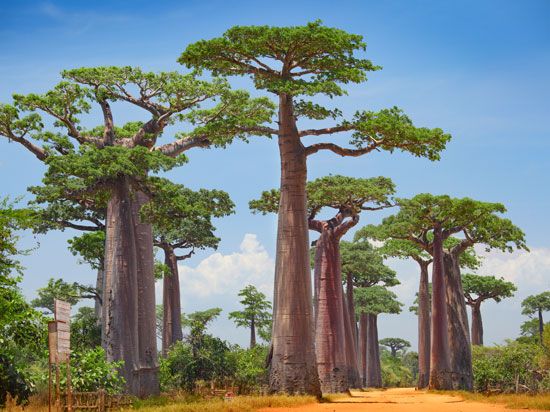
A xerophyte is any plant that has evolved to survive in environments with limited water availability, such as deserts, salt marshes, or acid bogs. These…
What is Xerophyte?
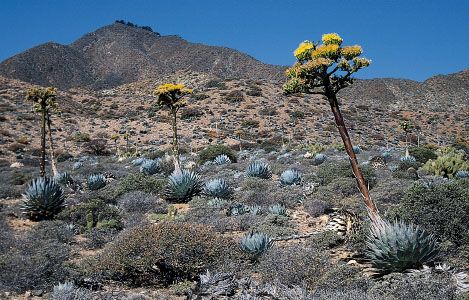
A xerophyte is any plant that has evolved to survive in environments with limited water availability, such as deserts, salt marshes, or acid bogs. These plants utilize specialized mechanisms to either minimize water loss or maximize water storage.12
Common adaptations include:
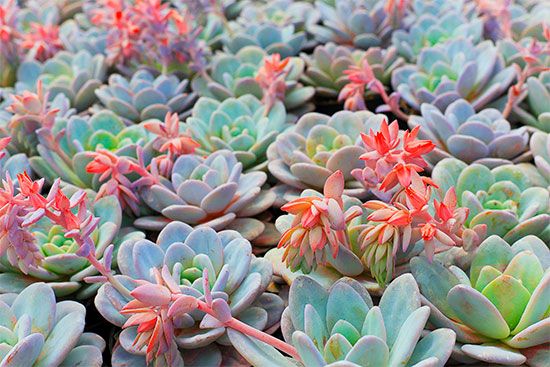
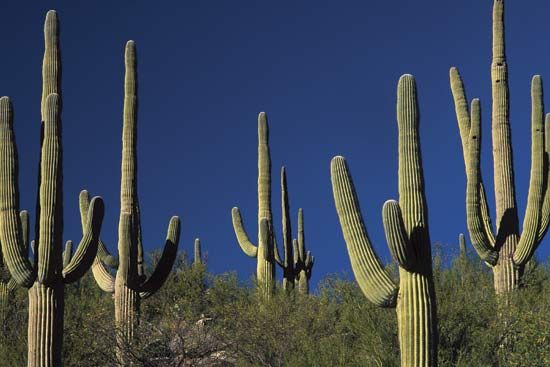
- Water Storage: Succulents, such as cacti and agaves, possess thick, fleshy stems or leaves designed to store water.1
- Water Retention: Many xerophytes feature waxy leaf coatings or dense, hairy coverings to reduce evaporation.1
- Behavioral Adjustments: Some species can drop their leaves during particularly dry periods or reposition/fold their leaves to minimize exposure to direct sunlight.1
These structural and physiological traits allow xerophytes to thrive in conditions that would be lethal to many other forms of vegetation.1
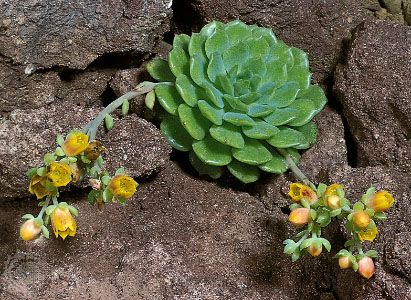
How do succulents store water in their stems?
Succulents store water in their stems through the use of specialized, thick, and fleshy tissues. This storage capacity is primarily facilitated by parenchyma, a type of fundamental plant tissue composed of living, thin-walled cells that are highly adaptable.314
In stems, these parenchyma cells are found in the cortex (the outer layers) and the pith (the innermost layers). Because these cells are unspecialized, they can effectively function as reservoirs for water. To minimize the loss of this stored water, many succulents employ crassulacean acid metabolism, a process where their stomata remain closed during the hot, dry day and open only at night to take in carbon dioxide. This adaptation significantly reduces transpiration, allowing the plant to retain its internal moisture for longer periods.453
What are the differences between xerophytes and hydrophytes?
Xerophytes and hydrophytes represent opposite ends of the spectrum in plant adaptation, primarily defined by their relationship with water availability.
Xerophytes
Xerophytes are plants adapted to survive in dry or physiologically dry habitats, such as deserts, salt marshes, or saline soils. Their primary challenge is conserving water and preventing dehydration. Key adaptations include:162
- Water Conservation: They often feature waxy cuticles, dense mats of trichomes (leaf hairs), and sunken stomata to minimize transpiration sunken stomata to minimize transpiration.62
- Morphology: Many have reduced leaf surface areas, or they may shed leaves entirely during dry periods. Some are succulents with fleshy stems or leaves designed to store water.2718
- Physiology: They may utilize crassulacean acid metabolism (CAM), opening their stomata only at night to reduce water loss.2
Hydrophytes
Hydrophytes are adapted to aquatic environments, such as submerged or standing water. Because water is abundant, they do not require mechanisms to prevent water loss. Key characteristics include:8
- Simplified Anatomy: They often lack a thick cuticle, and their vascular system is weakly developed because the surrounding water provides mechanical support.8
- Gas Exchange: Their leaves often contain aerenchyma, a tissue that promotes gas exchange and buoyancy.8
- Transpiration: Unlike xerophytes, these plants are structured to permit the rapid loss of water vapor, as they face no risk of dehydration.8
How do waxy leaf coatings help plants survive?
Waxy leaf coatings, known as the cuticle, are essential adaptations that help plants survive by regulating their interaction with the environment. This protective layer is composed of cutin, a water-repellent, fatty substance deposited in the walls of the epidermis.
The primary function of the cuticle and associated epicuticular waxes is to minimize transpiration, or the loss of water vapor from the plant to the atmosphere. By creating a waterproof barrier, these coatings allow plants to retain internal moisture, which is particularly critical for survival in arid conditions where desert plants often develop especially heavy wax coatings.
While the cuticle acts as a barrier, plants must still exchange gases like carbon dioxide and oxygen. They manage this through stomata—small pores regulated by guard cells—which allow for controlled gas exchange while the surrounding waxy cuticle prevents uncontrolled water loss.
Sources
- Xerophyte — Encyclopædia Britannica
- xerophyte — Merriam-Webster
- Succulent — Encyclopædia Britannica
- Parenchyma — Encyclopædia Britannica
- Plant - Stems — Encyclopædia Britannica
- Angiosperm - Leaves — Encyclopædia Britannica
- Transpiration — Encyclopædia Britannica
- Biosphere - Humidity — Encyclopædia Britannica
- Cuticle — Encyclopædia Britannica
- Angiosperm - Dermal tissue — Encyclopædia Britannica
Published on · 3 min read