Yosemite Falls
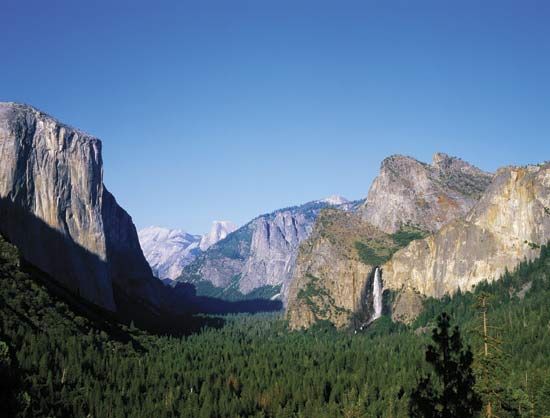
Yosemite Falls, located in Yosemite National Park, California, has a total drop of 2,425 feet (740 meters). This impressive cataract consists of three…
What is the total height of Yosemite Falls and how does it compare to other waterfalls in North America?
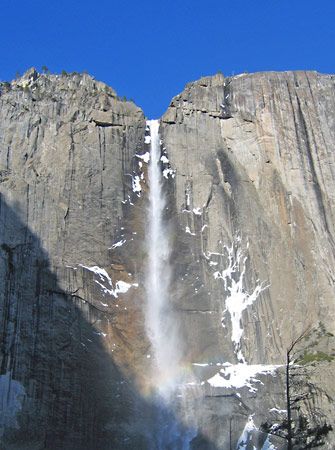
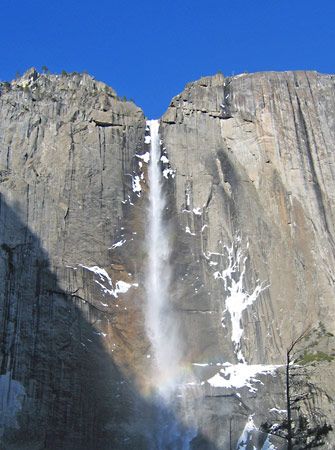
Yosemite Falls, located in Yosemite National Park, California, has a total drop of 2,425 feet (740 meters). This impressive cataract consists of three distinct sections: the Upper Yosemite Fall, which drops 1,430 feet (436 meters); the Lower Fall, which drops 320 feet (98 meters); and a series of cascades between them.1
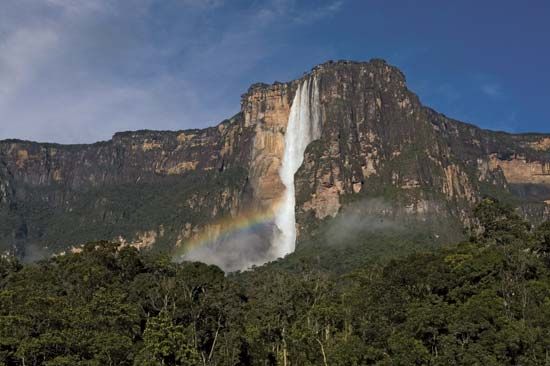
In terms of scale, Yosemite Falls is recognized as the highest waterfall in North America. While it is one of the world’s tallest cataracts, it is surpassed in total height by Angel Falls in Venezuela, which stands at 2,650 feet (807 meters). Unlike some other famous waterfalls, such as Niagara Falls, which are noted for their massive volume, the flow of Yosemite Falls is highly variable and depends on snowmelt, often reaching its peak in May and June.12
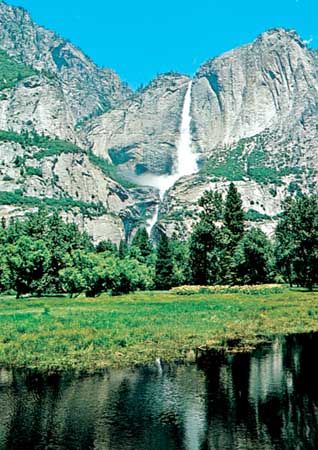
How do the different sections of Yosemite Falls (Upper, Middle, and Lower) contribute to its overall structure?
The structure of Yosemite Falls is defined by its origin as a series of snow-fed creeks tumbling from a hanging valley into the Yosemite Valley below. Its unique three-part configuration—consisting of an upper fall, a lower fall, and a series of middle cascades—is the result of vertical rock joints being interrupted by two horizontal joints in the underlying bedrock.14
The individual sections contribute to the total 2,425-foot (740-meter) drop as follows:
- Upper Yosemite Fall: This primary section features a dramatic vertical drop of 1,430 feet (436 meters).14
- Middle Cascades: Located between the upper and lower sections, this series of cascades connects the two main drops.14
- Lower Yosemite Fall: The final section of the falls, which descends 320 feet (98 meters) to the valley floor.14
This structural arrangement is a classic example of a waterfall formed by the discordance of a river profile, where tributary valleys were left elevated after the main trunk valley was deeply carved by glacial activity.15
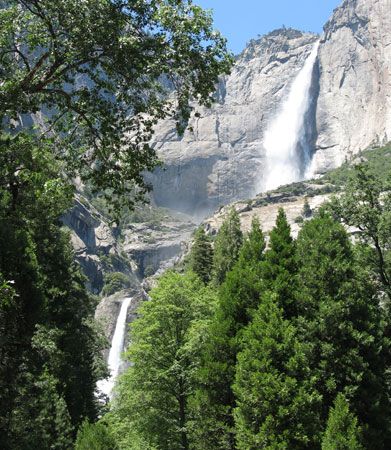
How has Yosemite Falls influenced the cultural and natural history of Yosemite National Park?
Yosemite Falls has played a pivotal role in both the natural and cultural history of Yosemite National Park. Geologically, the falls are a defining feature of the Yosemite Valley, formed by snow-fed creeks tumbling over the edges of hanging tributary valleys that were left elevated by glacial erosion.16
Culturally, the falls helped catalyze the American conservation movement. As early settlers and entrepreneurs arrived in the valley, the dissemination of artistic depictions—including lithographs of paintings by artists like Thomas Hill and photographs by Carleton E. Watkins—brought the region’s natural wonders to global attention. The resulting influx of visitors and subsequent environmental degradation prompted early calls for federal protection, leading to the authorization of a state park in 1864.6
Later, the advocacy of naturalist John Muir was instrumental in the establishment of the national park in 1890. Muir’s efforts to ensure the long-term preservation of such sites culminated in his 1903 meeting with President Theodore Roosevelt in the park, a landmark event that solidified the federal commitment to protecting these iconic landscapes.67
What role does Yosemite Falls play in the water system of Yosemite Valley?
Yosemite Falls serves as a critical component of the Yosemite National Park hydrological system by acting as a conduit for snowmelt. The falls are fed by creeks that originate from high-elevation snowpack, which then tumble over the edges of hanging tributary valleys into the Yosemite Valley below1.
The water system of these falls is highly seasonal and dependent on precipitation patterns. The volume of water is variable, reaching its maximum flow during the spring months of May and June as the winter snowpack melts. Because the system relies primarily on this melting snow, the flow can diminish significantly during years with low precipitation, and the falls may even run dry during certain parts of the year. Ultimately, the water from these creeks drains into the Merced River, which serves as the primary drainage artery for the valley.13
Sources
- Yosemite Falls — Encyclopædia Britannica
- waterfall — Encyclopædia Britannica
- Upper Yosemite Fall — Encyclopædia Britannica
- river - Falls attributable to discordance of river profile — Encyclopædia Britannica
- Yosemite Falls — Merriam-Webster
- Yosemite National Park — Encyclopædia Britannica
- National Park Service - Origins of the U.S. national park system — Encyclopædia Britannica
- Bridalveil Fall — Encyclopædia Britannica
- Nevada Fall — Encyclopædia Britannica
Published on · 3 min read