Zebra
There are three distinct species of zebras, all of which belong to the horse family, Equidae. They are primarily found in the wild across the African…
How many species of zebras exist, and where are they primarily found in the wild?
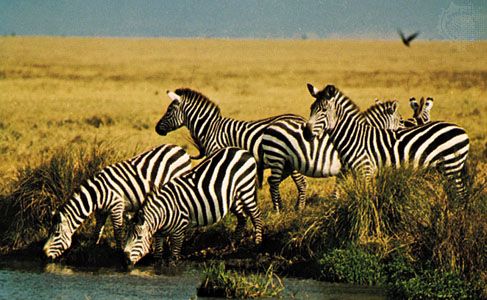
There are three distinct species of zebras, all of which belong to the horse family, Equidae. They are primarily found in the wild across the African continent:
- Plains zebra (E. quagga): This species is found throughout the grasslands and savannas of eastern and southern Africa.
- Grevy’s zebra (E. grevyi): These animals inhabit arid, sparsely wooded areas and semidesert plains, primarily in Kenya, as well as parts of Ethiopia and western Somaliland.
- Mountain zebra (E. zebra): This species lives in dry, rocky upland plains and escarpments, mainly in Namibia and scattered regions of western South Africa.
While these species share a common ancestry, they have adapted to different environments and exhibit unique social structures and physical characteristics. Unfortunately, all three species have seen their populations decline due to human activity, with Grevy’s zebra currently listed as an endangered species.
What is the gestation period for zebras, and how do they care for their young?
The provided search results do not contain information regarding the specific duration of the gestation period for zebras.
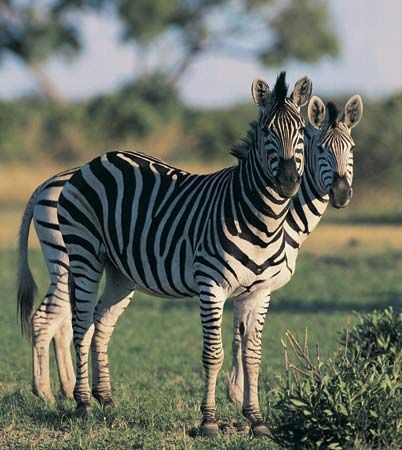
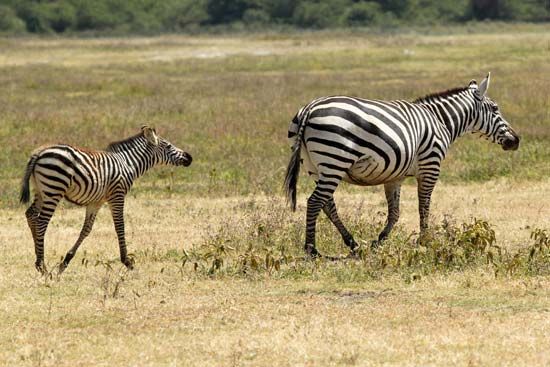
Regarding the care of their young, zebras give birth to precocial offspring that are well-developed and capable of standing shortly after birth—a plains zebra foal has been observed standing firmly within 14 minutes. During the first few days of life, a mare will drive away other zebras to ensure the foal forms a strong bond with her through a process of imprinting.3
Foals follow their mothers closely and are groomed frequently. To protect their young from predators like hyenas and wild dogs, zebras form a defensive cluster around the mother and foal rather than bolting, and the stallion will actively attack predators if the harem is threatened. Young zebras typically remain with their mothers until the next offspring is born.31
What is the social structure of zebra herds, and how do they communicate with each other?
The social structure and communication of zebras vary significantly by species, reflecting their unique adaptations to their environments.
Social Structure
- Plains and Mountain Zebras: These species live in stable, small family groups known as harems, consisting of a single stallion, several unrelated mares, and their foals. These groups remain intact even if the lead stallion is replaced. When food is abundant, these smaller groups may coalesce into larger herds while maintaining their individual group identities.1
- Grevy’s Zebra: Unlike the other species, Grevy’s zebra males are territorial. They mark boundaries with dung piles, or middens, to control access to vital resources like water and grazing sites. Females and bachelor males form unstable groups without a clear dominance hierarchy, and they do not maintain lasting bonds.1
Communication and Social Interaction
Zebras utilize several methods to interact and maintain social cohesion:
- Physical Identification: Because every zebra’s stripe pattern is unique—much like a human fingerprint—individuals can recognize one another, which helps maintain social bonds within their groups.14
- Grooming: Mutual grooming is a key social behavior, particularly among plains zebras. Animals stand facing opposite directions and groom each other by nibbling at the base of the neck and the root of the tail.5
- Greeting Rituals: Zebras typically greet one another through simple nose-to-nose contact. Adult stallions, however, engage in a more formal ceremony that involves nose-to-genital contact.5
How do zebras’ digestive systems differ from those of other herbivores?
Zebras are classified as hindgut fermenters, a digestive strategy that differs significantly from that of ruminants like cattle or sheep. While ruminants utilize a specialized stomach compartment called the rumen to ferment plant material before it reaches the stomach, zebras process their food in the cecum, a side pocket located at the far end of the small intestine.61
This distinction leads to several functional differences:
- Efficiency vs. Speed: Cecal digestion is generally less efficient at breaking down high-fiber grasses than ruminant digestion. However, because zebras do not regurgitate food (chewing cud), their forage passes through the digestive tract much more rapidly.61
- Dietary Adaptation: Because food moves quickly through their system, zebras can compensate for lower digestive efficiency by consuming a higher volume of forage. This allows them to extract more protein from low-quality, high-fiber grasses that ruminants cannot process effectively, providing a survival advantage during droughts or seasonal declines in food quality.1
- Physicality: The smaller bulk of the cecum compared to a rumen allows zebras to remain more athletic and agile, which is essential for escaping carnivore predators.6
Sources
- zebra — Encyclopædia Britannica
- perissodactyl - Zebras — Encyclopædia Britannica
- perissodactyl - Relations between parent and offspring — Encyclopædia Britannica
- perissodactyl - Amicable behaviour — Encyclopædia Britannica
- Why do zebras have stripes? — Encyclopædia Britannica
- nutrition - Herbivores — Encyclopædia Britannica
- horse - Anatomical adaptations — Encyclopædia Britannica
Published on · 4 min read