Beardfish
A beardfish is any of the five species of fish belonging to the genus Polymixia, which makes up the family Polymixiidae. These fish are primarily found in…
What is beardfish?
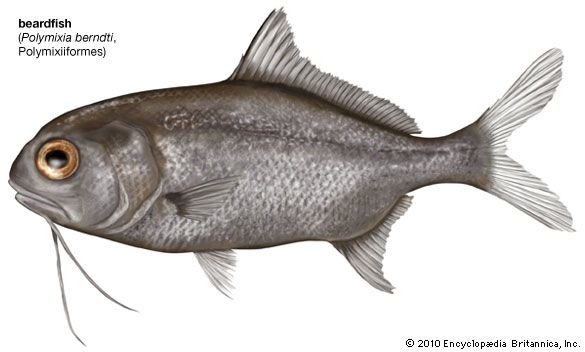
A beardfish is any of the five species of fish belonging to the genus Polymixia, which makes up the family Polymixiidae. These fish are primarily found in deep-sea marine environments across tropical and temperate regions of the Atlantic and Pacific oceans, typically at depths between 200 and 600 metres (650 to 2,000 feet).1
The name “beardfish” is derived from the two enlarged barbels that extend downward from the chin, giving the fish a beardlike appearance. They are relatively small; for example, the stout beardfish (P. nobilis) generally grows to less than 20 centimetres (8 inches) in length.1
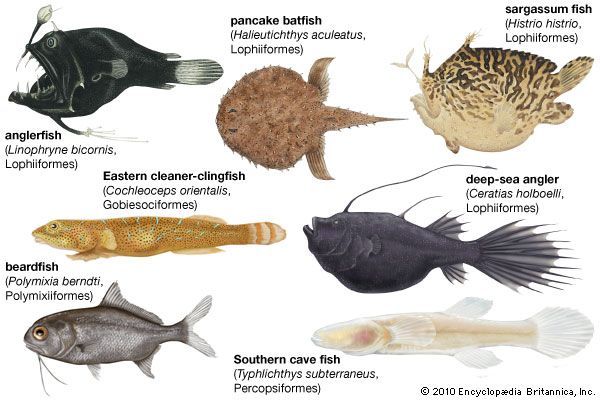
What are barbels and how do fish use them?
Barbels are slender, fleshy, fingerlike projections found on the snouts, chins, or corners of the mouths of many fish species, such as catfish, minnows, and loaches.23
These structures serve as vital sensory tools, primarily functioning as organs for touch and taste. Because many bottom-feeding fish inhabit environments where vision may be limited, they rely on their barbels to actively explore the river or ocean floor.2456
The way fish use barbels includes:
- Tactile Sensing: Barbels are highly sensitive to touch, allowing fish to physically detect objects and navigate their surroundings.24
- Chemoreception: Barbels are often covered in numerous taste buds, enabling the fish to “taste” the water and substrate to locate food sources like mollusks or other small organisms.627
- Food Selection: By combining touch and taste, fish can effectively identify and select food items before ingestion.24
What other creatures live in the deep-sea zone?
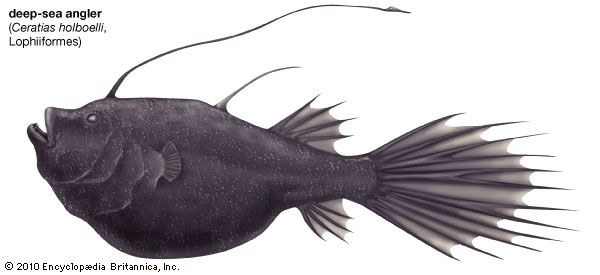
The deep-sea zone, particularly the aphotic zone where sunlight does not penetrate, hosts a highly specialized array of life adapted to extreme pressure, cold, and darkness. These creatures often rely on bioluminescence to attract prey or mates, or they sustain themselves through chemosynthesis near hydrothermal vents.8910
Deep-Sea Inhabitants
- Mid-water (Pelagic) Species: These organisms often possess large mouths, enlarged eyes, and light-producing organs. Notable examples include:
- Bottom-dwelling (Benthic) Species: These creatures typically have smaller eyes and often lack bioluminescence. They include:
- Grenadiers, Batfishes, and Cusk Eels: Common inhabitants of the ocean floor.811
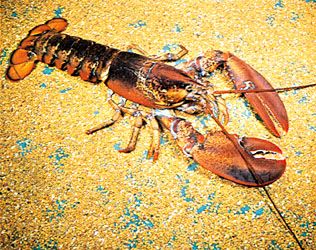
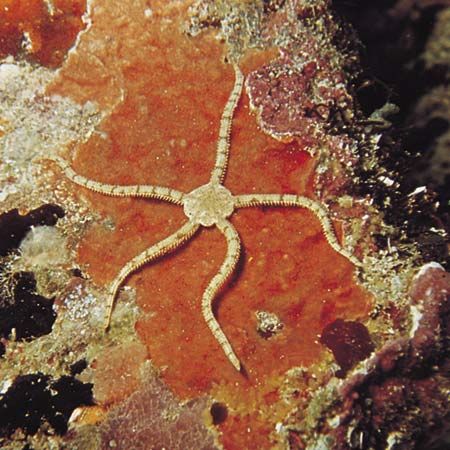
- Invertebrates: Various crustaceans, mollusks, sea cucumbers, and brittle stars thrive in these depths.91314
- Vent Communities: Unique ecosystems surrounding hydrothermal vents feature specialized bacteria, tube worms, and other organisms that derive nutrition from geothermal energy rather than sunlight.1014
How do fish adapt to high-pressure environments?
To survive the extreme hydrostatic pressure of the deep sea, fish have evolved specialized physiological and structural adaptations. Because pressure increases by one atmosphere for every 10 meters of depth, deep-sea environments present significant challenges to organisms accustomed to surface conditions.8
Key adaptations include:
- Loss of Air Compartments: Unlike many surface-dwelling fish, deep-sea species often lack a swim bladder, or have one that is significantly reduced or entirely absent. Because swim bladders are gas-filled, they would be crushed or require immense energy to maintain at extreme depths.16178
- Reduced Energy Requirements: Many deep-sea fish have evolved bodies that appear gelatinous, with reduced skeletal and muscular systems. This structural simplification requires less energy to maintain, which is a critical advantage in the food-poor environment of the deep ocean.15
- Specialized Buoyancy: In some deep-sea species, the swim bladder is filled with oil rather than gas, which provides buoyancy without the risks associated with compressible air pockets under high pressure.1617
These evolutionary traits allow deep-sea fish to thrive in habitats where pressures can reach hundreds of atmospheres.188
Sources
- beardfish — Encyclopædia Britannica
- barb — Encyclopædia Britannica
- fish - Taste — Encyclopædia Britannica
- ostariophysan - Barbels — Encyclopædia Britannica
- barbel — Merriam-Webster
- fish - Other senses (touch, pain, and special senses) — Encyclopædia Britannica
- Chemoreception - Fish — Encyclopædia Britannica
- deep-sea fish — Encyclopædia Britannica
- Marine bioluminescence — Encyclopædia Britannica
- Marine ecosystem - Geography, oceanography, and topography — Encyclopædia Britannica
- community ecology - The pyramid structure of communities — Encyclopædia Britannica
- bathypelagic zone — Encyclopædia Britannica
- life - Temperature and desiccation — Encyclopædia Britannica
- paracanthopterygian - Ecology and behavior — Encyclopædia Britannica
- Biosphere - Hydrostatic pressure — Encyclopædia Britannica
- Respiratory system - Fishes — Encyclopædia Britannica
- swim bladder — Encyclopædia Britannica
- fish - The respiratory system — Encyclopædia Britannica
- fish - Structural diversity — Encyclopædia Britannica
- Mechanoreception - Generalized hydrostatic pressure — Encyclopædia Britannica
- protacanthopterygian - Ecology — Encyclopædia Britannica
Published on · 3 min read