Belcher Islands
The Belcher Islands are an archipelago located in the southeastern portion of Hudson Bay, situated north of the mouth of James Bay within the Nunavut…
What is Belcher Islands?
The Belcher Islands are an archipelago located in the southeastern portion of Hudson Bay, situated north of the mouth of James Bay within the Nunavut territory of Canada.1
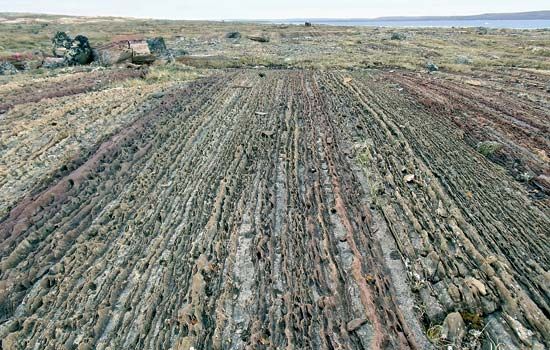
The islands are characterized by a low-lying, striated landscape covering approximately 5,000 square miles (13,000 square km), though only about 1,118 square miles (2,896 square km) of this area is land. While Henry Hudson first sighted the group in 1610, they were not formally explored or mapped until 1915. The archipelago is named after Sir Edward Belcher, a British naval officer who led an expedition to locate Sir John Franklin. Geologically, the islands are notable for large deposits of iron ore. The region’s sparse population is primarily served by the community of Sanikiluaq, which features an airstrip.1
Who was Henry Hudson and what did he discover?
Henry Hudson (c. 1565–1611) was an English navigator and explorer renowned for his four hazardous voyages in search of a short route from Europe to Asia via the Arctic Ocean. While he never found the desired passage, his expeditions significantly expanded geographical knowledge of North America and the Arctic.2
His key explorations and discoveries include:
- The Arctic: During his 1607 and 1608 voyages, he explored the Svalbard archipelago and the waters near Novaya Zemlya, building upon the work of earlier explorers like Willem Barents.2
- The Hudson River: In 1609, while sailing for the Dutch East India Company, he explored the river that now bears his name, ascending it to the vicinity of modern-day Albany. This discovery provided the foundation for future Dutch colonization.2
- Hudson Strait and Bay: In 1610, he navigated the Hudson Strait and entered the vast Hudson Bay. His exploration of these waters formed the basis for English claims to much of Canada.2
Hudson’s final voyage ended in tragedy when his crew mutinied in 1611, casting him and several others adrift in Hudson Bay, never to be seen again.2
What is the significance of iron ore deposits in the Arctic?
Iron ore deposits in the Arctic represent a significant, though partially untapped, component of the region’s mineral wealth. While the Arctic is currently most economically recognized for its vast hydrocarbon reserves, such as oil and natural gas, hard-rock mining remains a critical sector, particularly in Russia.3
In Russia, the development of mineral resources—including iron ore, gold, tin, nickel, copper, platinum, and cobalt—was historically driven by a national policy of self-sufficiency, with major mining centers established around Murmansk and Norilsk. In other parts of the Arctic, such as Canada, iron ore is also present; for instance, large deposits underlie the Belcher Islands and the neighboring Nastapoka Islands in Hudson Bay.31
Although the Arctic covers 15 percent of the planet’s land area, its mineral potential has not been exhaustively explored. Consequently, while current extraction is significant in specific regions, there remains the potential for enormous expansion should global demand or economic requirements shift.4
How do people live in the remote community of Sanikiluaq?
Sanikiluaq is a remote community located on the Belcher Islands in the southeastern portion of Hudson Bay, within the Nunavut territory of Canada. As of 2011, the settlement had a population of 812 people and is served by an airstrip, which provides essential connectivity to the outside world.1
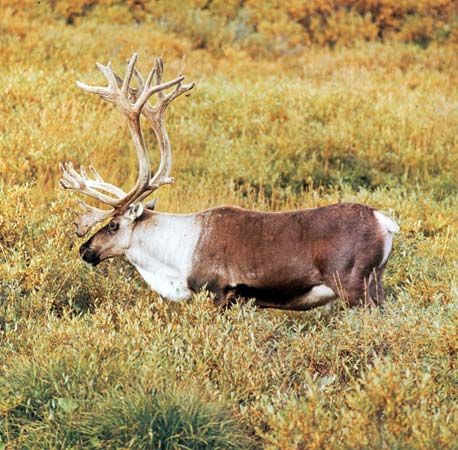
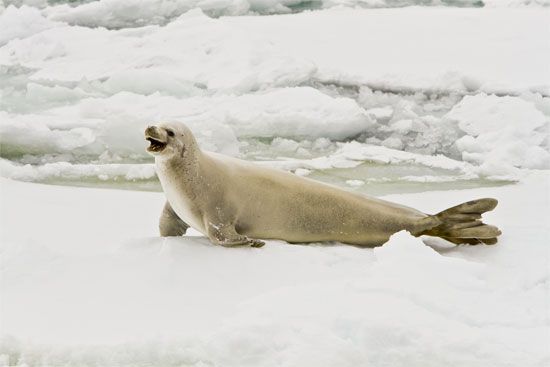
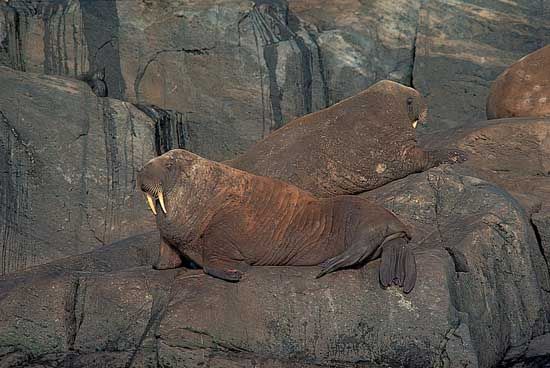
Life in this region is shaped by the harsh Arctic environment, characterized by permafrost and a severe continental climate where winter temperatures can drop to −60 °F (−51 °C). Historically, life for the Inuit in such regions has revolved around traditional practices, including hunting caribou, seals, walruses, whales, and fish for sustenance. Today, fishing and the hunting of sea mammals for their pelts remain primary local occupations for residents along the rim of Hudson Bay.56
The community exists within a landscape of low-lying, striated islands that were not fully mapped until 1915. While the area is known for its significant iron ore deposits, the population density remains very low, reflecting the challenges of living in such a remote, northern environment.15
Sources
- Belcher Islands — Encyclopædia Britannica
- Henry Hudson — Encyclopædia Britannica
- Arctic - Mineral resources — Encyclopædia Britannica
- Arctic - The economy of the Arctic — Encyclopædia Britannica
- Nunivak Island — Encyclopædia Britannica
- Inuit: Top Questions — Encyclopædia Britannica
- Hudson Bay — Encyclopædia Britannica
Published on · 3 min read