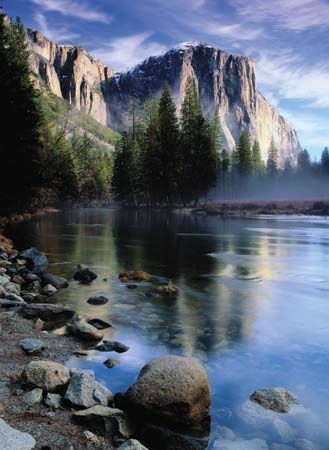
Bellenden Ker Range
The Bellenden Ker Range is a granitic massif located in the Eastern Highlands of northeastern Queensland, Australia. Extending 40 miles (65 km) along the…
What is Bellenden Ker Range?
The Bellenden Ker Range is a granitic massif located in the Eastern Highlands of northeastern Queensland, Australia. Extending 40 miles (65 km) along the coast, the range is bounded by the Mulgrave River, the Innisfail Downs, and the Atherton Plateau.1
Named after the Scottish botanist John Bellenden-Ker, the range reaches its highest point at Mt. Bartle Frere, which stands at 5,287 feet (1,611 meters). In 1921, the area was designated a national park, covering 125 square miles (325 square km). The landscape is ecologically diverse, featuring vegetation that transitions from tropical rain forests to scrub-covered peaks, and it contains significant cultural sites, such as Aboriginal bora rings used for tribal rites.1
What is the significance of Mount Bartle Frere?
Mount Bartle Frere is a significant geographical landmark in northeastern Queensland, Australia, primarily recognized as the highest point in the state, reaching an elevation of 5,287 feet (1,611 meters).2
Located within the Bellenden Ker Range, the mountain is situated in an area protected as a national park. Its slopes are characterized by a rain forest climate, which supports a diverse ecosystem of tropical plants, birds, and mammals. The peak was named in 1873 by the Scottish explorer George A.F.E. Dalrymple to honor Sir Henry Bartle Edward Frere, who served as the governor of Bombay from 1862 to 1867.2
What are the unique characteristics of tropical rainforest ecosystems in Australia?
Tropical rainforest ecosystems in Australia, primarily located in Queensland and the Cape York Peninsula, are characterized by a high degree of biological diversity and complex structural features.34
Key Characteristics
- Structure: These forests feature large trees with stem buttresses and multiple vegetation layers, including interlaced canopies of lianas and epiphytes, fitting the popular concept of “jungle.”3
- Influences: The vegetation exhibits a strong Malesian influence, reflecting a history of botanical exchange.35
- Climate and Soil: While the climate is hot and wet, the soils are often deep but relatively infertile due to heavy leaching of nutrients by high rainfall. Most nutrients are concentrated in the uppermost soil layers, recycled from decomposing organic litter.6
- Biodiversity: These regions support unique fauna, such as the cassowary and tree kangaroos. The northern rainforests are of such global significance that they were designated a UNESCO World Heritage site in 1988.74
How do Aboriginal bora rings reflect cultural history?
Sources
- Bellenden Ker Range — Encyclopædia Britannica
- Mount Bartle Frere — Encyclopædia Britannica
- Australia - Vegetation — Encyclopædia Britannica
- Australia - Animal life — Encyclopædia Britannica
- Queensland - Plant and animal life — Encyclopædia Britannica
- Tropical rainforest - Environment — Encyclopædia Britannica
- Australia - Plant life — Encyclopædia Britannica
- Temperate rainforest — Encyclopædia Britannica
- Queensland — Encyclopædia Britannica
- Australian Aboriginal peoples - Economic organization — Encyclopædia Britannica
Published on · 2 min read