Cornflower
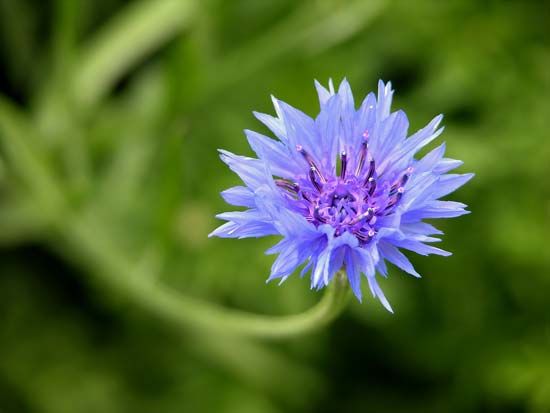
The cornflower (Centaurea cyanus) is an herbaceous annual plant belonging to the Asteraceae family. Native to Europe, it earned its common name because it…
What is Cornflower?
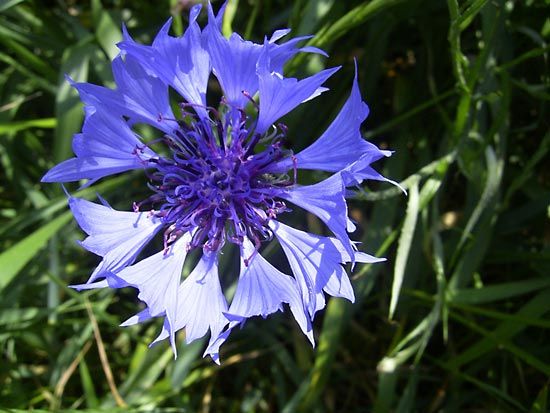
The cornflower (Centaurea cyanus) is an herbaceous annual plant belonging to the Asteraceae family. Native to Europe, it earned its common name because it was historically a frequent weed found in fields of corn and other grains.1
These plants typically reach heights of 30–90 cm and feature narrow, gray-green leaves. They produce papery flower heads—often blue, pink, or white—that are highly attractive to butterflies. While widely cultivated as garden plants in North America, they have also naturalized as an invasive species in certain regions outside their native range. Because they readily reseed, they are popular for use in both fresh and dried floral arrangements.1
It is important to distinguish the cornflower from the corn poppy, a different species (Papaver rhoeas) known for its brilliant red petals and its role as a symbol of World War I.2
What are some other plants in the Asteraceae family?
The Asteraceae family, also known as the aster, daisy, or composite family, is one of the largest families of flowering plants, encompassing more than 1,620 genera and 25,000 species. These plants are found globally and range from small herbs to shrubs and trees.34
Commonly recognized members of the Asteraceae family include:
- Garden Favorites: Aster, cosmos, dahlia, marigold, zinnia, and chrysanthemum.4
- Edibles: Lettuce, artichoke, cardoon, endive, chicory, tarragon, safflower, and stevia.4
- Wildflowers and Herbs: Dandelion, goldenrod, black-eyed Susan, yarrow, chamomile, arnica, and sagebrush.4
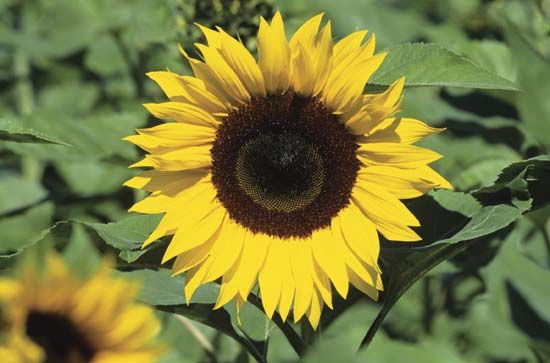
- Others: Burdock, cocklebur, ragweed, and sunflower.4
These plants are characterized by their composite flower heads, which are often composed of many small florets surrounded by bracts.546
Why are some plants considered invasive species?
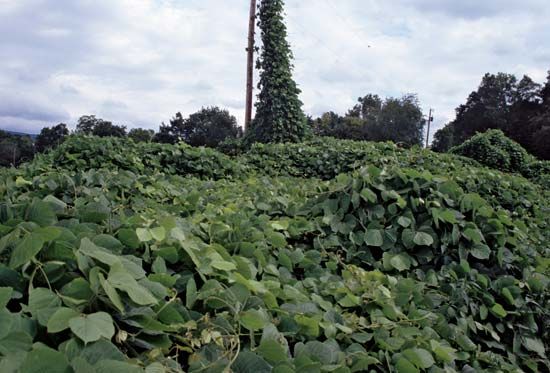
An invasive species is any nonnative organism that significantly disrupts or modifies the ecosystems it colonizes. While some species migrate naturally, many are introduced to new habitats through human activities, such as global commerce and the pet trade.7
Plants and animals often become invasive because they possess a competitive advantage over indigenous species, particularly when the new environment lacks natural predators to keep their populations in check. These invaders may:7
- Outcompete native species: They can prevent native organisms from obtaining essential resources like food, water, sunlight, or living space. For example, the common buckthorn creates dense vegetation that blocks sunlight, displacing native plants.78
- Disrupt ecosystem balance: Invasive predators can cause prey populations to decline or face local extinction.7
- Spread disease: They may act as vectors for parasites and pathogens that harm native life.7
- Use chemical warfare: Some plants, such as Japanese knotweed, are allelopathic, meaning they release chemicals into the soil that inhibit the growth of surrounding plants.9
Ultimately, these invasions reduce biodiversity and can cause significant economic harm.7
How do butterflies interact with garden flowers?
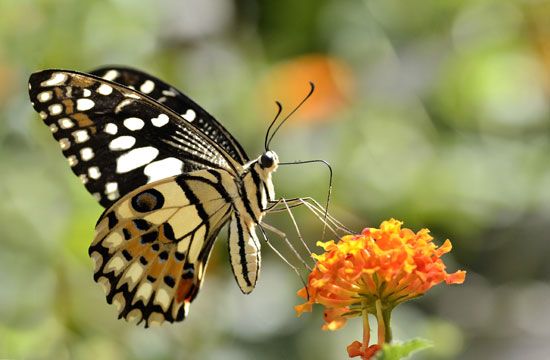
Butterflies interact with garden flowers primarily as pollinators, a relationship shaped by the coevolution of Lepidoptera and modern flowering plants. Because butterflies are diurnal, they are attracted to flowers that are conspicuously colored—often in shades of red, pink, or purple—and provide a stable landing platform, such as the flat-topped inflorescences found on milkweed or butterfly bush.1415
When visiting a flower, a butterfly uses its specialized, coiled tongue, known as a proboscis, to reach deep into the bloom for nectar. Interestingly, some butterflies can taste sugar solutions with their feet, which helps them identify suitable food sources upon landing. While color is a primary attractant, fragrance also plays a significant role in guiding them to their targets. By moving between plants to feed, butterflies facilitate the transfer of pollen, which is essential for the reproduction of many garden species.141516
Sources
- Cornflower — Encyclopædia Britannica
- corn poppy — Encyclopædia Britannica
- Asteraceae — Encyclopædia Britannica
- Asteraceae - Physical characteristics — Encyclopædia Britannica
- list of plants in the family Asteraceae — Encyclopædia Britannica
- Asteraceae - Flowers — Encyclopædia Britannica
- invasive species — Encyclopædia Britannica
- habitat loss — Encyclopædia Britannica
- Japanese knotweed — Encyclopædia Britannica
- weed - Biological control — Encyclopædia Britannica
- invasive species - Solutions — Encyclopædia Britannica
- conservation - Removing invasive species — Encyclopædia Britannica
- Plant - Dispersal and colonization — Encyclopædia Britannica
- Major types of pollinators - Butterflies and moths — Encyclopædia Britannica
- Pollination - Butterflies and moths — Encyclopædia Britannica
- What’s the difference between moths and butterflies? — Encyclopædia Britannica
Published on · 3 min read