Bullet Ant
The bullet ant (Paraponera clavata) is a large, predatory ant native to the humid lowland rainforests of Central and South America. It is widely recognized…
What is a bullet ant?
The bullet ant (Paraponera clavata) is a large, predatory ant native to the humid lowland rainforests of Central and South America. It is widely recognized for possessing the most painful sting of any insect, which is rated at the maximum 4+ on the Schmidt sting pain index.12
The insect derives its common name from the sensation of its sting, which is often described as feeling like a gunshot. This intense, throbbing pain is caused by poneratoxin, a paralyzing neurotoxic peptide found in the ant’s venom in the ant’s venom. In humans, the sting can cause temporary paralysis, uncontrollable trembling, and pain that may persist for up to 24 hours.1
Socially, these ants live in colonies and build nests in the soil at the base of trees. They are active foragers, hunting for spiders, frogs, and other insects primarily at night.1
Where do bullet ants live?
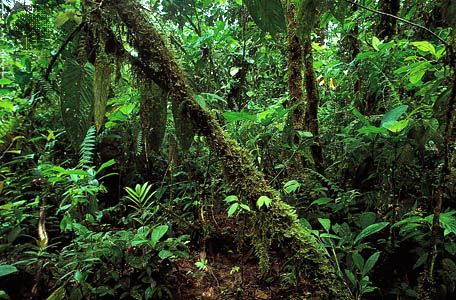
Bullet ants (Paraponera clavata) are native to the humid lowland rainforests of Central and South America. Their geographic range extends from El Salvador and Honduras in the north, down through Peru, Bolivia, Venezuela, and Brazil.1
Within these forest environments, they typically build their nests in the soil at the base of trees or lianas. These locations provide the ants with convenient access to the forest canopy, where they forage for food and water.1
It is important to note that the “Texas bullet ant” (Neoponera villosa) is a separate, unrelated species found in Texas and Mexico, and should not be confused with the true bullet ant of Central and South America.1
What does a bullet ant look like?
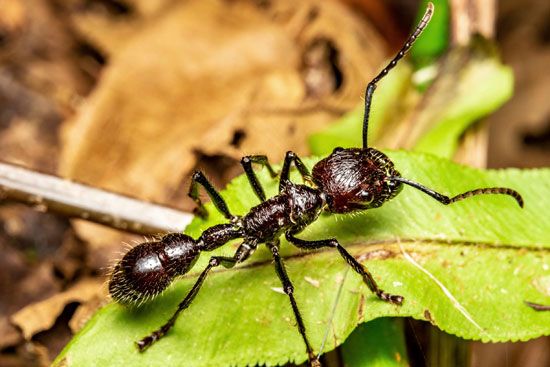
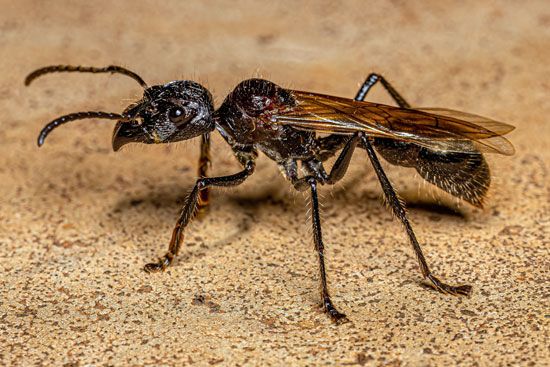
The bullet ant (Paraponera clavata) is a large, reddish-brown ant that typically measures between 1.8 and 2.5 cm (0.7 to 1 inch) in length.3
Physically, the bullet ant possesses large mandibles and bears a notable resemblance to a wingless wasp. Like other ants, it features a large head, a slender abdomen, and a thorax joined by a thin waist. A defining characteristic of the worker ants is the powerful sting located at the tip of the abdomen, which they use for both defense and hunting. While queens are only slightly larger than workers, they are distinguished by the presence of wings until they mate.31
Why is the bullet ant known for its sting?
The bullet ant (Paraponera clavata) is renowned for possessing what is considered the most painful insect sting in the world, earning a maximum 4+ rating on the Schmidt sting pain index.1
The extreme sensation is caused by poneratoxin, a paralyzing neurotoxic peptide found in the ant’s venom. When a human is stung, this toxin triggers intense, throbbing pain that can last for up to 24 hours—leading some to call it the “24-hour ant”—along with symptoms like uncontrollable trembling, temporary paralysis, and swelling of the lymph nodes. Entomologist Justin O. Schmidt famously described the experience as “pure, intense, brilliant pain,” comparing it to “walking over flaming charcoal with a 3-inch nail in your heel”.12
Beyond its defensive use, the sting is biologically significant for the ant’s ability to paralyze prey, such as spiders and other insects. Researchers are currently studying the potential medical applications of the venom’s bioactive peptides for future analgesic drugs.1
Sources
- bullet ant — Encyclopædia Britannica
- Schmidt sting pain index — Encyclopædia Britannica
- ant - Physical description — Encyclopædia Britannica
Published on · 3 min read