Bullhead Shark
A bullhead shark refers to any shark belonging to the genus Heterodontus and the family Heterodontidae. These exclusively marine animals are characterized by…
What is bullhead shark?
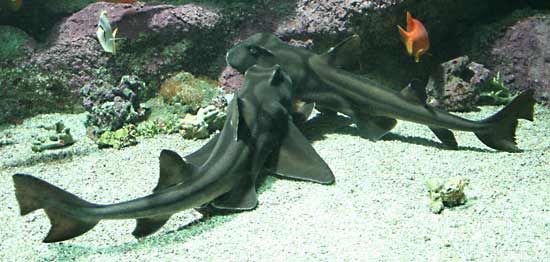
A bullhead shark refers to any shark belonging to the genus Heterodontus and the family Heterodontidae. These exclusively marine animals are characterized by their broad heads, small mouths, and short snouts. They are typically found in the tropical regions of the Pacific and Indian oceans, as well as the eastern Pacific from California to the Galapagos Islands.12
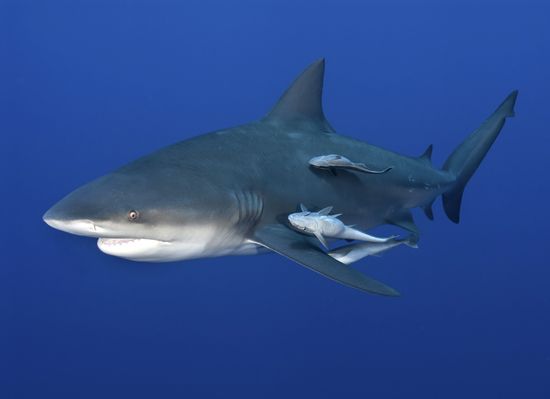
Bullhead sharks are harmless to humans and possess teeth specialized for crushing and grinding their prey, which includes mollusks, crabs, and sea urchins. Most species reach about 1 metre (3.3 feet) in length, though some, such as the Port Jackson shark, can grow larger. It is important not to confuse these with the “bull shark” (Carcharhinus leucas), which is a different, potentially dangerous species.13
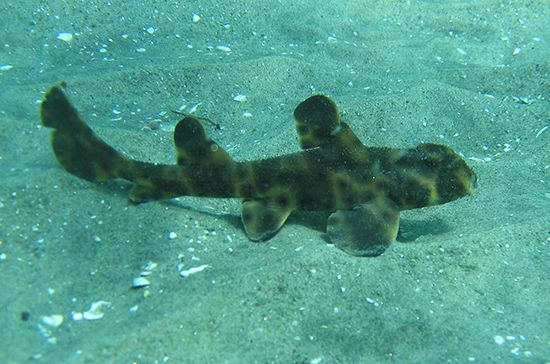
How do bullhead sharks use their teeth to crush shells?
Bullhead sharks (genus Heterodontus) possess teeth that are specifically adapted for crushing and grinding rather than the shearing or sawing motions seen in many other shark species. While many sharks use body rotation or head-twisting to tear prey, bullhead sharks utilize their specialized dentition to break down the hard shells of their primary food sources, which include mollusks, crabs, and sea urchins.1
These sharks are bottom-dwelling, and their small mouths are equipped with these robust, pavement-like teeth that allow them to effectively process their prey’s protective outer layers. Unlike species that rely on rapid, violent biting motions to consume large fish, the bullhead shark’s feeding mechanism is focused on the mechanical pressure required to crush these hard-shelled organisms.1
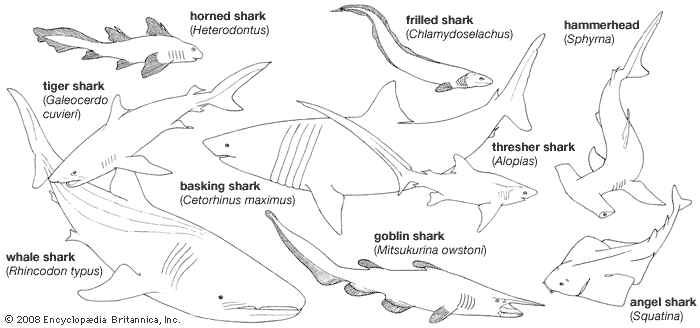
What makes the Port Jackson shark unique among other bullhead species?
The Port Jackson shark (Heterodontus portusjacksoni) is a notable member of the bullhead shark family found primarily in the coastal waters of Australia. While the term “bullhead” refers to the entire genus Heterodontus, the Port Jackson shark is distinguished by its specific geographic range and its distinct physical appearance, often featuring a brown to reddish-brown coloration.7
Unlike some other bullhead species that may inhabit tropical regions of the Pacific or Indian oceans, the Port Jackson shark is specifically adapted to the temperate waters of the Australasian region. Like its relatives, it is a harmless bottom-dweller that relies on its specialized teeth to feed on hard-shelled prey such as mollusks.7
Are there other types of sharks that are also harmless to humans?
While many sharks are often perceived as dangerous, more than 85 percent of all shark species are considered harmless to humans because they are too small, possess unsuitable teeth, or inhabit depths far beyond human reach.8
Among the most well-known harmless species are the “gentle giants” that rely on filter feeding rather than hunting large prey:
- Whale shark: As the largest living fish, this species subsists on plankton and small organisms. They are known to be docile, often allowing divers to approach or even ride them without showing aggression.49
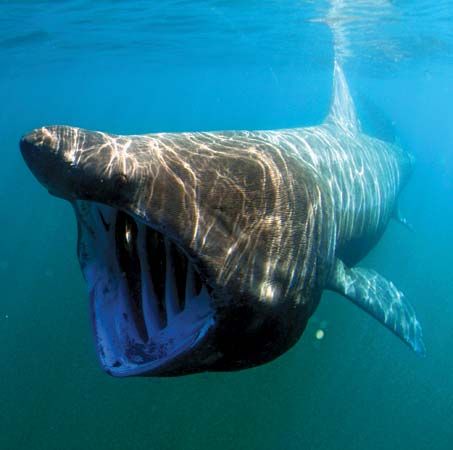
- Basking shark: Similar to the whale shark, this enormous species feeds by straining minute planktonic organisms from the water through its gill rakers.89
Additionally, many smaller, bottom-dwelling species are generally not a threat to people. For example, nurse sharks are often encountered by divers in tropical waters. While they are generally tolerant of humans, they can deliver a severe bite if provoked or harassed, such as when a diver grabs their tail or fins.10
It is important to remember that even non-predatory sharks are wild animals; most negative interactions occur when humans provoke them or when the shark reacts to bait.410
Sources
- bullhead shark — Encyclopædia Britannica
- bullhead shark — Merriam-Webster
- ostariophysan - Annotated classification — Encyclopædia Britannica
- chondrichthyan - Danger to human life — Encyclopædia Britannica
- chondrichthyan - Sharks — Encyclopædia Britannica
- shark - Shark behaviour — Encyclopædia Britannica
- Port Jackson shark — Merriam-Webster
- whale shark — Encyclopædia Britannica
- nurse shark — Encyclopædia Britannica
- shark - Description and habits — Encyclopædia Britannica
- shark: Top Questions — Encyclopædia Britannica
- shark — Encyclopædia Britannica
Published on · 3 min read