Cave Deposit
Speleology is the scientific discipline dedicated to the study and exploration of caves and underground cavern systems. It applies geological and…
What is speleology and how does it relate to cave deposits?
Speleology is the scientific discipline dedicated to the study and exploration of caves and underground cavern systems. It applies geological and hydrological principles to understand how caves develop, the chemical processes involved in their formation, and the nature of their internal features.12
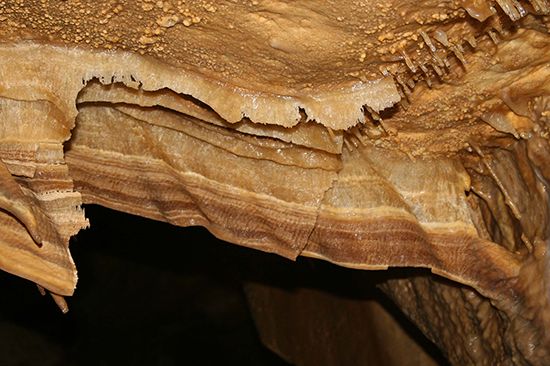
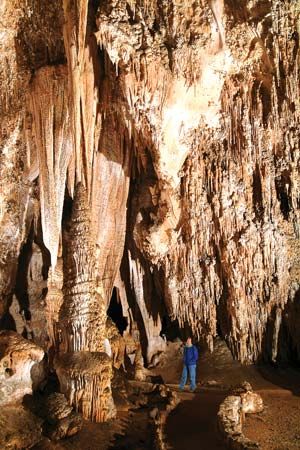
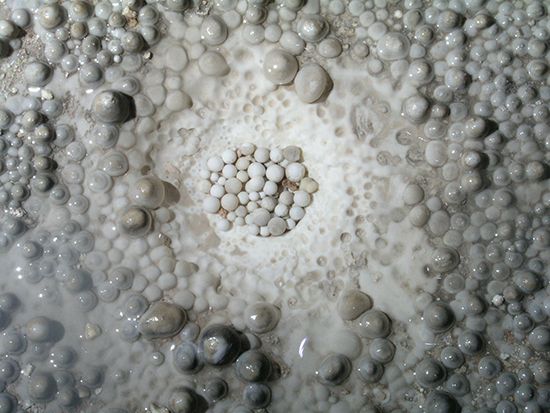
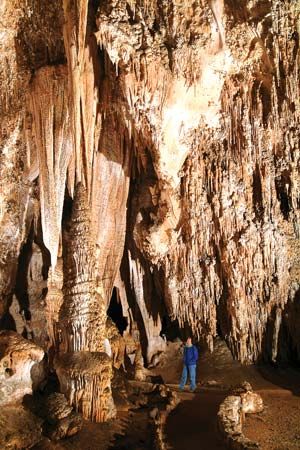
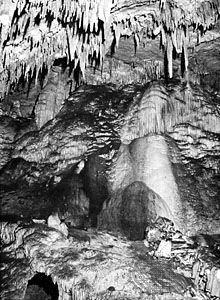
Speleology is deeply connected to the study of cave deposits, which are secondary mineral formations created after a cave’s initial development. These deposits, collectively known as speleothems, form when groundwater—often carrying dissolved calcium carbonate—seeps into a cave and precipitates minerals as carbon dioxide escapes into the cave atmosphere.34
Speleologists study these formations, such as stalactites, stalagmites, and flowstone, to analyze the chemical and hydrological conditions of the environment. Furthermore, because these deposits grow slowly over time, they serve as vital natural archives that researchers use to reconstruct past climate patterns.1345
What are some of the challenges faced by speleologists when exploring and studying caves?
The provided search results do not contain information regarding the specific challenges, risks, or difficulties faced by speleologists during the exploration and study of caves. While the text outlines the scientific focus of speleology and the geological processes behind cave deposits, it does not address the logistical or physical obstacles encountered in the field.
Sorry, the Britannica knowledge base does not contain this information.
What can cave deposits tell us about the geological history of an area?
Cave deposits, or speleothems, serve as vital natural archives that provide significant insights into the geological and environmental history of an area. Because caves offer a stable environment where temperature and humidity can remain constant for millennia, these deposits grow slowly and undisturbed, preserving a detailed record of past conditions.4
Key ways cave deposits reveal geological history include:
- Paleoclimatic Reconstruction: By analyzing the isotopic composition of stalagmites, researchers can infer past climate patterns, such as temperature fluctuations and moisture levels. The ratios of oxygen and carbon isotopes retained within these deposits act as proxies for environmental changes over time.78
- Geochronology: The age of sedimentary deposits found in caves can be determined using paleomagnetic records. By measuring magnetic particles trapped in sediments and correlating them with the geomagnetic polarity time scale, scientists can date geological events that occurred millions of years ago.9
- Hydrological and Flow History: Features like scallops on cave walls act as paleo-flow meters. Their size and shape provide evidence of the direction and velocity of ancient water flow, even in passages that have been dry for hundreds of thousands of years.9
- Environmental Indicators: The presence of specific minerals, such as gypsum or aragonite, can indicate unique geological environments or specific chemical conditions, such as the presence of ore deposits or periods of evaporation.4
What role does water play in the formation of cave deposits?
Water is the primary agent in the formation of cave deposits, acting as a “calcite pump” that transports minerals from the surface into the cave environment. The process involves several key stages:42
- Acidification: As rainwater infiltrates the soil, it absorbs carbon dioxide, forming a dilute solution of carbonic acid. This acidic water reacts with limestone bedrock, dissolving calcium carbonate and carrying it downward through fractures.42
- Precipitation: When this mineral-rich water emerges into the cave, the loss of carbon dioxide into the cave atmosphere reduces the water’s acidity. This causes the dissolved calcium carbonate to precipitate, forming speleothems such as stalactites, stalagmites, and flowstone.412
- Form and Growth: The shape of these deposits is determined by how the water moves—whether it drips, flows, or seeps. For instance, stalactites form from pendant drops, while flowstone is created by water moving along walls and ledges.412
- Evaporation: In drier caves, water-soluble minerals like gypsum may be deposited through the evaporation of seepage water rather than through chemical precipitation.4
Sources
- speleology — Encyclopædia Britannica
- stalactite and stalagmite — Encyclopædia Britannica
- cave deposit — Encyclopædia Britannica
- cave - Depositional materials and features — Encyclopædia Britannica
- speleology — Merriam-Webster
- Climate change - Evidence for climate change — Encyclopædia Britannica
- cave - Solutional sculpturings — Encyclopædia Britannica
- dating: Top Questions — Encyclopædia Britannica
- geology - Isotopic geochemistry — Encyclopædia Britannica
- Cambrian Period - Paleoclimate — Encyclopædia Britannica
- Tertiary Period - Correlation of Tertiary strata — Encyclopædia Britannica
- carbonic acid — Encyclopædia Britannica
- cave — Encyclopædia Britannica
Published on · 3 min read