Chile Lantern Tree
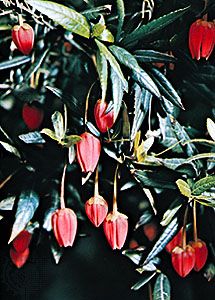
The Chile lantern tree (Crinodendron hookeranum) is an ornamental tree belonging to the Elaeocarpaceae family, native to western South America.
What is Chile lantern tree?
The Chile lantern tree (Crinodendron hookeranum) is an ornamental tree belonging to the Elaeocarpaceae family, native to western South America.1
Typically reaching a height of 4.5 to 7.5 metres (15 to 25 feet), the tree is widely cultivated for its attractive appearance. Its most distinctive feature is its urn-shaped, dark red flowers, which measure approximately 2 cm (0.8 inch) in length.1
What other plants are in the Elaeocarpaceae family?
The Elaeocarpaceae family consists of 12 genera and approximately 605 species of trees and shrubs, primarily distributed throughout tropical regions. The family is dominated by two major genera, Elaeocarpus and Sloanea, which together account for more than half of the species and include several important timber trees.2
Notable plants within this family include:
- Timber Trees: Sloanea berteriana (motillo), known for its heavy wood, and Sloanea woollsii (carabeen), which provides light wood.2
- Edible Species: The seeds of various Elaeocarpus species, such as the Ceylon olive (E. serratus), are commonly consumed.2
- Cultivated and Medicinal Plants: In addition to the Chile lantern tree (Crinodendron hookeranum), the genus Aristotelia is cultivated. Specifically, the maqui berry (Aristotelia chilensis) is used to produce Chilean wine and is noted for its reputed medicinal properties.2
What kind of climate does the Chilean lantern tree need to grow?
The Chile lantern tree (Crinodendron hookeranum) is native to the temperate, moist regions of western South America.1
While the provided information does not detail specific cultivation requirements, this species generally thrives in cool, humid climates with protection from harsh winds and extreme frost. It typically prefers acidic, well-drained soil and benefits from partial shade, reflecting the conditions of its native habitat in the temperate rainforests of Chile.
How do pollinators interact with the urn-shaped flowers?
The Chile lantern tree (Crinodendron hookeranum) features dark red, urn-shaped flowers that are approximately 2 cm (0.8 inch) long. While specific interaction details for this species are not explicitly documented in the provided text, its floral characteristics align with general traits of bird-pollinated flowers.1
Bird-pollinated flowers are typically brightly colored—often in shades of red, which birds perceive well—and are frequently tubular or urn-shaped to accommodate a bird’s beak. These flowers generally lack a strong scent, as birds rely primarily on vision rather than smell to locate food sources. In the Americas, bird-pollinated flowers are often pendant (hanging downward) and radially symmetrical, lacking the landing platforms required by insects.56
In such systems, the sturdy construction of the flower protects the reproductive organs from the probing bill of the visitor. As a bird feeds on the copious nectar produced within the floral chamber, its head or breast typically brushes against the protruding stamens, facilitating the transfer of pollen.6
Sources
- Chile lantern tree — Encyclopædia Britannica
- Elaeocarpaceae — Merriam-Webster
- Oxalidales — Encyclopædia Britannica
- Elaeocarpus — Merriam-Webster
- orchid - Bird pollination — Encyclopædia Britannica
- Botanical Sex: 9 Alluring Adaptations — Encyclopædia Britannica
- Asparagales - Pollination — Encyclopædia Britannica
- pollination - Birds — Encyclopædia Britannica
- Asteraceae - Pollination — Encyclopædia Britannica
Published on · 2 min read