Chital
The chital (Cervus axis or Axis axis), also known as the axis deer, is a species of deer belonging to the family Cervidae. Native to India and Sri Lanka…
What is chital?
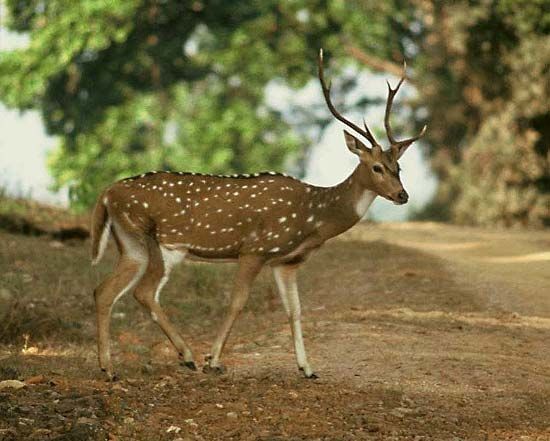
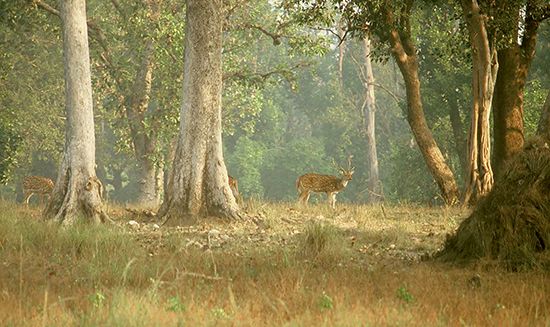
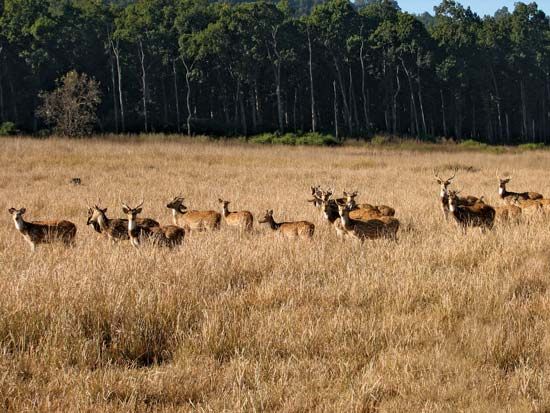
The chital (Cervus axis or Axis axis), also known as the axis deer, is a species of deer belonging to the family Cervidae. Native to India and Sri Lanka, these gregarious animals typically live in herds of 100 or more within grasslands and forests.123
Physically, the chital stands approximately 90–95 cm (35–37 inches) at the shoulder and is characterized by a reddish-brown coat marked with white spots. Males possess branching, three-tined antlers that can reach up to 100 cm in length.1
Ecologically, chital are ruminants that prefer forest edges, where they feed on tender grass blades, leaves, and fruits. They generally avoid steep terrain and forests with an unbroken canopy. Their name is derived from the Hindi word cital, which traces back to the Sanskrit citra, meaning “spotted” or “bright”.42
What are the main differences between grazing and browsing animals?
The primary difference between grazing and browsing animals lies in their preferred food sources and feeding behaviors.
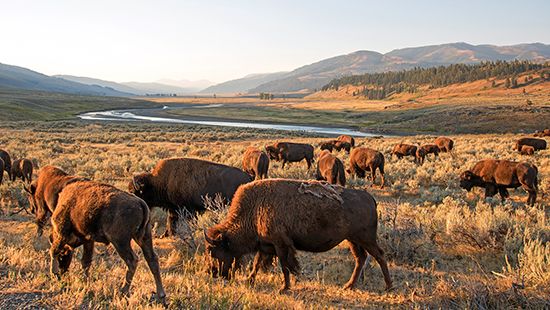
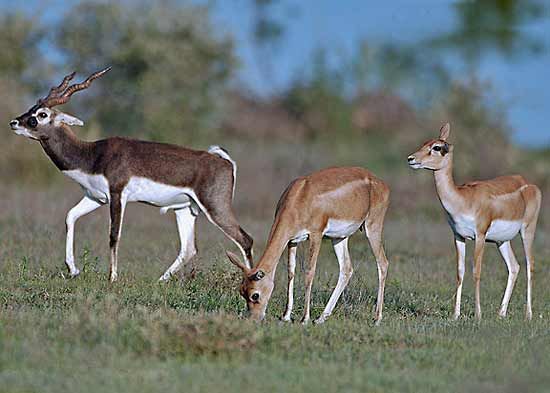
- Grazers primarily feed on grasses and herbaceous plants found in open areas like rangelands, prairies, and savannas. Because grasses can be coarse or coated in silica, grazers often require specialized digestive systems, such as those found in ruminants, to break down cellulose. Examples of grazers include wildebeest, blackbuck, and gaur.356
- Browsers feed on the foliage of shrubs, trees, and other soft vegetation, such as leaves, berries, fruits, and roots. Browsers often exhibit greater variation in their feeding height, with species like the giraffe reaching the highest levels of forest canopy. Examples of browsers include chevrotains and sambar deer, which often forage in dense undergrowth or forest environments.3
While some animals are specialized, many species exhibit flexible feeding habits depending on the season and available resources. For instance, the red deer acts as a browser in wooded areas, consuming lichens and tree leaves, but shifts to grazing on grass in open country.3
How do the antlers of a male chital differ from those of other deer species?
The antlers of a male chital are characterized by their branching, three-tined structure, which can reach lengths of up to 100 cm. Like most members of the deer family, these antlers are solid, bony outgrowths of the frontal bones that are shed and regrown annually.1910
While the basic structure of deer antlers consists of an anterior brow tine and a posterior beam, the chital’s specific three-tined configuration is a standard feature for the species. In contrast to other deer:10
- Growth Patterns: Research on chital indicates that their antlers increase in size until the animal reaches its seventh year, remain constant until the ninth year, and subsequently decline.10
- General Deer Variation: While most deer species follow a similar growth cycle involving “velvet”—a vascularized skin that covers the antlers during development—the complexity and size of antlers vary significantly across the family. Some species, such as Père David’s deer, exhibit more complex branching where the brow tine itself is branched.910
- Unique Exceptions: Unlike the chital, where only males carry antlers, both sexes of reindeer possess them, and the Chinese water deer lacks antlers entirely, relying instead on tusks.911
What predators do chital face in their natural habitats in India and Sri Lanka?
In their natural habitats across India and Sri Lanka, chital (Cervus axis) are a primary prey species for several large carnivores. The most significant predator of the chital is the tiger, which frequently hunts them in grasslands and forest environments.112
Additionally, chital face predation from other large carnivores that share their range, including:
- Dholes: These wild Asian dogs (dhole) are known to hunt in packs, allowing them to take down prey as large as deer.1312
- Leopards: As apex predators, leopards also target chital, though they may face competition for these kills from tigers.12
These predators play a crucial role in regulating chital populations within their ecosystems. While other large carnivores or reptiles exist within these regions, the tiger, leopard, and dhole are the most prominent threats to the chital’s survival in the wild.12
Sources
- chital — Encyclopædia Britannica
- chital — Merriam-Webster
- artiodactyl - Food habits — Encyclopædia Britannica
- deer - Old World deer — Encyclopædia Britannica
- food web — Encyclopædia Britannica
- Rangeland — Encyclopædia Britannica
- ruminant — Encyclopædia Britannica
- mammal - Digestive system — Encyclopædia Britannica
- deer - Morphology and behaviour — Encyclopædia Britannica
- deer: Top Questions — Encyclopædia Britannica
- artiodactyl - Horns and antlers — Encyclopædia Britannica
- reptile - Feeding habits — Encyclopædia Britannica
- dhole — Encyclopædia Britannica
- tiger - Natural history — Encyclopædia Britannica
Published on · 3 min read