Coast
Coastal landforms are shaped by a combination of geological processes, sediments, and wave energy, and are broadly categorized as either erosional or…
What are some of the major coastal landforms and how do they develop?
Coastal landforms are shaped by a combination of geological processes, sediments, and wave energy, and are broadly categorized as either erosional or depositional.1
Erosional Landforms
These features develop primarily through the action of waves and currents on bedrock:
- Sea Cliffs: These steep to vertical formations are created by wave-induced erosion at the base, which causes the upper rock to collapse.2
- Sea Arches: Formed by varying rates of erosion on bedrock, these structures feature openings that can extend below sea level.3
- Sea Stacks: These isolated pinnacles are erosional remnants left behind when a sea arch collapses or when wave-cut platforms are unevenly eroded.43
Depositional Landforms
These features develop as sediment is transported and accumulated by wind and water:
- Beaches: Composed of sand, gravel, or mud, beaches are dynamic environments that change shape based on wave energy. They typically feature a steep foreshore and a horizontal backshore, often undergoing cyclic erosion and repair.5
- Coastal Dunes: These form when wind carries sand from the beach landward, depositing it around obstructions. They are vital for the seaward growth of a coast.6
How are different types of coasts formed and what are their characteristics?
Coasts are broadly classified into two primary morphological types based on the dominant geological processes: erosional and depositional. Their formation is driven by the interaction of wave action, chemical weathering, sediment supply, and tectonic activity.83
Erosional Coasts
Erosional coasts are characterized by little to no sediment accumulation and are typically dominated by exposed bedrock.8
- Characteristics: These coasts often feature high relief, rugged topography, and steep slopes. Where tectonic uplift occurs alongside intense wave erosion, they are marked by nearly vertical sea cliffs and narrow inlets.83
- Formation: They frequently occur on the leading edges of lithospheric plates or in regions shaped by past glacial activity. While they are subject to constant wave energy, the rate of shoreline retreat is often slow due to the high resistance of the underlying bedrock.8
Depositional Coasts
Depositional coasts are defined by the long-term accumulation of sediment, such as sand, gravel, or mud.38
- Characteristics: These areas typically feature wide, sandy beaches, smooth plains, and sandbars that parallel the shoreline. They often include complex systems of barrier islands, lagoons, and tidal flats.39
- Formation: These coasts form in areas of crustal subsidence where sediment supply is abundant. They are categorized into three large-scale types: deltas, barrier island/estuarine systems, and strand-plain coasts. Barrier islands, for instance, are built by waves and longshore currents, creating sheltered environments like estuaries and marshes.3109
What are the main differences between rocky and sandy coasts?
The primary differences between rocky and sandy coasts lie in their geological composition, the dominant processes shaping them, and their overall topography.
Rocky Coasts
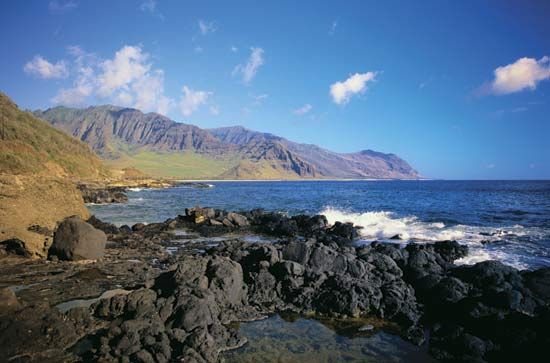
- Composition and Formation: These are erosional coasts dominated by exposed bedrock. They often form on the leading edges of lithospheric plates or in regions shaped by past glacial activity.9
- Topography: They are characterized by high relief, rugged topography, and steep slopes, such as vertical sea cliffs. While subject to constant wave energy, the rate of shoreline retreat is generally slow due to the resistance of the bedrock.97
- Ecology: Organisms on these shores must be firmly cemented or anchored to the substratum to withstand high wave energy.3
Sandy Coasts
- Composition and Formation: These are depositional coasts defined by the long-term accumulation of unconsolidated sediment, such as sand, gravel, or mud. They typically form in areas of crustal subsidence where sediment supply is abundant.1213
- Topography: They feature wide, sandy beaches, smooth plains, and sandbars that parallel the shoreline. These environments are dynamic, with beach profiles constantly changing in response to wave conditions and storm cycles.1213
- Ecology: These areas often support burrowing organisms, such as mollusks and worms, which thrive in the protected or shifting sediment environments.3
What is the definition of a coast in geographical terms?
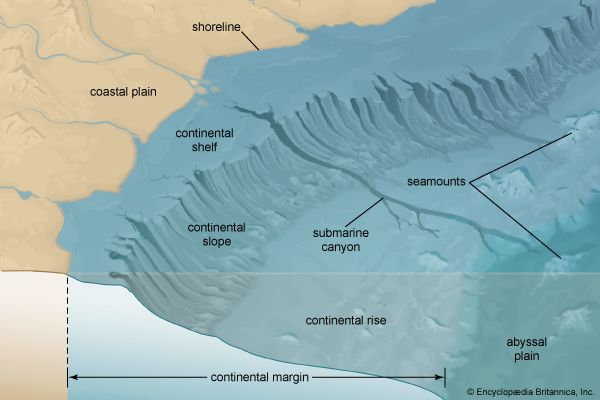
In geographical terms, a coast is defined as the broad area of land that borders the sea. It represents the dynamic interface where terrestrial environments meet marine environments, encompassing a wide variety of relief features known as coastal landforms.816
The configuration and topography of any given coast are shaped by the interaction of several key processes, including:
- Erosional processes: Such as wave action and chemical weathering.8
- Deposition: The accumulation of rock debris and sediment by currents.8
- Tectonic activity: The uplifting or sinking of the Earth’s crust.8
- Climate and Gravity: Factors that influence sediment transport, weathering, and the stability of coastal slopes.1718
Because of these ongoing geological and environmental forces, coastlines are not static; they have undergone significant shifts in position over geologic time due to changes in relative land and sea levels. In international law, the coast also serves as the baseline from which a state’s maritime zones—such as its territorial sea and exclusive economic zone—are measured.819
Sources
- coastal landforms - Sea stacks — Encyclopædia Britannica
- coastal landforms — Encyclopædia Britannica
- coastal landforms - Tides — Encyclopædia Britannica
- coastal landforms - Sea arches — Encyclopædia Britannica
- coastal landforms - Sea cliffs — Encyclopædia Britannica
- coastal landforms - Coastal dunes — Encyclopædia Britannica
- coastal landforms - Beaches — Encyclopædia Britannica
- coast — Encyclopædia Britannica
- coastal landforms - Landforms of erosional coasts — Encyclopædia Britannica
- coastal landforms - General coastal morphology — Encyclopædia Britannica
- coastal landforms - Barrier island/estuarine systems — Encyclopædia Britannica
- coastal landforms - Waves — Encyclopædia Britannica
- littoral zone — Encyclopædia Britannica
- coastal landforms - Longshore currents — Encyclopædia Britannica
- ecological disturbance - Disturbance and biodiversity in intertidal zones — Encyclopædia Britannica
- coast — Merriam-Webster
- coastlines — Merriam-Webster
- shoreline — Merriam-Webster
- shorelines — Merriam-Webster
- coastal landforms - Factors and forces in the formation of coastal features — Encyclopædia Britannica
- coastal landforms - Other factors and processes — Encyclopædia Britannica
- International law - Maritime spaces and boundaries — Encyclopædia Britannica
- Ocean vs. Sea: What’s the Difference? — Encyclopædia Britannica
Published on · 4 min read