Ecological Disturbance
Ecosystems recover from disturbances through a process known as ecological succession, which is the predictable evolution of a biological community's…
How do ecosystems recover from disturbances, and what is ecological succession?
Ecosystems recover from disturbances through a process known as ecological succession, which is the predictable evolution of a biological community’s structure over time.12
Types of Succession
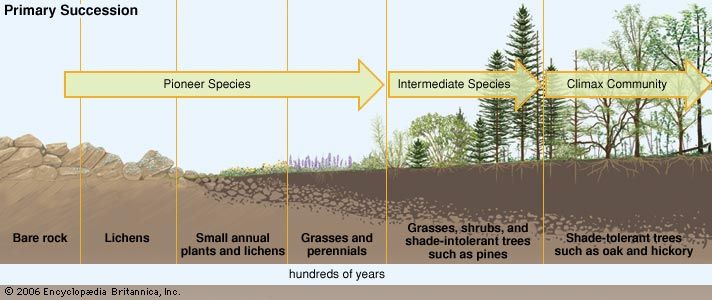
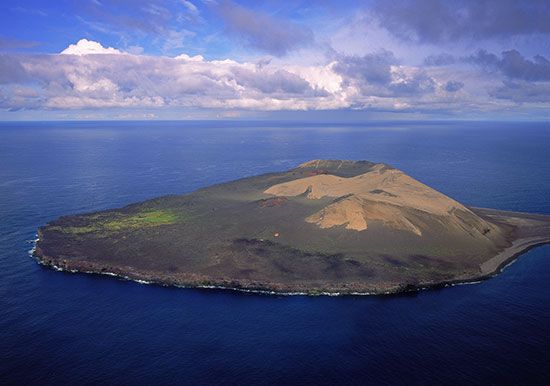
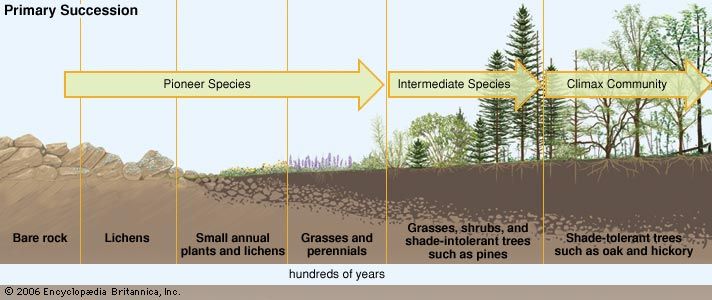
- Primary Succession: Occurs in essentially lifeless areas where soil is absent, such as on lava flows or rocks left by retreating glaciers.12
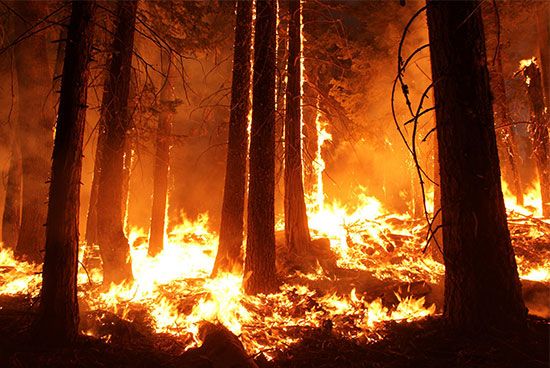
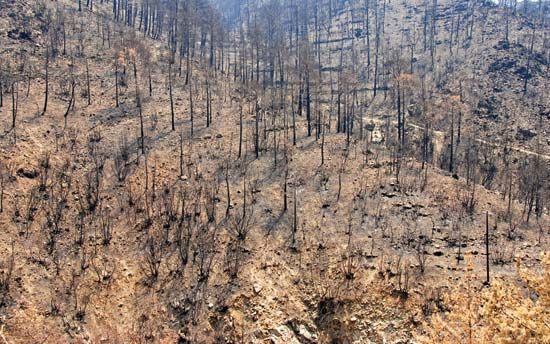
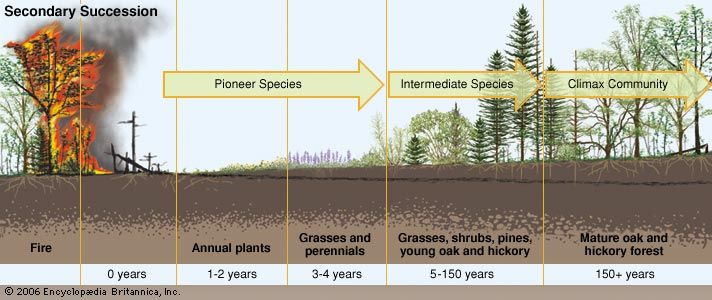
- Secondary Succession: Occurs in areas where a disturbance—such as a wildfire or flood—has removed the existing community but left the soil and nutrients intact, allowing for faster recolonization.2
The Process
Succession begins with pioneer species, such as lichens or mosses, which colonize the area and modify the environment by building soil. As conditions change, these are replaced by intermediate species and eventually, in some cases, a stable climax community.31
Crucially, species diversity enhances an ecosystem’s resilience; diverse communities recover more effectively from disturbances than species-poor ones. Maintaining this richness is vital for the stability and health of our natural world.4
Can you explain the intermediate disturbance hypothesis?
The intermediate disturbance hypothesis suggests that species richness is maximized when ecological disturbances occur at intermediate levels of frequency and intensity.7
According to this hypothesis:
- Low disturbance: When disturbances are rare or small, resource availability often declines, leading to a decrease in the variety of species that can coexist.7
- High disturbance: When disturbances are large-scale and frequent, they prevent the community from developing or evolving naturally, which also limits diversity.7
- Intermediate disturbance: By occurring at moderate levels, disturbances create a dynamic environment that prevents any single species from dominating, thereby allowing a greater number of species to persist.7
However, this hypothesis is not universally accepted. Some ecologists argue that it is difficult to define what constitutes a “disturbance” or to determine the appropriate scale for study. Critics also suggest that the hypothesis places too much emphasis on species diversity as the primary metric for recovery, noting that factors like species abundance and the specific status of organisms affected by the event are equally important for understanding ecosystem health.7
What are some management strategies used to mitigate the negative impacts of ecological disturbances?
To mitigate the negative impacts of ecological disturbances, resource managers employ a variety of strategies focused on restoration, prevention, and adaptive planning.
Restoration Strategies
When ecosystems are degraded, managers may use:
- Passive Restoration: Removing the source of the disturbance (such as halting agricultural tillage or livestock grazing) to allow the ecosystem to recover naturally through ecological succession.8
- Active Restoration: Necessary when an ecosystem has passed a threshold of degradation. This involves soil rehabilitation (e.g., adjusting pH, adding microorganisms), land stabilization (e.g., erosion control structures), and active revegetation using native species to accelerate recovery.8
- Fragmentation Mitigation: Increasing habitat patch size, fostering ecological linkages between patches, and bolstering genetic diversity to help populations survive disturbances.8
Prevention and Management Techniques
- Adaptive Management: An iterative approach that uses hypothesis testing and monitoring to inform decisions, allowing managers to adjust goals as new information emerges or environmental conditions change.9
- Fire Management: Techniques include prescribed fire to reduce fuel loads and restore fire-adapted ecosystems, as well as the creation of firebreaks to limit the spread of wildfires.1011
- Soil and Land Conservation: Practices such as crop rotation, cover crops, terracing, and rotational grazing are used to maintain productivity and prevent erosion in drylands and agricultural areas.12
- Early-Warning Systems: Monitoring statistical fluctuations or environmental indicators can help predict the onset of events like desertification or fishery collapse, enabling proactive intervention.13
How can some species benefit from ecological disturbances?
Ecological disturbances are often viewed as destructive, yet they are essential for the survival and success of many species. These events create “ecological opportunities” by clearing space, reducing competition, and altering environmental conditions in ways that favor specific life strategies.1617
Fugitive or “Weedy” Species
Many organisms, known as fugitive or r-selected species, are specifically adapted to thrive in disturbed environments. They possess traits such as excellent dispersal capabilities, high reproductive output, and short lifespans. By colonizing gaps created by events like wildfires or windstorms, these species can flourish before being eventually shaded out or outcompeted by slower-growing, hardier plants. For example, the pin cherry relies on major disturbances to cull competitors, allowing it to dominate a site and replenish its long-lived seed bank.161718
Fire-Adapted Species
Some plants have evolved to require fire to complete their life cycles:
- Fire-activated seeds: Species like the lodgepole pine and Eucalyptus have serotinous cones that only release seeds after heat melts their resinous seals.7
- Prolific flowering: Certain plants, such as the grass tree and various fire lilies, flower abundantly in the nutrient-rich, ash-fertilized soil following a blaze.7
Disturbance-Dependent Specialists
Other species require specific types of physical disruption to persist. The sea palm, for instance, flourishes only in areas where wave scouring creates gaps in mussel beds. Similarly, localized disturbances—such as the mounds of bare soil created by badgers digging for prey—provide the necessary habitat for fugitive plants like the stiff goldenrod to establish themselves.1817
Sources
- ecological succession: Top Questions — Encyclopædia Britannica
- ecological succession — Encyclopædia Britannica
- secondary succession — Encyclopædia Britannica
- pioneer species — Encyclopædia Britannica
- ecological restoration - Concepts — Encyclopædia Britannica
- community ecology - Community equilibrium and species diversity — Encyclopædia Britannica
- ecological disturbance - Intermediate disturbance hypothesis — Encyclopædia Britannica
- ecological disturbance - Management implications — Encyclopædia Britannica
- ecological restoration — Encyclopædia Britannica
- adaptive management — Encyclopædia Britannica
- desertification - Solutions to desertification — Encyclopædia Britannica
- ecological restoration - Implementation — Encyclopædia Britannica
- forestry - Fire prevention and control — Encyclopædia Britannica
- ecological resilience — Encyclopædia Britannica
- prescribed fire — Encyclopædia Britannica
- ecological disturbance - Spatial distribution — Encyclopædia Britannica
- Playing with Wildfire: 5 Amazing Adaptations of Pyrophytic Plants — Encyclopædia Britannica
- ecological disturbance - Disturbance and biodiversity in prairie landscapes — Encyclopædia Britannica
- Wetland - Natural disturbances — Encyclopædia Britannica
- ecological disturbance - Disturbance frequency and recovery — Encyclopædia Britannica
Published on · 5 min read