Ocean Vs. Sea: What’s the Difference?
The primary distinction between an ocean and a sea is based on size, depth, and geographical boundaries. Oceans are vast, deep, and continuous bodies of…
Ocean vs. Sea: What’s the Difference?
The primary distinction between an ocean and a sea is based on size, depth, and geographical boundaries. Oceans are vast, deep, and continuous bodies of saltwater that cover approximately 71% of Earth’s surface, with an average depth of about 3,688 meters (12,100 feet). There are five major oceans: the Pacific, Atlantic, Indian, Arctic, and Southern oceans.12
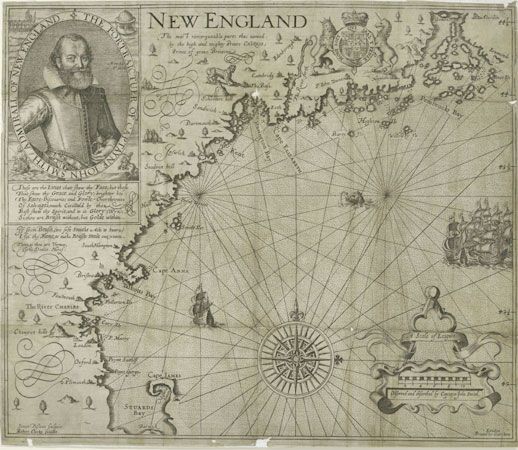
In contrast, seas are smaller, shallower, and typically located on the margins of oceans. They are often partially enclosed by land, such as the Mediterranean Sea, which makes them more influenced by human activity and distinct in their historical or political significance. While the terms are sometimes used interchangeably in casual conversation, scientific study—known as oceanography—maintains these structural differences when analyzing the evolution of basins and marine ecology.13
How do ocean currents affect global climate?
Ocean currents play a fundamental role in regulating global climate by acting as a massive heat-distribution system. They transport warm water from the tropics toward the poles and return cold water toward the equator, significantly moderating the temperatures of coastal regions.78
Heat Transport and Climate Moderation
The thermohaline circulation, driven by differences in temperature and salinity, moves vast volumes of water globally. A prominent example is the Gulf Stream, which carries warm water into the North Atlantic. This current, combined with prevailing winds, keeps the climate of northwestern Europe significantly warmer and more temperate than it would otherwise be.79
Large-Scale Climate Patterns
Ocean currents are also central to the El Niño-Southern Oscillation (ENSO). During El Niño, weakened trade winds reduce upwelling in the Pacific, leading to warmer surface temperatures that can alter global weather patterns, including rainfall and tropical cyclone activity. Conversely, La Niña strengthens these winds and upwelling, resulting in distinct climatic shifts across multiple continents.1011
What are the five major oceans of the world?
The world’s oceans are often categorized into five major divisions. While historically some models recognized only four, the Southern Ocean is now widely acknowledged as the fifth, encompassing the waters surrounding Antarctica.12
The five major oceans are:
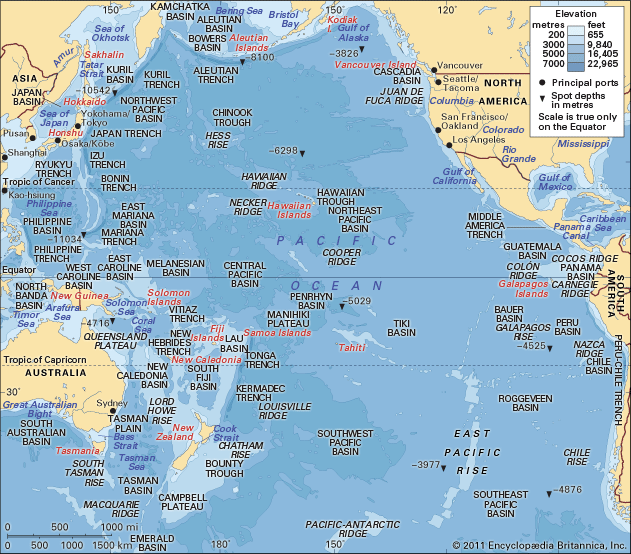
- Pacific Ocean: The largest and deepest ocean, covering about one-third of the globe’s surface.1314
- Atlantic Ocean: The second-largest ocean, known for having the most extensive area of bordering marginal seas.14
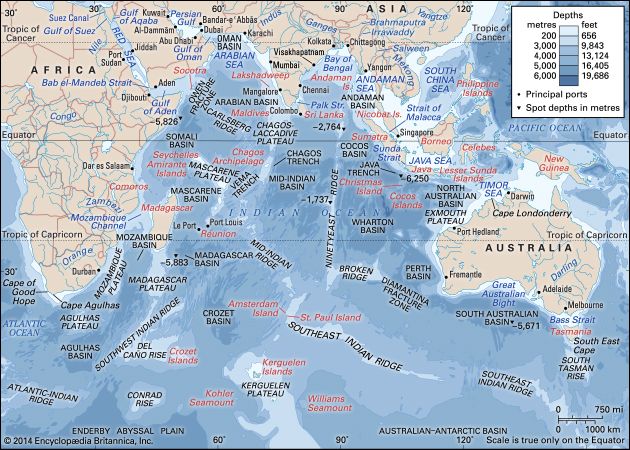
- Indian Ocean: The third-largest ocean, located between Africa, Asia, and Australia.1214
- Southern Ocean: Formally recognized by organizations like the National Geographic Society, it consists of the waters south of 60° S latitude.1214
- Arctic Ocean: The smallest and shallowest of the five oceans, situated around the North Pole.1214
Functionally, these bodies of water are interconnected, forming a single continuous global ocean system facilitated by thermohaline circulation.12
Why are some seas considered landlocked?
Seas are considered landlocked when they lack direct access to the global ocean system, effectively functioning as large, isolated inland bodies of water. Because these basins are surrounded by land, they do not share the same connectivity as the open ocean, which leads to distinct physical characteristics.151617
The classification of these bodies can be a subject of debate among scientists. While some are referred to as “seas”—such as the Caspian Sea—they are often viewed by hydrologists as large lakes because they are terrestrial end points in the hydrologic cycle with no downstream outflow to the ocean.1518
This isolation significantly impacts their composition. In the open ocean, water is mixed over long periods, maintaining a relatively uniform salt composition. In contrast, landlocked seas are highly susceptible to local environmental factors. For example, high rates of evaporation in isolated basins can lead to significantly elevated salinity levels, while proximity to freshwater sources can cause localized dilution.17
Sources
- Ocean vs. Sea: What’s the Difference? — Encyclopædia Britannica
- ocean — Merriam-Webster
- sea — Merriam-Webster
- sea — Merriam-Webster
- ocean: Top Questions — Encyclopædia Britannica
- hydrologic sciences - Study of the oceans and seas — Encyclopædia Britannica
- How Do Ocean Currents Affect the Biosphere? — Encyclopædia Britannica
- What Is the Difference Between El Niño and La Niña? — Encyclopædia Britannica
- thermohaline circulation — Encyclopædia Britannica
- Atmosphere - Effect of oceans on air movement — Encyclopædia Britannica
- Climate - Climate and the oceans — Encyclopædia Britannica
- Just How Many Oceans Are There? — Encyclopædia Britannica
- Pacific Ocean — Encyclopædia Britannica
- ocean - Major subdivisions of the oceans — Encyclopædia Britannica
- Landlocked country — Encyclopædia Britannica
- Landlocked country: Top Questions — Encyclopædia Britannica
- lake - Occurrence — Encyclopædia Britannica
- seawater - Salinity distribution — Encyclopædia Britannica
Published on · 3 min read