Continental Shield
Continental shields are the stable, ancient interiors of continents, characterized by extensive outcrops of Precambrian crystalline rocks that are typically…
What types of rocks are typically found in continental shields?
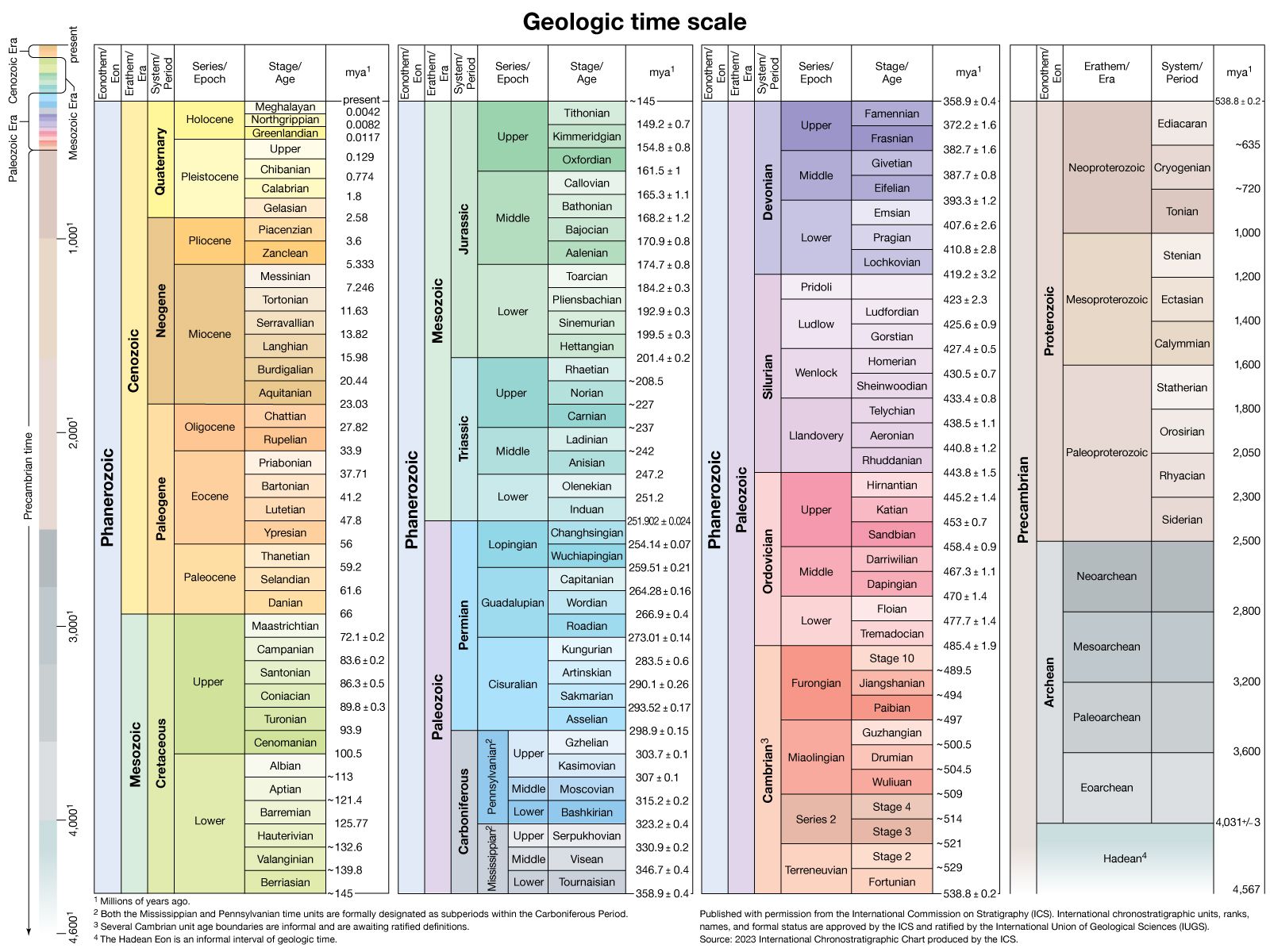
Continental shields are the stable, ancient interiors of continents, characterized by extensive outcrops of Precambrian crystalline rocks that are typically over 540 million years old.123
The composition of these shields is complex, but they are primarily defined by:
- Granitic and Granodioritic Gneisses: These form vast areas of the basement rock within shield regions.4
- Metamorphic Rocks: Shield areas contain belts of rocks frequently metamorphosed into greenschist, amphibolite, and granulite facies.4
- Sedimentary Rocks: Overlapping onto the crystalline basement are belts of sedimentary rocks that are similar in nature to those found in modern sedimentary belts.4
These regions serve as the continental nuclei, having been shaped by long histories of uplift, erosion, and mountain-building events. While they are considered stable, they are not entirely devoid of igneous activity, as contact-metamorphic events can occur within them.124
How do continental shields differ from other geological formations?
Continental shields are distinct from other geological formations primarily due to their age, stability, and structural role as the foundational cores of continents. While other regions of the Earth’s crust are characterized by active deformation, subsidence, or the accumulation of younger sediments, shields represent the ancient, stable interiors of continental landmasses.526
Key differences include:
- Age and Composition: Shields are composed of Precambrian crystalline rocks that are at least 540 million years old, with some dating back 2 to 4 billion years. In contrast, other geological features, such as mountain belts or sedimentary basins, often involve much younger rock formations.52
- Structural Stability: Shields act as cratons—the rigid, stable nuclei of continents. Unlike “mobile” zones or geosynclinal troughs, which are linear belts subject to subsidence and intense tectonic deformation, shields have remained relatively stable over vast periods of geologic time.26
- Surface Exposure: A defining feature of a shield is the extensive outcrop of its ancient basement rock at the surface. This distinguishes it from a platform, where the same type of ancient basement is present but is buried beneath a cover of horizontal or subhorizontal sedimentary layers.6
What is a continental shield, and how is it formed in geological terms?
A continental shield is a large, stable area of low relief within a continent, characterized by the extensive surface exposure of ancient Precambrian crystalline rocks. These regions serve as the foundational “nuclei” of continents, with rock ages typically exceeding 540 million years and some dating back 2 to 3 billion years.210
Geological Formation
Shields are formed through long-term processes of continental evolution and growth:
- Accretion: A primary theory of shield formation is continental accretion. Over geologic time, smaller landmasses—such as island arcs—underwent intense deformation and mountain-building episodes, eventually welding together to form larger, stable blocks.246
- Cratonic Aggregation: Shields are often aggregates of multiple smaller, rigid cratons that fused together. For example, the Canadian Shield was formed by the fusion of at least four discrete continents between 2.0 and 1.8 billion years ago.11
- Stability: Once formed, these regions become stable interiors that resist the subduction processes that constantly recycle oceanic crust. This stability allows them to persist as the oldest parts of the Earth’s crust.106
How old are continental shields compared to other geological features?
Continental shields are among the oldest geological features on Earth, serving as the stable, foundational cores of continents. Their age and characteristics differ significantly from other geological formations:213
- Age: Shields are composed of Precambrian crystalline rocks that are at least 540 million years old. Many regions within these shields contain some of the oldest rocks on the planet, with radiometric dating revealing ages between 2 and 3 billion years, and in some specific locations, even older.214
- Stability vs. Mobile Zones: Unlike “mobile” zones—such as geosynclinal troughs or active mountain belts—which are subject to ongoing subsidence, intense tectonic deformation, and the accumulation of younger sediments, shields are characterized by their long-term structural stability.213
- Surface Exposure: A defining feature of a shield is the extensive outcrop of ancient basement rock at the surface. This contrasts with platforms, which share the same ancient basement composition but are covered by younger, horizontal layers of sedimentary rock.213
Sources
- Canadian Shield: Top Questions — Encyclopædia Britannica
- continental shield — Encyclopædia Britannica
- metamorphic rock - Distribution of metamorphic rocks — Encyclopædia Britannica
- craton — Encyclopædia Britannica
- continent — Encyclopædia Britannica
- North America - The Canadian Shield — Encyclopædia Britannica
- continental shelf — Encyclopædia Britannica
- Precambrian - Orogenic belts — Encyclopædia Britannica
- mountain - Andean-type belts — Encyclopædia Britannica
- continental crust — Encyclopædia Britannica
- North America - General considerations — Encyclopædia Britannica
- plate tectonics - Plate boundaries — Encyclopædia Britannica
- North America - 4.6 to 3.0 billion years ago — Encyclopædia Britannica
- Earth - Planetary differentiation — Encyclopædia Britannica
- Precambrian - Occurrence and distribution of Precambrian rocks — Encyclopædia Britannica
Published on · 3 min read