Cone
A cone is a versatile term used across several scientific and everyday contexts:
What is Cone?
A cone is a versatile term used across several scientific and everyday contexts:
Mathematics
In mathematics, a cone is a surface traced by a moving straight line (the generatrix) that passes through a fixed point called the vertex and glides along a closed plane curve known as the directrix. A right circular cone is a surface of revolution where the directrix is a circle and the axis is perpendicular to the circle’s plane.12
Biology and Anatomy
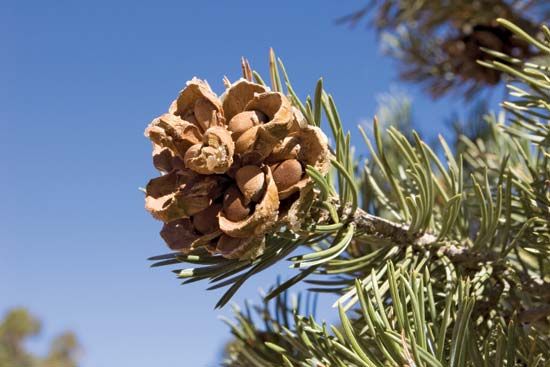
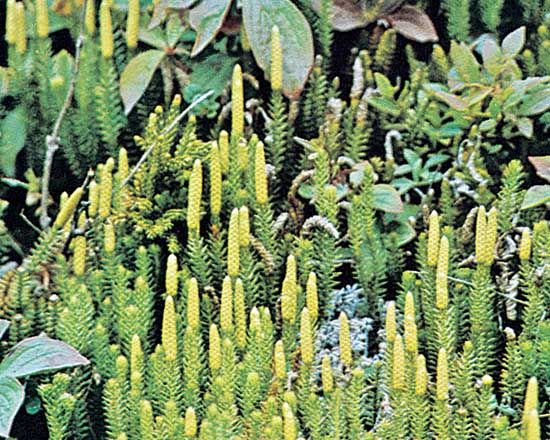
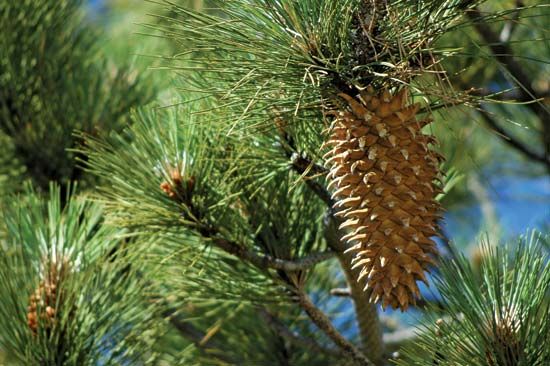
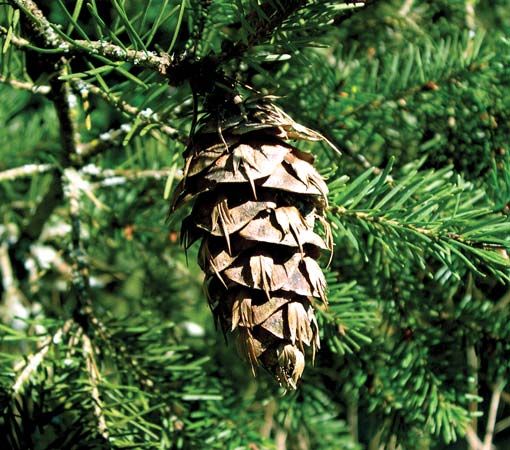
- Botany: A cone is a mass of scales or bracts containing the reproductive organs of gymnosperms, including conifers, as well as some club mosses and horsetails.3
- Vision: In the retina of the vertebrate eye, a cone is a light-sensitive photoreceptor cell responsible for colour vision and the perception of fine detail.4
Other Uses
The term also describes various objects resembling a cone in shape, such as the apex of a volcano, a wafer for ice cream, or a family of predatory tropical marine mollusks (Conidae).2
How do cone cells in the eye help us see color?
Cone cells in the retina are specialized photoreceptor cells that enable colour vision by responding to different wavelengths of light.45
The Trichromatic Theory
According to the Young-Helmholtz theory, humans possess three types of cones, each containing a specific pigment sensitive to different parts of the light spectrum:65
- S-cones (Short): Most sensitive to blue-violet light (absorption peak near 445 nm).75
- M-cones (Medium): Most sensitive to green light (absorption peak near 535 nm).75
- L-cones (Long): Most sensitive to red light (absorption peak near 565 nm).75
How Color is Perceived
Color perception results from the relative intensity of the response across these three cone types. When light enters the eye, it stimulates these receptors in varying degrees; the brain interprets the resulting pattern of signals as a specific hue. For example, yellow light stimulates both red and green cones but has little effect on blue cones, leading the brain to perceive the color yellow.76
Beyond this, neural cells in the retina combine these signals into opponent processes (such as red-green or blue-yellow), which help emphasize color differences and refine our visual perception.78
What are the differences between gymnosperms and flowering plants?
Angiosperms (flowering plants) and gymnosperms are the two primary groups of vascular seed plants, but they differ significantly in their reproductive structures and development.910
Key Differences
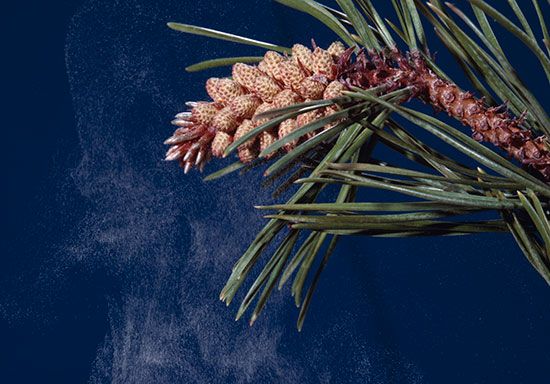
- Seed Development: The most fundamental distinction is how seeds are formed. Angiosperm seeds develop within the ovaries of flowers and are enclosed by a protective fruit. Conversely, gymnosperms produce “naked seeds,” which are typically exposed on the scales of cones (strobili) rather than being enclosed in fruit.11910
- Reproductive Efficiency: Angiosperms generally complete their reproductive cycles more quickly than gymnosperms. Furthermore, angiosperms utilize a process called double fertilization, where one sperm fertilizes the egg and another forms endosperm to nourish the embryo. In gymnosperms, the embryo is nourished by the somatic tissues of the female gametophyte.1213
- Anatomy: Most angiosperms possess specialized conducting tissues called vessels, which are absent in most gymnosperms (with the exception of the genus Gnetum).119
- Diversity: Angiosperms are the most diverse group of plants, exhibiting a vast array of growth habits, whereas gymnosperms are primarily woody trees and shrubs.9
How do you calculate the volume of a geometric cone?
To calculate the volume (VV) of a geometric cone, you use the following formula:
V=πr2h3V = \frac{\pi r^2 h}{3}
In this formula:
- rr represents the radius of the circular base.
- hh represents the perpendicular height of the cone.
- π\pi (pi) is a mathematical constant approximately equal to 3.14159.
Essentially, the volume of a cone is one-third the volume of a cylinder with the same base radius and height.1415
Sources
- cone — Merriam-Webster
- cone — Encyclopædia Britannica
- cone — Encyclopædia Britannica
- cone — Encyclopædia Britannica
- colour - Colour vision — Encyclopædia Britannica
- human eye - The nervous messages — Encyclopædia Britannica
- human eye - Young-Helmholtz theory — Encyclopædia Britannica
- colour blindness — Encyclopædia Britannica
- Angiosperm: Top Questions — Encyclopædia Britannica
- What’s the Difference Between Angiosperms and Gymnosperms? — Encyclopædia Britannica
- Plant reproductive system - Seed plants — Encyclopædia Britannica
- gymnosperm — Encyclopædia Britannica
- Angiosperm - General features — Encyclopædia Britannica
- cylinder — Encyclopædia Britannica
- Euclidean geometry - How to calculate areas of plane figures and volumes of solid figures — Encyclopædia Britannica
Published on · 3 min read