Crurotarsan
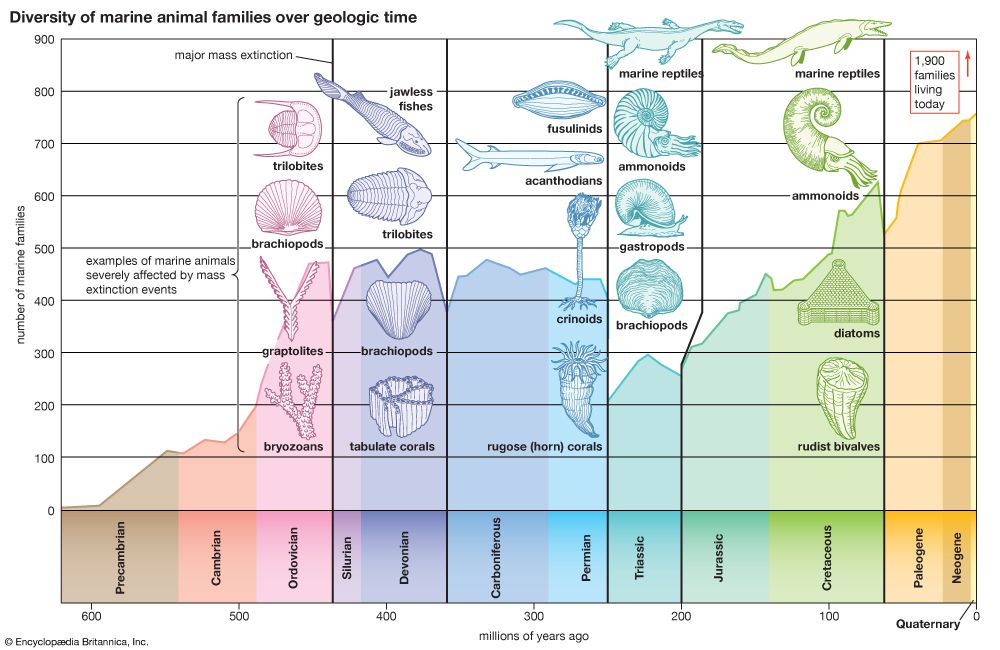
Most crurotarsan lineages went extinct during the end-Triassic extinction event, a period marked by intense volcanism and significant climatic changes. While…
What adaptations allowed some Crurotarsan lineages to survive while others went extinct?
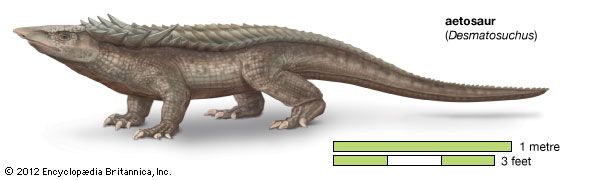
Most crurotarsan lineages went extinct during the end-Triassic extinction event, a period marked by intense volcanism and significant climatic changes. While the specific biological adaptations that allowed the Crocodylomorpha lineage to survive while others, such as the aetosaurs and rauisuchids, perished are not explicitly detailed in the provided research, the extinction of these groups is widely credited with opening ecological niches that facilitated the subsequent dominance of dinosaurs.12
Crurotarsans are defined by a unique “peg-in-socket” ankle joint that allows for both a “high walk” and a sprawling stance. Although this flexibility was a hallmark of the clade, it did not prevent the widespread collapse of most of its members during the environmental upheaval at the end of the Triassic Period. The survivors, the ancestors of modern crocodilians, persisted through this transition, eventually evolving into forms that thrived in diverse environments.12
How are Crurotarsi different from other reptile groups?
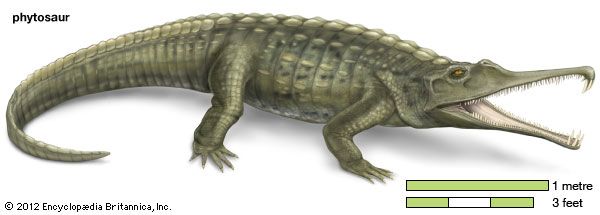
Crurotarsi, or “cross-ankles,” are a major clade of archosaurs more closely related to modern crocodiles than to birds. They are distinguished from other archosaurs—such as the Avemetatarsalia group, which includes dinosaurs and pterosaurs—primarily by their unique ankle anatomy.1
Key Differences
- Ankle Structure: Crurotarsans possess a “peg-in-socket” connection between the astragalus and the calcaneum. This allows for ankle rotation, whereas other archosaurs have ankle joints that limit the foot to bending in only one direction.1
- Locomotion: This specialized ankle joint enables crurotarsans to utilize two distinct walking postures: a “high walk,” which elevates the body by bringing the legs inward toward the midline, and a sprawling stance, which lowers the body by spreading the legs outward. In contrast, other archosaurs were generally limited to a more-erect posture.1
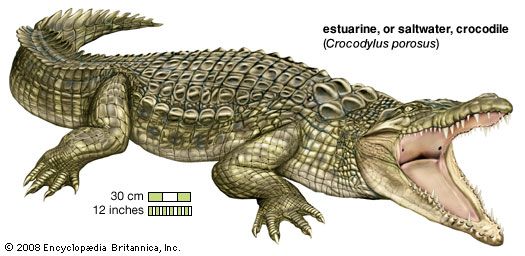
While most lineages went extinct during the end-Triassic extinction, the Crocodylomorpha lineage survived to the present day.1
How did the extinction events, such as the Triassic-Jurassic extinction, affect Crurotarsan diversity?
The end-Triassic extinction event, which occurred approximately 200 million years ago, had a profound impact on the diversity of the Crurotarsi. During the Triassic Period, crurotarsans were the dominant vertebrate group, occupying a wide range of ecological niches alongside early dinosaurs.1
The extinction event, widely attributed to intense volcanic eruptions linked to the breakup of Pangea and subsequent climatic changes, resulted in the demise of most crurotarsan lineages, including the aetosaurs and rauisuchids. This significant loss of species is considered a pivotal moment in evolutionary history; by clearing these ecological spaces, the extinction facilitated the rapid diversification and eventual dominance of dinosaurs in the Jurassic Period.13
While most lineages perished, the Crocodylomorpha lineage survived the transition, eventually evolving into the modern crocodilians that persist today.13
What are the key characteristics of Crurotarsan anatomy?
Crurotarsans, or “cross-ankles,” are a major clade of archosaurs more closely related to modern crocodiles than to birds. Their anatomy is defined by several key characteristics that distinguish them from other archosaur groups:
- Unique Ankle Structure: The defining feature of the clade is a “peg-in-socket” connection between the astragalus and the calcaneum in the ankle. This joint allows for rotation, whereas the ankles of other archosaurs (such as dinosaurs and pterosaurs) are restricted to bending in only one plane.15
- Locomotion and Posture: This specialized ankle joint enables crurotarsans to utilize two distinct walking postures: a “high walk,” which elevates the body by bringing the legs inward toward the midline, and a sprawling stance, which lowers the body by spreading the legs outward.15
- General Archosaur Traits: Like other archosaurs, they possess teeth set in sockets rather than in shallow grooves, and they exhibit specific openings in the skull, including the antorbital fenestra on the snout and the mandibular fenestra in the lower jaw.5
While most crurotarsans were quadrupedal, some, such as Effigia okeeffeae, were bipedal.1
Sources
- crurotarsan — Encyclopædia Britannica
- end-Triassic extinction — Encyclopædia Britannica
- Jurassic Period - Vertebrates — Encyclopædia Britannica
- Triassic Period - End-Triassic extinctions — Encyclopædia Britannica
- archosaur — Encyclopædia Britannica
- crocodile - Annotated classification — Encyclopædia Britannica
Published on · 3 min read