Curly-coated Retriever
The curly-coated retriever is one of the oldest sporting dog breeds, originally developed in England from water spaniels and retrievers to retrieve game on…
What is curly-coated retriever?
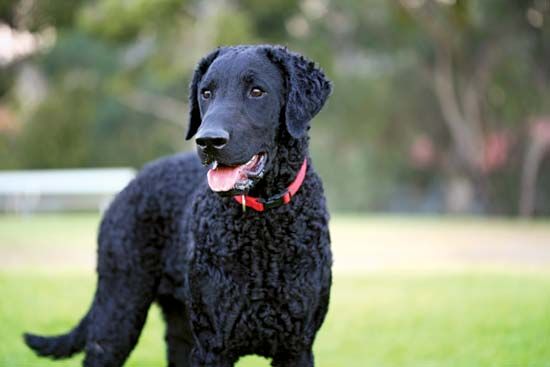
The curly-coated retriever is one of the oldest sporting dog breeds, originally developed in England from water spaniels and retrievers to retrieve game on both land and in water. First exhibited in the United Kingdom in 1860, the breed is recognized for its distinctive coat of short, tight curls—typically black or liver-colored—which covers its body except for the forehead, face, lower forelegs, and feet.12
Physically, the breed stands between 23 and 27 inches (58 to 68.5 cm) tall and weighs between 60 and 80 pounds (27 to 36 kg). Beyond its appearance, the curly-coated retriever is known for being sturdy, intelligent, and highly trainable. These traits make it both a tireless worker in the field and an ideal family companion. While it was first registered by the American Kennel Club in 1924, the breed remains a particularly popular hunting dog in Australia and New Zealand.1
What are the main differences between a curly-coated retriever and a Labrador retriever?
The curly-coated retriever and the Labrador retriever are both members of the sporting dog group, but they possess distinct physical and historical characteristics.
Physical Differences
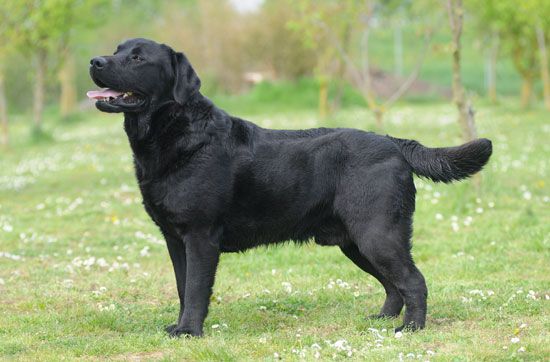
The most notable difference is the coat. The curly-coated retriever is defined by its unique, short, tight curls that cover its body, excluding the face, forehead, and lower legs. In contrast, the Labrador retriever features a short, dense, weather-resistant coat that is straight rather than curly.
Historical Background
The curly-coated retriever is considered one of the oldest retriever breeds, developed in England from water spaniels and retrievers and first exhibited in 1860. While both breeds were developed for retrieving game on land and in water, they have different regional popularity; the curly-coated retriever is particularly favored as a hunting dog in Australia and New Zealand, whereas the Labrador retriever is widely recognized globally as a versatile working dog and family companion.
I cannot provide a comprehensive comparison of their temperaments or specific breed standards as the current search results do not contain detailed data on the Labrador retriever.
How do sporting dog breeds differ from other dog groups?
Sporting dog breeds are distinguished primarily by their functional roles and specific behavioral traits developed through generations of selective breeding.
Functional Classification
Sporting dogs—referred to as gundogs in England—are specifically bred to scent, point, flush, or retrieve birds and other game on both land and in water. They are categorized into four basic types: pointers, retrievers, setters, and spaniels. In contrast, other dog groups are classified by different historical functions, such as:45
- Working Dogs: Bred for tasks like guarding, herding, draft work, or rescue.6
- Herding Dogs: A subset of the working group (in some classifications) specifically bred to manage livestock.56
- Hounds: Known for being more independent and aloof, often scouting territory on their own to follow a scent or movement, unlike the more human-oriented sporting breeds.7
- Terriers: Bred to chase and catch rodents, typically characterized by high energy and feistiness.7
Behavioral Traits
While sporting breeds vary in size, they generally share an intelligent, active, and highly social temperament. They are noted for being adventurous and responsive to human interaction, often following their noses but remaining eager to return to their handlers. This contrasts with the more “business-like” disposition of working and herding dogs, which are inclined to evaluate situations and perform specific tasks independently.47
What specific traits make a dog well-suited for retrieving game in water?
Dogs well-suited for retrieving game in water possess a specific combination of physical and behavioral traits that allow them to perform effectively in aquatic environments.
Key Physical and Behavioral Traits
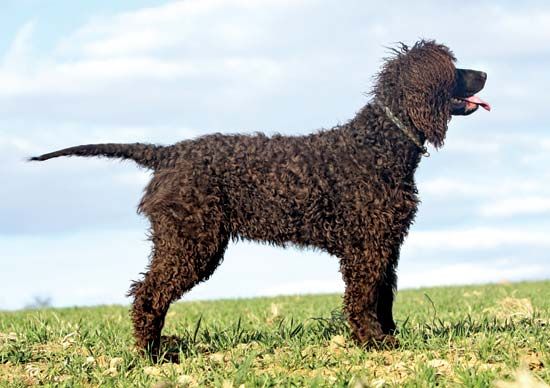
- Water-Resistant Coats: A primary requirement for water work is a coat that protects the dog from cold and moisture. Breeds like the curly-coated retriever feature tight, dense curls, while other retrievers possess specialized coats designed to repel water and maintain body temperature.
- “Soft” Mouths: A defining characteristic of a successful retriever is a “soft” mouth, which allows the dog to carry and return game to the handler without damaging it.1
- Keen Senses: Retrievers rely on a sharp sense of smell to locate game, which is essential for tracking and recovery in varied terrain and water conditions.1
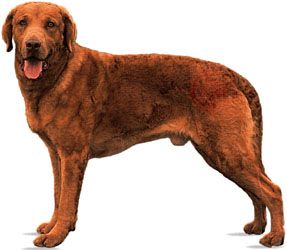
- Swimming Ability and Drive: Beyond physical structure, these dogs must have a natural affinity for swimming and a strong drive to retrieve. This instinct is so pronounced that breeds like the Chesapeake Bay retriever, Golden retriever, and Labrador retriever excel in both field work and water-based sports like dock diving.
Sources
- curly-coated retriever — Encyclopædia Britannica
- Poodle — Encyclopædia Britannica
- curly-coated retriever — Merriam-Webster
- sporting dog — Encyclopædia Britannica
- dog - The breeds — Encyclopædia Britannica
- dog - Breed-specific behaviour — Encyclopædia Britannica
- working dog — Encyclopædia Britannica
- retriever — Encyclopædia Britannica
- dog sports - Dock diving — Encyclopædia Britannica
Published on · 3 min read