Cyathocrinites
Cyathocrinites is an extinct genus of crinoids, commonly known as sea lilies. These marine invertebrates are found as fossils in marine rocks dating from the…
What is Cyathocrinites?
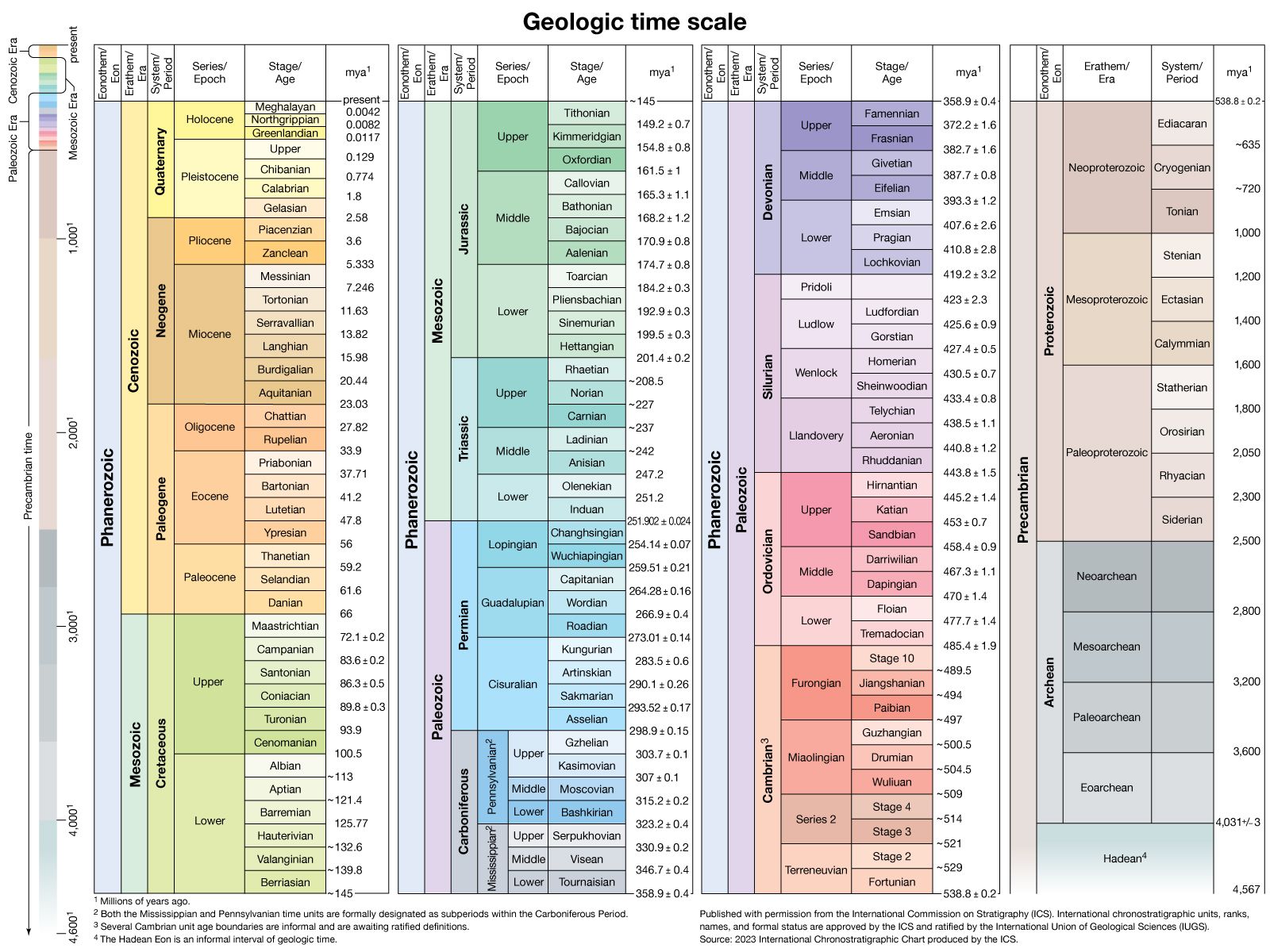
Cyathocrinites is an extinct genus of crinoids, commonly known as sea lilies. These marine invertebrates are found as fossils in marine rocks dating from the Silurian to the Permian periods, spanning approximately 444 million to 251 million years ago.12
The genus was particularly abundant during the Early Carboniferous Epoch, and researchers have described more than 100 distinct species. Like other crinoids, Cyathocrinites possessed a cup-shaped body and feathery arms used to capture food particles from the water. Because of their distinctive calcium carbonate skeletons, these organisms serve as important index fossils for the Paleozoic Era.12
What are the main physical features of a crinoid?
Crinoids, commonly known as sea lilies or feather stars, are marine invertebrates characterized by several distinct physical features:
- Body Structure: They possess a cup-shaped body, known as a theca or calyx, which houses the mouth at its center.24
- Arms: Arising from the body are five or more flexible, fern-like arms. While five is the primitive number, these arms often branch to produce between 10 and 200 arms in many living species. These arms are edged with feathery projections called pinnules, which contain reproductive organs and tube feet.24
- Skeleton: Crinoids have an internal skeleton composed of calcium carbonate, often referred to as limy plates or tests.25
- Attachment: Depending on the type, crinoids are either supported by a stalk (stem) made of limy disks that anchors them to the seafloor, or they lack a stalk and instead use slender, grasping appendages called prehensile cirri to attach themselves to surfaces.45
- Feeding Apparatus: The arms are equipped with grooves containing tube feet and cilia, which capture food particles and sweep them toward the mouth.26
How do crinoids differ from other echinoderms like starfish?
Crinoids differ from other echinoderms, such as starfish (asteroids), in several key anatomical and functional ways:
- Body Orientation and Feeding: Crinoids are suspension feeders that orient their arms into a “fan” to capture plankton from water currents. Unlike asteroids, which often extrude their stomachs to digest prey externally, crinoids use cilia and tube feet on their arms to sweep food particles toward a centrally located mouth on their cup-shaped body (theca).278
- Reproductive Anatomy: Crinoids are unique among echinoderms because their gonads are located in their arms or pinnules rather than within the main body cavity. In contrast, asteroids typically have gonads located near the base of their arms.4
- Skeletal Structure: While all echinoderms share a calcium carbonate skeleton, crinoids lack the pincerlike organs known as pedicellariae found in asteroids and echinoids. Additionally, crinoids are either attached to the seafloor by a stalk or use grasping appendages called cirri, whereas asteroids move using tube feet on the underside of their arms.589
- Arm Composition: The arms of asteroids are hollow and contain major internal organ systems, while the arms of crinoids are edged with feathery projections called pinnules that house reproductive organs and tube feet.78
Why are crinoid fossils important for studying Earth’s history?
Crinoid fossils are highly significant for studying Earth’s history primarily because their distinctive internal skeletons, composed of calcium carbonate, make them valuable index fossils.2
Their importance in geological research includes:
- Geologic Correlation: Because many crinoid species were abundant and widespread during the Paleozoic Era, their fossilized remains—particularly their circular or star-shaped stem ossicles—are essential tools for geologists to correlate and sequence rock layers across different regions.211
- Defining Time Intervals: Along with other echinoderms, crinoid fossils help scientists establish relative time scales and divide geologic periods into finer, more precise intervals.1112
- Evolutionary Tracking: Crinoids have a long evolutionary history, having survived major extinction events like the Permian-Triassic crisis. By studying their fossil record, researchers can track the recovery and diversification of marine life following mass extinctions and understand the “Mesozoic Marine Revolution,” which saw increased predation pressures and ecological shifts in ancient seas.1113
Sources
- Cyathocrinites — Encyclopædia Britannica
- crinoid — Encyclopædia Britannica
- crinoid — Merriam-Webster
- echinoderm - Symmetry and body form — Encyclopædia Britannica
- echinoderm - Food and feeding habits — Encyclopædia Britannica
- sea lily — Encyclopædia Britannica
- echinoderm - Reproductive system — Encyclopædia Britannica
- echinoderm - Extant echinoderms — Encyclopædia Britannica
- echinoderm - Locomotion — Encyclopædia Britannica
- echinoderm - Skeleton — Encyclopædia Britannica
- Jurassic Period - Protists and invertebrates — Encyclopædia Britannica
- Paleozoic Era — Encyclopædia Britannica
- Triassic Period - Invertebrates — Encyclopædia Britannica
- Cretaceous Period - Correlation — Encyclopædia Britannica
Published on · 3 min read