Detti Falls
It is important to clarify that the waterfall is commonly referred to as Dettifoss rather than "Detti Falls".
What is Detti Falls?
It is important to clarify that the waterfall is commonly referred to as Dettifoss rather than “Detti Falls”.1
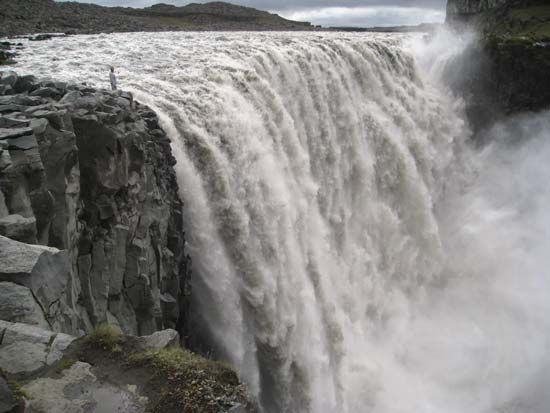
Located in northeastern Iceland, Dettifoss is a powerful waterfall situated on the Jökulsá á Fjöllum, the island’s second-longest river. It features a vertical drop of 144 feet (44 meters) and is recognized as the largest waterfall in Iceland by volume.21
Due to its immense flow, the site holds the greatest hydroelectric-power potential of any location in the country. Its dramatic scenery and accessibility by road from Akureyri have established it as a significant tourist destination.21
How do glaciers contribute to the water flow of Icelandic rivers?
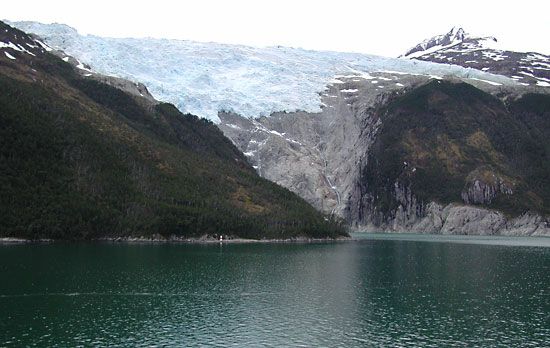
Glaciers play a fundamental role in shaping the hydrology of Icelandic rivers, acting as both a primary water source and a regulator of flow. Many of Iceland’s major rivers, such as the Jökulsá á Fjöllum, are fed by meltwaters originating from extensive ice fields like the Vatna Glacier.23
The contribution of glaciers to river systems occurs through several mechanisms:
- Seasonal Regulation: Glaciers function as natural reservoirs. They store precipitation as ice and snow, releasing it as meltwater during warmer months. This process helps regulate streamflow, as glaciers can buffer against unusually wet or dry years by adjusting their melt rates based on surface reflectivity (albedo) and temperature.4
- Sediment Transport: Rivers of glacial origin are typically debris-laden. As glaciers erode the landscape, they supply rivers with high concentrations of sediment, including fine-grained rock flour, which influences the physical characteristics of the river channels.54
- Catastrophic Floods: In Iceland, volcanic activity beneath ice fields can trigger sudden, massive releases of meltwater known as jökulhlaups. These “glacier runs” occur when subglacial lakes break through ice barriers, causing catastrophic flooding that significantly alters river discharge and landscape features.36
What makes a waterfall have high hydroelectric potential?
The hydroelectric potential of a waterfall or river site is primarily determined by two factors: the head and the volume of flow.7
- Head: This refers to the vertical distance the water falls. Potential energy is directly proportional to this height; a higher head allows for the generation of more power from a smaller volume of water.78
- Volume of Flow: The amount of water passing over the falls per second is critical. Sites with high flow rates can generate significant power even if the vertical drop is relatively modest.79
In hydroelectric installations, water is typically collected at a higher elevation and directed through pipes or tunnels, known as penstocks, to a lower elevation where it drives turbines. The turbines convert the water’s potential energy into mechanical energy, which then powers generators to produce electricity.78
Engineers select specific turbine types based on these site conditions: impulse turbines (such as the Pelton wheel) are generally used for high-head, low-flow sites, while reaction turbines (such as the Francis or Kaplan varieties) are typically employed for lower heads with moderate to high flow rates.10
What are some other famous waterfalls in Iceland?
Iceland is home to several iconic waterfalls, each defined by its unique geological setting and flow characteristics. Beyond those already mentioned, here are some of the most famous:
- Gull Falls (Gullfoss): Located in southwestern Iceland on the Hvítá river, this “Golden Falls” is fed by meltwaters from the Langjökull glacier. It features a 105-foot (32-meter) drop and is one of the country’s most popular tourist destinations.121
- Detti Falls: Situated in the northeast on the Jökulsá á Fjöllum river, this is the largest waterfall in Iceland by volume. With a vertical drop of 144 feet (44 meters), it also holds the greatest hydroelectric potential of any site in the country.13
- Hái Falls: Found in southern Iceland on the Fossá river, this is the nation’s second-highest cataract. It is notable for its impressive 400-foot (122-meter) vertical drop.14
Sources
- Detti Falls — Encyclopædia Britannica
- Jökulsá á Fjöllum — Encyclopædia Britannica
- Iceland - Lakes and rivers of Iceland — Encyclopædia Britannica
- Vatnajökull — Encyclopædia Britannica
- glacier - Glacier hydrology — Encyclopædia Britannica
- Pleistocene Epoch - Fluvial environments — Encyclopædia Britannica
- turbine - History of water turbine technology — Encyclopædia Britannica
- hydroelectric power — Encyclopædia Britannica
- waterfall — Encyclopædia Britannica
- potential energy — Encyclopædia Britannica
- turbine - Water turbines — Encyclopædia Britannica
- Gull Falls — Encyclopædia Britannica
- Hái Falls — Encyclopædia Britannica
- Gullfoss — Merriam-Webster
Published on · 3 min read