Dik-dik
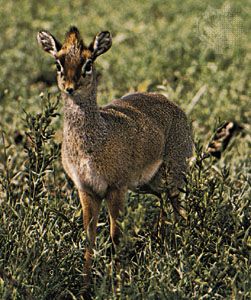
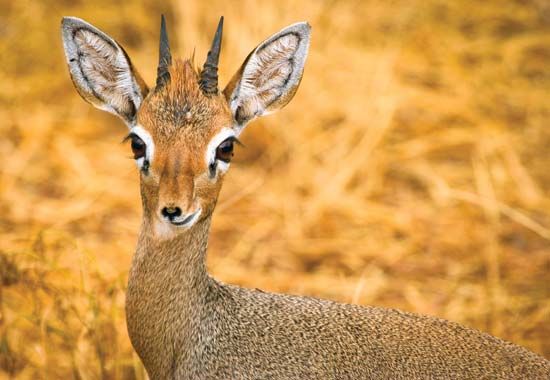
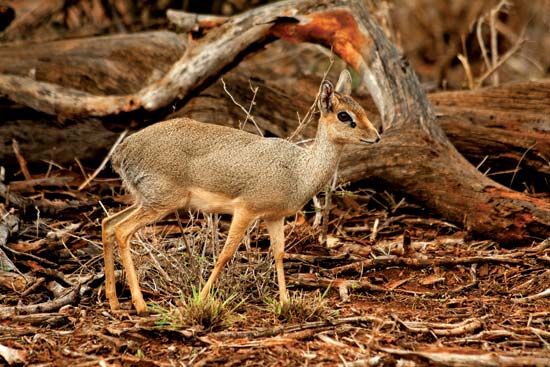
Dik-diks are small antelopes that serve as a vital component of the acacia savanna and arid bush ecosystems in eastern Africa.
What role do dik-diks play in their ecosystem?
Dik-diks are small antelopes that serve as a vital component of the acacia savanna and arid bush ecosystems in eastern Africa.1
As highly selective browsers, they feed on foliage, forbs, herbs, and succulents, which allows them to thrive in waterless environments where they efficiently manage energy and water resources. By maintaining monogamous territories, they help structure the local habitat, with their ritualized dunging ceremonies and scent-marking behaviors serving as a means of communication and territorial demarcation.1
Furthermore, dik-diks occupy a critical position in the food web as prey for a wide variety of predators, including eagles and various cat species. Their presence supports these predator populations, while their alarm calls—distinctive “zik-zik” sounds—serve as a warning system that can alert other animals in the vicinity to the presence of danger.1
How long do dik-diks typically live, and what are their main predators?
The provided search results do not contain information regarding the typical lifespan of dik-diks.
Regarding their predators, dik-diks are vulnerable to a wide range of threats, including various species of cats and eagles, as well as human beings. To evade these predators, they rely on their small size and cover-dependent nature, often remaining low until detected before fleeing in a sudden, zigzag pattern into nearby thickets. They also utilize distinctive “zik-zik” alarm calls to alert their mates and harass potential predators.1
What are the feeding habits and diet of dik-diks?
Dik-diks are highly selective browsers that have evolved to thrive in the arid, waterless bush country of eastern Africa. Their diet consists primarily of foliage, forbs, herbs, and succulents.1
To survive in these challenging environments, they employ several physiological and behavioral strategies to manage their energy and water intake:
- Selective Feeding: They carefully choose high-quality plant materials that provide necessary nutrients while minimizing water loss.1
- Metabolic Efficiency: They maintain a lowered metabolic rate and can tolerate fluctuating body temperatures to conserve energy.1
- Water Conservation: They produce concentrated urine and dry feces, which helps them retain moisture in arid conditions.1
- Activity Patterns: By resting in the shade during the hottest hours of the day and engaging in nocturnal activity, they avoid the peak heat that would otherwise increase their water requirements.1
These adaptations allow them to subsist in habitats where water is scarce, relying on the moisture content found within their selected plant diet.1
How do dik-diks communicate and what is the origin of their name?
Dik-diks communicate through a combination of vocalizations and complex chemical signaling, which also serves to maintain their monogamous pair bonds and demarcate their territories.4
Communication Methods
- Vocalizations: Their common name is derived from the breathy, toy-trumpet “zik-zik” alarm calls they emit. When sustained, often in a duet, these calls serve to harass predators and advertise the presence of a mated pair to others.4
- Chemical Signaling: Dik-diks use ritualized dunging and urination to mark territory boundaries. In a specific ceremony, the female excretes first, followed by the male, who samples her urine to monitor her reproductive condition before marking over her deposit. Additionally, they anoint nearby twigs with tarlike secretions from their prominent preorbital glands, which are located just in front of their eyes.41
Origin of the Name
The name “dik-dik” is onomatopoeic, originating from the distinctive “zik-zik” alarm calls these small antelopes make when threatened. While the name is widely recognized, the specific etymological history beyond this vocalization remains unknown.45
Sources
- dik-dik — Encyclopædia Britannica
- Africa - Mammals — Encyclopædia Britannica
- deer: Top Questions — Encyclopædia Britannica
- dik-dik — Merriam-Webster
- Chemoreception - Territorial behavior — Encyclopædia Britannica
Published on · 3 min read